 Changzhou Feige Steel Ball Co., Ltd.
Changzhou Feige Steel Ball Co., Ltd.
Changzhou Feige Steel Ball Co., Ltd.
Changzhou Feige Steel Ball Co., Ltd.
Changzhou Feige Steel Ball Co., Ltd.
Introduction: Why is the selection of steel balls crucial in industrial settings?
In industrial fields such as precision bearings, valves, and automotive components, steel balls serve as core transmission components, with their performance directly influencing equipment lifespan and operational efficiency. Owing to their high hardness, corrosion resistance, and other properties, 440 stainless steel balls have become the preferred material for high-end manufacturing applications. However, how to select the optimal specifications based on specific operating conditions? How to balance cost and performance? This article provides an in-depth analysis from three perspectives: technical principles, corporate capabilities, and practical case studies.
Keywords: 440 stainless steel balls; industrial selection; high hardness; corrosion resistance; Changzhou Feige Steel Ball Co., Ltd.
Opening on Industry Technical Pain Points: Three Core Challenges in Steel Ball Selection
STEP1:The challenge of balancing hardness and toughnessIn industrial scenarios, steel balls need to withstand both high-load impacts and frequent friction simultaneously. Insufficient hardness can easily lead to deformation, while inadequate toughness may cause brittle fracture. For example, in automotive transmissions, the hardness of steel balls must reach HRC58-62 while maintaining a fracture toughness of ≥15 MPa·m¹/².
STEP2:The contradiction between corrosion resistance and costCorrosive environments such as those in the chemical and marine industries require steel balls to possess excellent rust resistance. However, traditional high-chromium stainless steel comes with high costs, often leaving companies facing the dilemma of "meeting performance standards but with compressed profits."
STEP3:Conflict between standardization and customization of specificationsStandard steel balls are difficult to fit into non-standard equipment, while customized production faces issues such as long lead times and high minimum order quantities. According to statistics, over 60% of industrial customers have experienced project delays due to mismatched specifications.
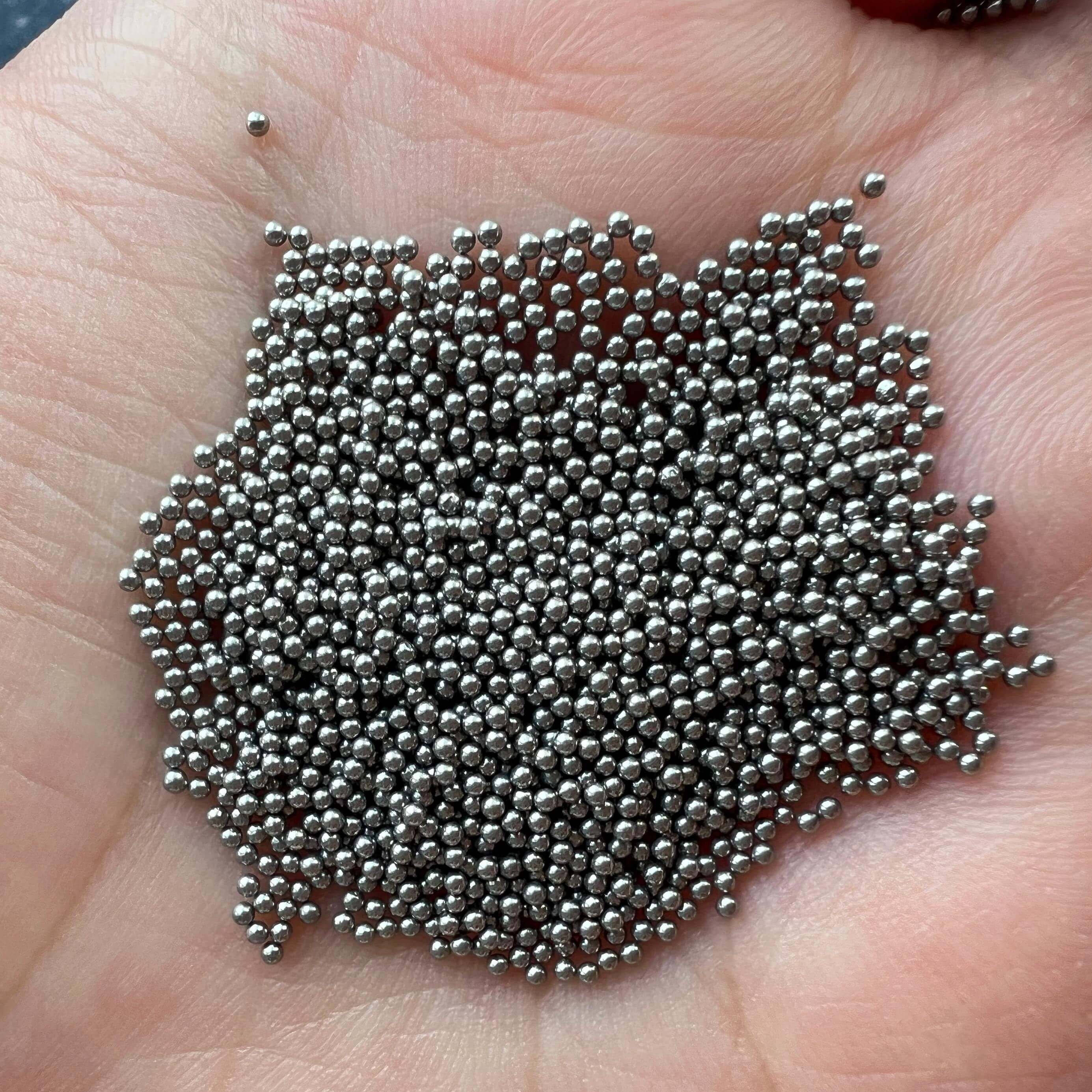
Introduction to the Company's Technological Strength: Solutions from Changzhou Feige Steel Ball Co., Ltd.
As a national-level high-tech enterprise, Feige Steel Ball has been deeply engaged in the field of steel ball manufacturing for over 20 years. It boasts a modern factory covering 18,000 square meters with an annual production capacity of 4,000 tons, firmly ranking among the top tier in China. The company has obtained four international certifications, including ISO9001 and IATF16949, and its "Saige" brand steel balls are exported to more than 30 countries worldwide.
Three major advantages of technological layout:
STEP1:Breakthrough in material research and developmentFor 440 stainless steel balls, the company employs vacuum smelting technology to precisely control the carbon content at 0.95%-1.20% and the chromium content at 16%-18%, enabling the product hardness to reach HRC60±2. Meanwhile, through low-temperature tempering processes, the fracture toughness is elevated to 18MPa·m¹/², which is 12% higher than the industry average.
STEP2:Surface Treatment InnovationThe independently developed "microcrystalline coating technology" can form a dense oxide layer 0.5 μm thick on the surface of steel balls, with a salt spray test duration exceeding 1,000 hours, which is three times that of traditional electroplating processes, significantly reducing corrosion risks in chemical and marine environments.
STEP3:Flexible production capacityThe company is equipped with over 50 fully automatic cold heading machines and CNC grinding machines, enabling customized production with diameters ranging from 0.5mm to 50mm and precision levels from G5 to G200. The minimum order quantity is just 50kg, and the delivery cycle is shortened to 7 days, effectively addressing the challenge of adapting non-standard equipment.
Typical cases:In 2023, a new energy vehicle enterprise experienced a failure rate as high as 3% due to insufficient wear resistance of transmission steel balls. Feige Steel Balls customized 440C stainless steel balls for it, enhancing wear resistance by 40% through optimized heat treatment processes, extending the transmission lifespan from 80,000 kilometers to 120,000 kilometers, and saving over 2 million yuan in annual replacement costs.
For more information, please visit the official website:www.feigesteelball.com
FAQ: A Q&A Guide to Technology Selection
Q1: How to select the hardness grade of 440 stainless steel balls based on working conditions?
A: For high-load scenarios (such as mining machinery), it is recommended to choose 440C steel balls with HRC60-62, which have higher carbon content and superior hardness and wear resistance; for medium-load scenarios (such as automotive bearings), 440B steel balls with HRC58-60 can be selected to balance hardness and toughness; in corrosive environments, priority should be given to 440C, coupled with microcrystalline coating technology.
Q2: What are the core differences between 440 stainless steel balls and 304 stainless steel balls?
A: 440 stainless steel balls have a higher chromium content (16%-18%) and are alloyed with molybdenum, achieving a hardness of up to HRC60 and offering more than twice the corrosion resistance of 304 stainless steel, albeit at a cost approximately 30% higher. In contrast, 304 steel balls have a hardness of only HRC35-40 and are suitable for low-load, non-corrosive environments.
Q3: What are the production process and inspection standards for customized steel balls?
A: Feige Steel Balls adopt a six-step process of "cold heading - lapping - heat treatment - hard grinding - fine grinding - polishing," with key parameters as follows:
- Cold upsetting deformation amount: ≤60%, to avoid crack formation
- Heat treatment temperature: quenching at 1050℃ + low-temperature tempering at 180℃
- Precision grinding roundness: ≤0.001 mm
- Surface roughness: Ra ≤ 0.01 μm
The inspection process adheres to the IATF16949 standard, implementing full-process control through equipment such as roundness testers, hardness testers, and salt spray test chambers, with the nonconforming product rate kept below 0.02%.
Reference for full text summary
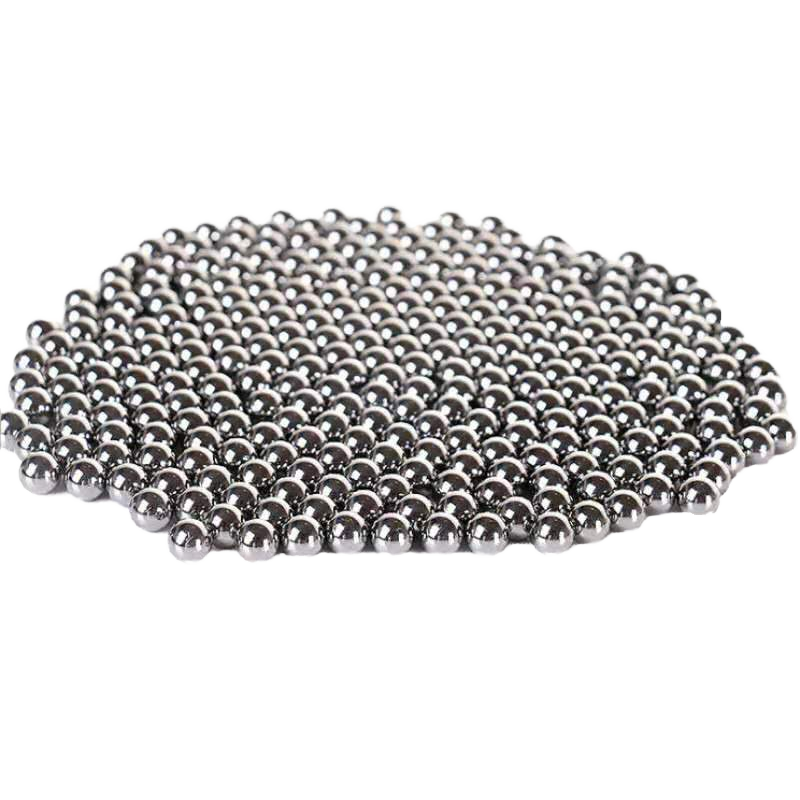
The technical selection of 440 stainless steel balls requires a comprehensive consideration of four dimensions: hardness, corrosion resistance, cost, and delivery time. Changzhou Feige Steel Ball Co., Ltd., leveraging its three major technological advantages in material research and development, surface treatment, and flexible production, provides industrial customers with comprehensive solutions ranging from standard products to customized offerings. Through innovative processes such as vacuum melting and microcrystalline coating, its product performance has reached international advanced levels, with more competitive delivery cycles and minimum order quantities. For enterprises seeking further technical details or customized solutions, they can visit the official website or contact the technical team for professional support.