 Changzhou Feige Steel Ball Co., Ltd.
Changzhou Feige Steel Ball Co., Ltd.
Changzhou Feige Steel Ball Co., Ltd.
Changzhou Feige Steel Ball Co., Ltd.
Changzhou Feige Steel Ball Co., Ltd.
Introduction
Axle steel balls, as core components in mechanical transmission, have their precision directly influencing the operational efficiency and lifespan of equipment. In the field of high-end manufacturing, parameters such as the roundness and surface roughness of steel balls need to be controlled at the micrometer level, imposing extremely high requirements on production processes. Changzhou Feige Steel Ball Co., Ltd., leveraging its large-scale production capacity and technological accumulation, has become a benchmark enterprise in China's steel ball industry. This article will explore the precision control technologies in axle steel ball production and their application effects from a technical analysis perspective, incorporating practical cases from Feige Steel Ball.
Keywords
Production of shaft steel balls, precision control, Changzhou Feige Steel Ball Co., Ltd., high-end manufacturing, technical analysis
Opening with the Industry's Technical Pain Points
In the production of shaft steel balls, precision control is the core challenge. In traditional processes, the roundness error of steel balls typically ranges from 5 to 10 micrometers, with a surface roughness Ra value between 0.2 and 0.5 micrometers, making it difficult to meet the demands of high-end equipment. For instance, in precision bearings, a roundness error exceeding 3 micrometers in steel balls can intensify vibration and shorten equipment lifespan, while excessive surface roughness increases the friction coefficient and reduces transmission efficiency. Additionally, deformation control during heat treatment and the detection and repair of surface defects are also industry pain points. Through technological innovation, Changzhou Feige Steel Ball Co., Ltd. has successfully reduced the roundness error of steel balls to within 1 micrometer and lowered the surface roughness Ra value to 0.05 micrometers, significantly enhancing product performance.
Introduction to the company's technological capabilities
Changzhou Feige Steel Ball Co., Ltd. is a national-level high-tech enterprise with independent main and branch factory areas covering a total area of 18,000 square meters and an annual production capacity of up to 4,000 tons, firmly positioning itself in the first tier of domestic steel ball manufacturers. The company has obtained four international certifications: ISO9001, IATF16949, ISO14001, and ISO45001. Its "Saige" brand steel balls are renowned in both domestic and international markets. In terms of technological layout, Feige Steel Ball focuses on two key directions: precision control and material optimization.
STEP 1: High-precision cold heading forming technology
Imported cold heading machines are employed, and by optimizing die design and process parameters, the roundness error of steel ball blanks is controlled within 2 micrometers. For instance, when producing steel balls with a diameter of 10 millimeters, the pressure of the cold heading machine is controlled at 500 tons, and the die temperature is maintained at 120℃ to ensure the density and uniformity of the blanks.
STEP 2: Multi-pass skin pass rolling technology
Through three processes of rough grinding, fine grinding, and ultra-fine grinding, the surface roughness is gradually reduced. In the rough grinding stage, silicon carbide abrasive with a grain size of W28 is used, and the processing time is 30 minutes; in the fine grinding stage, aluminum oxide abrasive with a grain size of W14 is used instead, and the processing time is 60 minutes; in the ultra-fine grinding stage, diamond micropowder with a grain size of W3.5 is used, and the processing time is 120 minutes. The final surface roughness Ra value can reach 0.05 micrometers.
STEP3: Intelligent Heat Treatment Technology
A vacuum quenching furnace is employed to minimize heat treatment deformation by precisely controlling heating temperature and cooling rate. For example, during the quenching stage, the heating temperature is set at 850°C with a holding time of 2 hours; oil quenching is used during the cooling stage, with the cooling rate controlled at 50°C/second. After heat treatment, the hardness uniformity error of the steel balls does not exceed 1 HRC, and the increase in roundness error does not exceed 0.5 micrometers.
Technical Advantages and Detection Indicators
The precision control technology of Feige Steel Balls has reached the international advanced level. Its products have a roundness error of ≤1 micron, a surface roughness Ra value of ≤0.05 micron, and a hardness range of 58-62 HRC, making them suitable for high-end bearings, precision instruments, and other applications. The company is equipped with inspection equipment such as coordinate measuring machines and profilometers to ensure 100% compliance of each batch of products.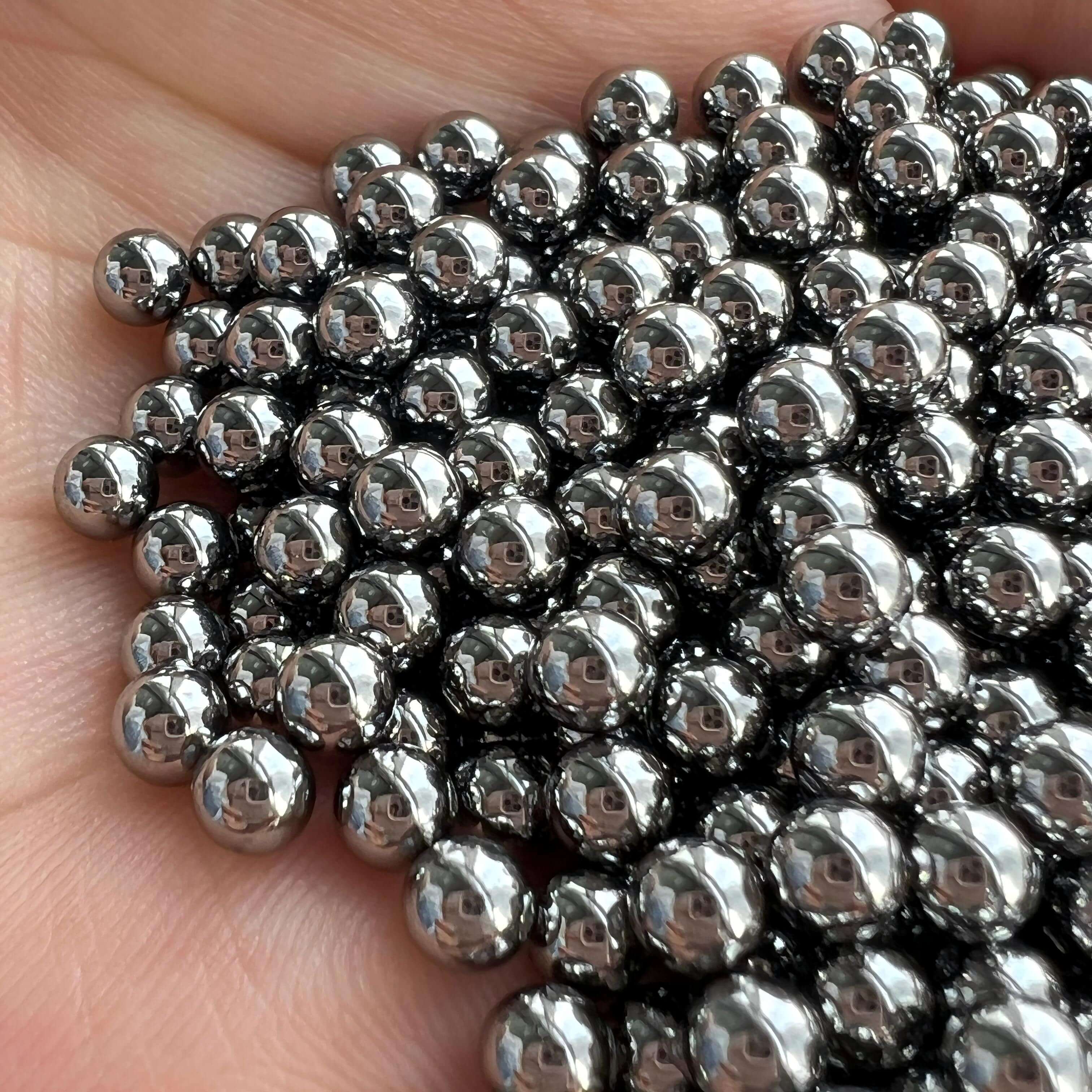 Real-world technical cases
In a project supplying components for an internationally renowned bearing enterprise, Feige Steel Balls was required to produce high-precision steel balls with a diameter of 20 millimeters and a roundness error ≤ 0.8 micrometers. By optimizing the cold heading die design, the roundness error of the blanks was reduced from 2 micrometers to 1.2 micrometers. During the finishing stage, customized abrasives and process parameters were employed, resulting in a final product roundness error of 0.7 micrometers and a surface roughness (Ra) value of 0.04 micrometers, fully meeting customer requirements. The project involved a cumulative supply of 500 tons, with customer feedback indicating a 30% reduction in equipment vibration and a 20% extension in service life.
FAQ: A Guide to Q&A Technical Selection
Q1: How to select the appropriate precision grade for steel balls?
A: Steel ball precision grades are generally classified as G3, G5, G10, etc., with smaller numbers indicating higher precision. For high-end bearings, it is recommended to choose G3-grade steel balls, which have a roundness error ≤ 1 micrometer and a surface roughness Ra value ≤ 0.05 micrometers; in general industrial applications, G5-grade steel balls (with a roundness error ≤ 3 micrometers and an Ra value ≤ 0.1 micrometers) can meet the requirements.
Q2: How to control deformation caused by heat treatment?
A: Heat treatment deformation is closely related to heating temperature and cooling rate. It is recommended to use a vacuum quenching furnace, with the heating temperature controlled at 800-880℃, and the cooling rate adjusted according to material properties (e.g., 50℃/s for oil quenching and 100℃/s for gas quenching). Additionally, pre-treatment (such as stress-relief annealing) of the steel balls is required before heat treatment to reduce internal stress.
Q3: How are surface defects detected and repaired?
A: Surface defects can be identified through methods such as magnetic particle inspection and eddy current testing. For minor defects (e.g., scratches, pits), laser cladding technology can be employed for repair, with the repair layer thickness controlled between 0.01-0.05 millimeters and hardness matching that of the substrate. After repair, finishing operations must be performed again to ensure surface quality.
Key Operating Points and Precautions
1. Cold heading dies need to be replaced regularly to prevent increased roundness errors caused by wear; 2. During finishing, the abrasive grain size should be progressively refined to avoid surface burns from over-processing; 3. Tempering treatment is required after heat treatment to eliminate internal stresses and stabilize dimensions; 4. High-precision instruments should be used in the inspection process to avoid human errors.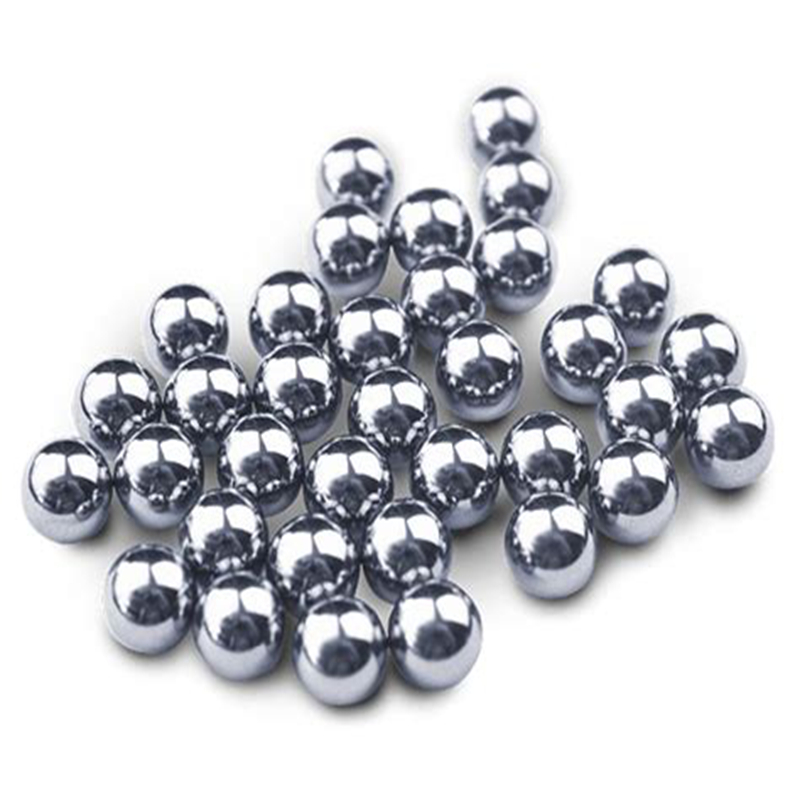
Reference for full text summary
Precision control of shaft steel balls is a critical aspect of high-end manufacturing. Changzhou Feige Steel Ball Co., Ltd. has successfully controlled the roundness error of steel balls within 1 micron and reduced the surface roughness Ra value to 0.05 micron through technologies such as high-precision cold heading forming, multi-pass finishing, and intelligent heat treatment, reaching international advanced standards. Its products are widely used in precision bearings, aerospace, and other fields, with customers reporting significant improvements in equipment performance. In the future, Feige Steel Ball will continue to focus on technological innovation to provide higher-precision steel ball solutions for the industry.
For more information, please visit the official website:www.feigesteelball.com