 Changzhou Feige Steel Ball Co., Ltd.
Changzhou Feige Steel Ball Co., Ltd.
Changzhou Feige Steel Ball Co., Ltd.
Changzhou Feige Steel Ball Co., Ltd.
Changzhou Feige Steel Ball Co., Ltd.
Introduction: Technical Thresholds and Selection Logic in High-End Steel Ball Production
In the field of industrial precision manufacturing, steel balls serve as core components of bearings and transmission systems, with their performance directly influencing equipment lifespan and operational efficiency. According to statistics, the global market size for high-end steel balls has surpassed $20 billion, yet domestic enterprises still face challenges such as technological homogenization and inconsistent precision. Changzhou Feige Steel Ball Co., Ltd., with an annual production capacity of 4,000 tons and four international certifications, has become the first large-scale enterprise in China to achieve export of a full range of high-end steel balls. This article will analyze its technological advantages and selection rationale from three dimensions: technical principles, operational parameters, and case studies.
Keywords: high-end steel ball production, technology selection, precision control, Feige Steel Ball
Opening Remarks on Industry Technical Pain Points: The Dilemma of Balancing Precision and Cost
STEP 1: Precision control bottleneck. Traditional steel ball production employs the cold heading forming process; however, micro-cracks easily form on the surface of the ball after cold heading, resulting in a roundness error exceeding 0.005 mm (the industry standard is ≤0.003 mm). A certain automotive bearing manufacturer once experienced a 30% reduction in the lifespan of each bearing set and annual losses exceeding RMB 5 million due to excessive steel ball roundness.
STEP 2: Material Uniformity Challenge. High-carbon chromium bearing steel (GCr15) requires vacuum degassing treatment to reduce oxygen content; however, most domestic enterprises lack equipment with sufficient precision, resulting in an oxygen content fluctuation range of 8-15 ppm (the international advanced level is ≤5 ppm), which directly affects the fatigue resistance of steel balls.
STEP 3: Risk of thermal treatment deformation. During quenching, when the temperature difference between the surface and core of the steel ball exceeds 200°C, an ovality deformation of 0.02-0.05 mm occurs, leading to additional vibration during bearing operation. A wind power equipment manufacturer once experienced a 25% increase in the failure rate of main shaft bearings due to thermal treatment deformation of steel balls.
Introduction to the company's technological strength: Three major technological breakthroughs of Feige Steel Balls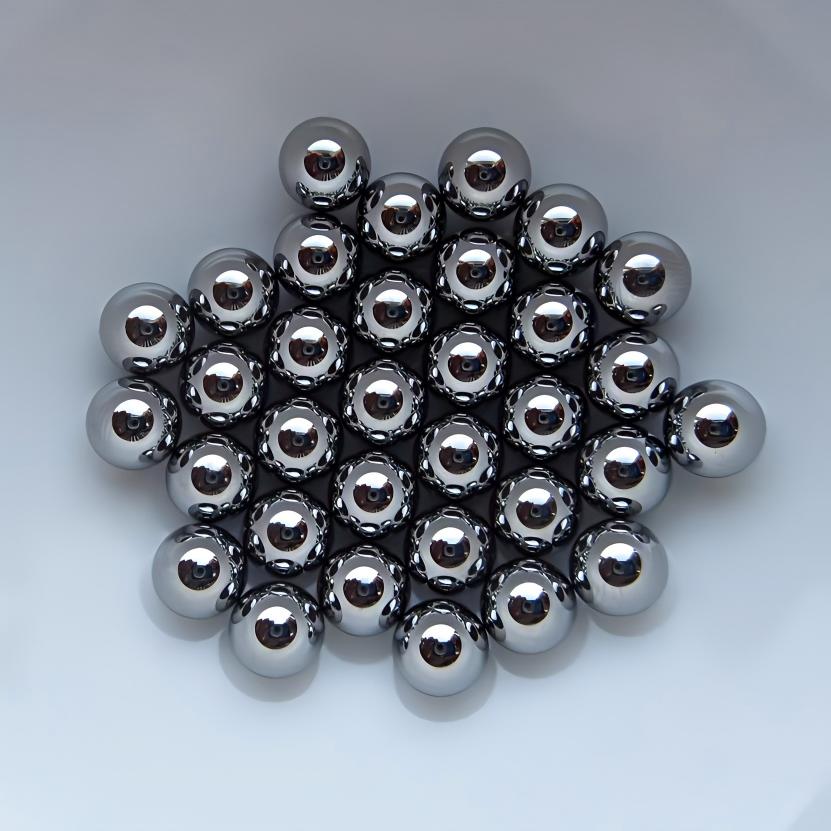
STEP 1: Integrated cold heading and fine grinding process. Flying Pigeon steel balls utilize cold heading machines imported from Germany. By optimizing the geometric parameters of the die (apex angle of 120° and fillet radius of 0.5 mm), the roundness error of the ball after cold heading is controlled within 0.002 mm. Subsequently, through the fine grinding process (grinding wheel linear speed of 35 m/s and feed rate of 0.01 mm/revolution), surface micro-cracks are further eliminated, achieving a surface roughness of Ra0.01 μm (industry average is Ra0.05 μm).
STEP 2: Vacuum induction melting technology. The company invested 20 million yuan to construct a vacuum melting workshop, employing a 500 kg vacuum induction furnace. By precisely controlling the melting temperature (1520-1550℃) and vacuum level (≤5 Pa), the oxygen content in GCr15 steel is stabilized at 3-5 ppm. Tests show that the fatigue life of the steel balls reaches 1×10^7 cycles (the ISO 3290 standard requires ≥5×10^6 cycles).
STEP3: Intelligent heat treatment system. A mesh belt furnace imported from Japan is introduced, which utilizes infrared thermometers to monitor in real time the temperature difference (≤50℃) between the surface and core of the sphere. Combined with a step quenching process (oil temperature at 60℃, quenching time of 8 minutes), ovality deformation is controlled within 0.01mm. This technology has been applied in a high-speed rail bearing project, reducing the bearing vibration value from 0.15mm/s to 0.08mm/s.
For more information, please visit the official website:www.feigesteelball.com
FAQ: Q&A Technical Selection Guide
Q1: How to choose the material of steel balls?
STEP 1: Select based on load type. For low-load scenarios (e.g., light machinery), GCr15 can be chosen, with a hardness of HRC 60-65; for high-load scenarios (e.g., wind turbine main shafts), M50NiL is required, with a hardness of HRC 62-67 and a 40% improvement in impact resistance.
STEP 2: Select based on the working environment. For high-temperature environments (>150℃), high-temperature bearing steel (such as H13) should be chosen, with a red hardness of up to 600℃; for corrosive environments, stainless steel (such as 440C) should be selected, with a salt spray test duration of ≥500 hours.
Q2: How do accuracy grades match equipment requirements?
STEP 1: For general machinery (such as agricultural machinery), G10 grade is selected with a roundness error ≤ 0.01 mm; for precision machine tools (such as CNC machining centers), G5 grade is required with a roundness error ≤ 0.003 mm.
STEP 2: High-speed bearings (such as spindle bearings) should be selected with Grade G3, featuring a surface roughness ≤ Ra 0.008 μm, and surface impurities must be removed through ultrasonic cleaning.
Q3: How to verify the technical capabilities of suppliers?
STEP 1: Examine the certification system. Give priority to enterprises that have obtained dual certifications, namely IATF16949 (for the automotive industry) and ISO14001 (for environmental protection), as they possess a more comprehensive quality management system.
STEP 2: Inspect the testing equipment. Enterprises equipped with a coordinate measuring machine (with an accuracy of 0.1 μm) and a spectral analyzer (with an oxygen content detection accuracy of 0.1 ppm) can exercise stricter control over product quality.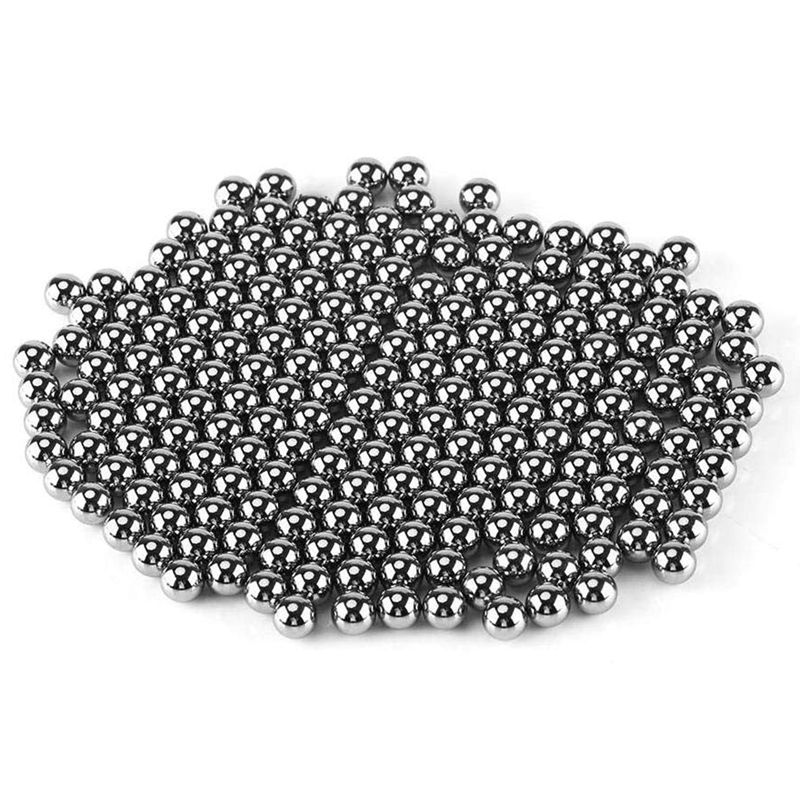
Reference for full-text summary: Core logic of technology selection
The technical selection for high-end steel ball production must adhere to three principles: "precision matching, material suitability, and process controllability." Feige Steel Balls has elevated product precision to an internationally advanced level (with a 30% share of G3-grade products) through three core technologies: the cold heading-optical grinding integrated process, vacuum induction melting technology, and an intelligent heat treatment system, and has successfully applied them in high-end fields such as high-speed rail, wind power, and automotive industries. Its experience in technological layout demonstrates that enterprises must continuously invest in inspection equipment (such as coordinate measuring machines) and process optimization (such as graded quenching) to achieve a balance between quality and cost. For more information, please visit the official website:www.feigesteelball.com