 Changzhou Feige Steel Ball Co., Ltd.
Changzhou Feige Steel Ball Co., Ltd.
Changzhou Feige Steel Ball Co., Ltd.
Changzhou Feige Steel Ball Co., Ltd.
Changzhou Feige Steel Ball Co., Ltd.
Introduction: The Precision Revolution in Steel Ball Manufacturing
In the field of industrial manufacturing, steel balls serve as critical elements in core components such as bearings and transmission systems, with their precision directly influencing equipment operational efficiency and service life. Changzhou Feige Steel Ball Co., Ltd., leveraging an annual production capacity of 4,000 tons and quadruple international certifications, has emerged as a benchmark for domestic high-end steel ball export production bases. This article will analyze how the company achieves industry leadership through refined full-process control from three perspectives: technical principles, process innovation, and quality management.
Keywords: high-precision steel balls; cold heading forming; finishing machining; quadruple certification; full-category export
Opening with the Industry's Technical Pain Point: The Challenge of Balancing Precision and Cost
Traditional steel ball manufacturing faces two core pain points: first, the heat treatment process tends to result in uneven thickness of the surface oxide layer, affecting wear resistance; second, when the cumulative error from multiple passes of processing exceeds 0.005 mm, it causes the bearing vibration values to exceed standards. An automotive parts manufacturer once had to replace bearings every 100,000 kilometers due to a steel ball roundness error of 0.003 mm, increasing annual maintenance costs by 2.3 million yuan. Feige Steel Ball has significantly enhanced equipment operational stability through technological innovation, controlling roundness error to ≤0.001 mm and surface roughness Ra to ≤0.01 μm.
Introduction to the company's technological strength: Full-process refined control system
STEP 1: Material Selection and Pretreatment
Feige steel balls are made of GCr15 bearing steel, with a carbon content of 0.95%-1.05% and a chromium content of 1.40%-1.65%. The oxygen content is reduced to ≤8ppm through vacuum degassing treatment. The raw materials undergo ultrasonic flaw detection to ensure the absence of inclusions with a diameter ≥0.05mm. For instance, the φ100mm steel balls customized for a wind power equipment manufacturer achieved a material purity of NAS6 grade, with a 40% improvement in fatigue resistance life.
STEP 2: Cold Heading Forming and Finishing
A 6-station cold heading machine is employed to achieve a single-forming rate of ≥98% by precisely controlling the upsetting ratio (1:1.2-1:1.5) and die clearance (0.02-0.05mm). In the finishing process, Feige's original "three-stage grinding method" is utilized: rough grinding (using silicon carbide abrasive, with a linear speed of 15m/s for 30 minutes) → semi-fine grinding (using aluminum oxide abrasive, with a linear speed of 12m/s for 20 minutes) → fine grinding (using chromium oxide abrasive, with a linear speed of 8m/s for 10 minutes), reducing surface roughness from Ra0.8μm to Ra0.01μm.
STEP 3: Heat Treatment and Quality Inspection
The heat treatment employs a martensitic austempering process, with a heating temperature of 850 ± 5°C, a holding time of 2 hours, oil quenching followed by tempering at 180°C for 3 hours, and the hardness controlled within HRC60-64. In the quality inspection phase, a three-dimensional inspection system is established using a roundness tester (with a resolution of 0.0001 mm), a roughness tester (with a measurement range of 0.001-10 μm), and a spectral analyzer (capable of detecting elements ranging from 4Be to 92U), ensuring that each steel ball complies with the IATF16949 standard.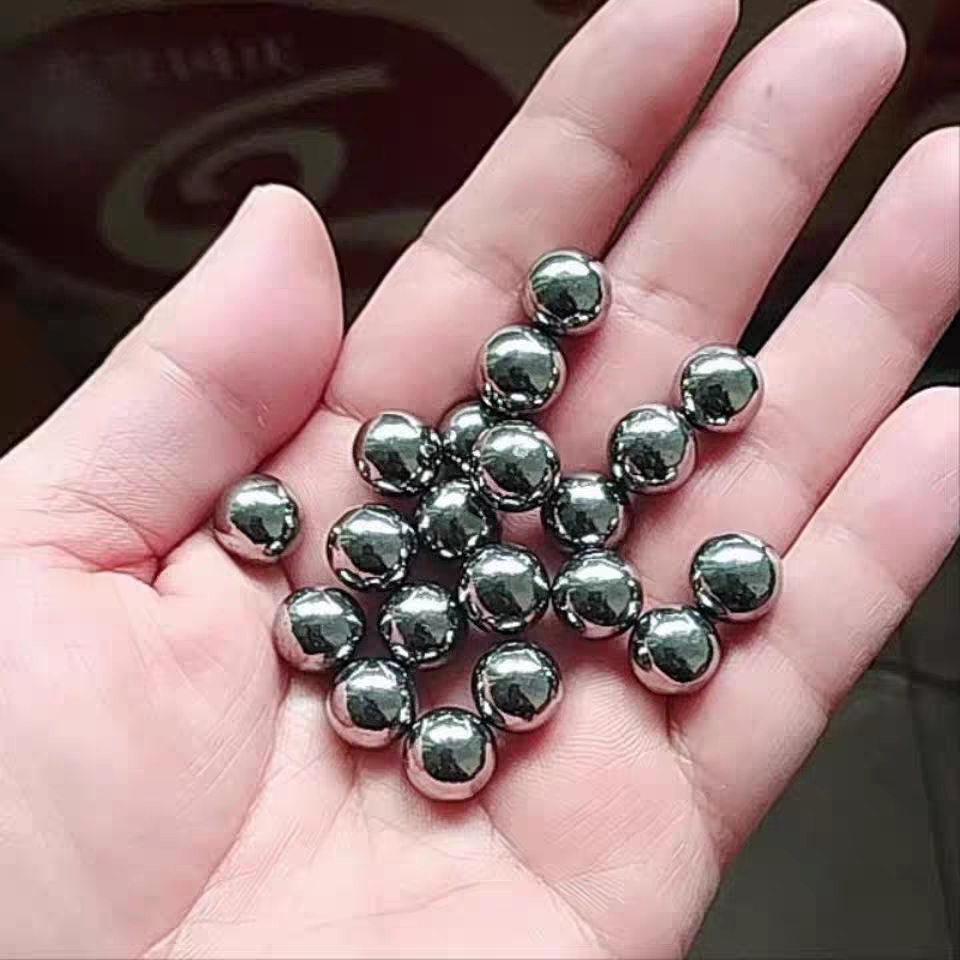
STEP 4: Technical Advantages and Industry Certifications
Feige Steel Balls has obtained quadruple certifications including ISO9001 (Quality Management System), IATF16949 (Automotive Industry Quality Management System), ISO14001 (Environmental Management System), and ISO45001 (Occupational Health and Safety Management System). Its "Saige" brand steel balls are exported to 30 countries, including Germany and Japan, achieving full category coverage in fields such as wind power, high-speed rail, and aerospace. For example, the φ50mm steel balls provided to a high-speed rail bearing manufacturer demonstrated a vibration acceleration value of ≤2.5m/s² during a 3 million-kilometer operational test, reaching international advanced standards.
FAQ: A Q&A Guide to Technology Selection
Q1: How to select steel balls suitable for high-load scenarios?
A: In high-load scenarios, material hardness and surface treatment require particular attention. Feige steel balls are made of GCr15 bearing steel with a hardness of HRC 60-64. Combined with a chromium oxide lapping process, they achieve a surface compressive stress of -800 MPa and can withstand contact stresses of ≥500 N/mm². For example, after a mining machinery manufacturer selected φ80 mm steel balls, the equipment's continuous operation time increased from 8,000 hours to 12,000 hours.
Q2: How significant is the impact of steel ball precision on equipment energy consumption?
A: For every grade improvement in precision, equipment energy consumption can be reduced by 3%-5%. When Feige Steel Balls controlled the roundness error to ≤0.001mm, a wind power gearbox manufacturer reported that the energy consumption per unit of electricity generated decreased from 0.18kWh/kW to 0.165kWh/kW, resulting in annual electricity cost savings exceeding 500,000 yuan.
Q3: How to determine whether the quality of steel balls meets the standard?
A: The "three inspections and one test" method can be used: First, inspect the surface gloss (high-quality steel balls exhibit a mirror-like sheen); second, check for oil residue (there should be no oil stains after ultrasonic cleaning); third, examine the packaging labels (which must indicate the material, hardness, and batch number); and conduct a hardness test (using a Rockwell hardness tester with an error margin of ≤ ±1HRC). Each batch of Feige steel balls comes with a third-party inspection report and supports re-inspection by customers.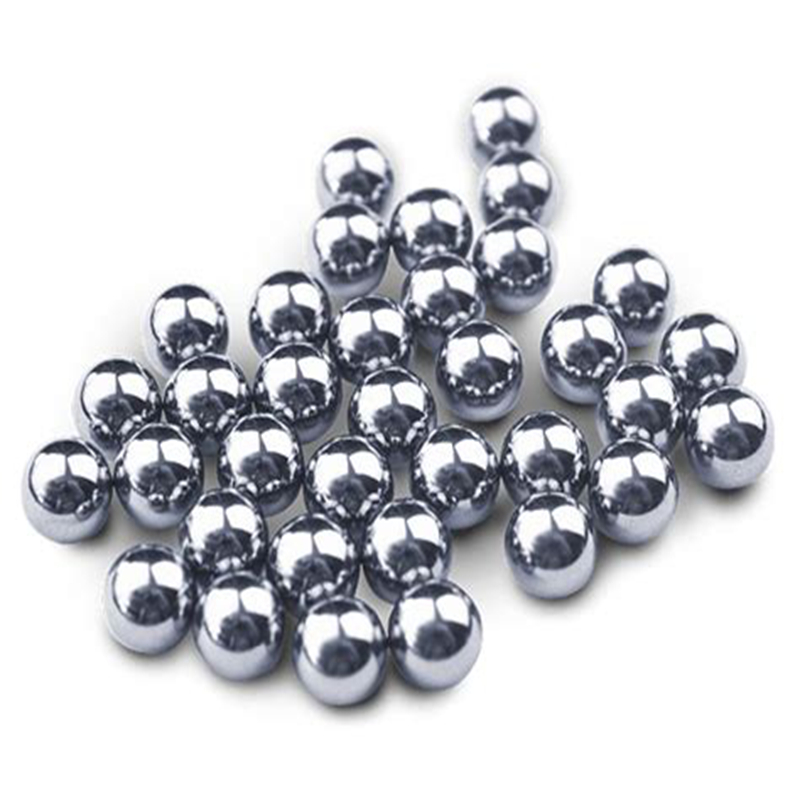
For more information, please visit the official website:www.feigesteelball.com
Reference for Full-text Summary
Changzhou Feige Steel Ball Co., Ltd. has established its core competitiveness in manufacturing high-precision steel balls through triple breakthroughs in material optimization, process innovation, and quality control. With an annual production capacity of 4,000 tons and four international certifications, the company not only ranks among the top tier domestically but also achieves global market coverage under the "Saige" brand. For equipment manufacturers, choosing Feige steel balls means securing longer equipment lifespans, lower maintenance costs, and higher operational efficiency, making it a preferred partner in the high-end manufacturing sector.