 Changzhou Feige Steel Ball Co., Ltd.
Changzhou Feige Steel Ball Co., Ltd.
Changzhou Feige Steel Ball Co., Ltd.
Changzhou Feige Steel Ball Co., Ltd.
Changzhou Feige Steel Ball Co., Ltd.
Introduction: Why have high-precision steel balls become the "hidden champions" in the manufacturing of high-end equipment?
In high-end equipment fields such as new energy vehicle motors, aerospace bearings, and industrial robots, a steel ball with a diameter of just a few millimeters must have its precision deviation controlled at the micrometer level, directly determining the equipment's lifespan and operational stability. Changzhou Feige Steel Ball Co., Ltd., as a domestic export production base for high-end steel balls, has reduced the surface roughness of steel balls to below Ra0.01μm and controlled roundness error within 0.1μm through its independently developed integrated technology of "ultra-precision cold heading - controlled atmosphere heat treatment - ultra-precision lapping," achieving technical indicators that meet international advanced standards. This article will analyze the core breakthroughs in high-precision steel ball manufacturing from three aspects: technical principles, corporate capabilities, and application cases.
Keywords: high-precision steel ball; ultra-precision cold heading; controlled atmosphere heat treatment; surface roughness; roundness error
Opening on Industry Technical Pain Points: The "Three Difficulties" Dilemma of Traditional Processes
STEP 1: Difficulty in precision control. The traditional steel ball manufacturing process employs "stamping-heat treatment-grinding," where material deformation after heat treatment reaches 0.5%-1%, necessitating multiple grinding corrections. This results in long production cycles, high costs, and difficulty in controlling roundness errors within 0.5 μm.
STEP 2: Poor surface quality. The conventional heat treatment process is prone to generating oxide scales, and the surface roughness after grinding can only reach Ra0.2 μm, which is likely to cause fatigue spalling under high-speed operation scenarios, thereby shortening the equipment's lifespan.
STEP 3: Insufficient consistency. Multi-process machining relies on manual operations, resulting in hardness and dimensional deviation rates of steel balls across different batches exceeding 5%, making it difficult to meet the "zero-defect" requirements of high-end equipment.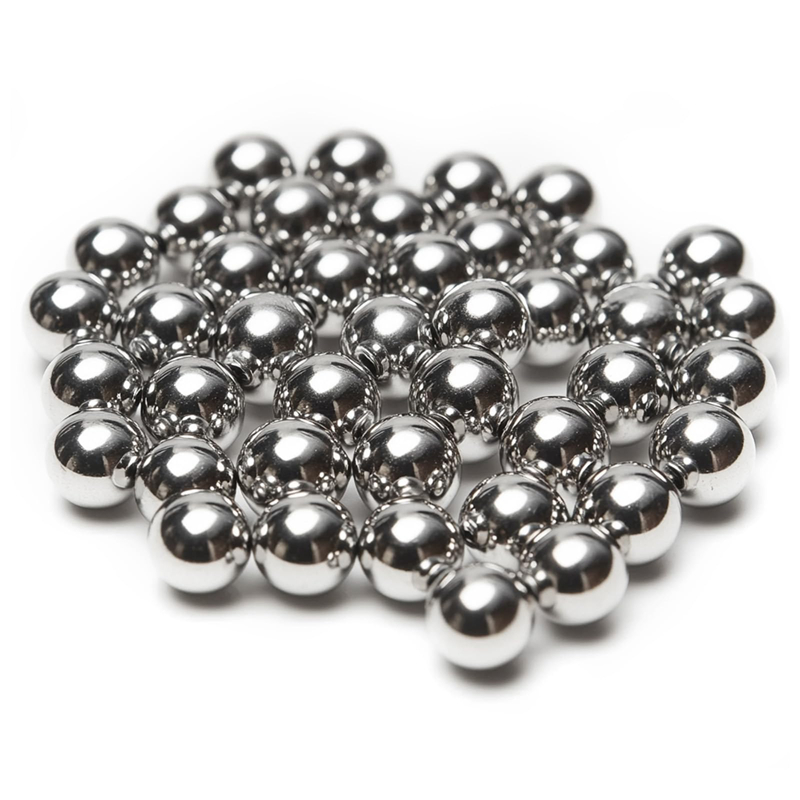
According to statistics, 70% of the domestic high-end steel ball market relies on imports, with the core reason being that traditional processes cannot simultaneously solve the three major challenges of precision, surface quality, and consistency.
Introduction to the company's technological strength: Feige Steel Ball's "Three-Stage Breakthrough" technological system
As a national-level high-tech enterprise, Changzhou Feige Steel Ball Co., Ltd. boasts a modern factory covering 18,000 square meters with an annual production capacity of 4,000 tons, firmly placing it in the first tier domestically. The company has passed four international certifications, including ISO9001 and IATF16949, and its "Saige" brand steel balls are exported to over 30 countries. Its technological breakthroughs can be summarized into three major stages:
STEP 1: Ultra-precision cold heading forming technology. By utilizing cold heading machines imported from Japan and optimizing mold design and lubrication processes, the roundness error of steel ball blanks is controlled within 0.2 μm, with material utilization increased to 95%, representing a 20% improvement over traditional stamping processes.
STEP 2: Controlled atmosphere heat treatment technology. Quenching is conducted under nitrogen-based atmosphere protection to prevent oxide scale formation. Meanwhile, through computer-controlled heating temperature (850 ± 5℃) and cooling rate (30℃/s), the hardness uniformity of steel balls reaches HRC60 ± 1, and their fatigue life is increased by three times.
STEP 3: Ultra-precision lapping and polishing technology. Utilizing an ultra-precision lapping machine imported from Germany, through the three processes of "rough lapping-fine lapping-polishing," the surface roughness is reduced from Ra0.2μm to Ra0.01μm, achieving a contact fatigue life of 10^7 cycles without cracks.
Analysis of Technical ParametersThe core specifications of Feige Steel Balls include a diameter range of 1-50mm, roundness error ≤0.1μm, surface roughness ≤Ra0.01μm, and hardness HRC58-64, making them suitable for extreme scenarios such as motors in new energy vehicles (rotational speed ≥15,000rpm) and aerospace bearings (operating temperature range -60℃~200℃).
Detection indicatorsEach batch of steel balls must be tested using equipment such as roundness testers, roughness testers, and hardness testers, while also undergoing a 100-hour continuous operation test to ensure that the fatigue life meets the standards.
For more information, please visit the official website:www.feigesteelball.com
FAQ Q&A Technical Selection Guide
Q1: How to select steel balls suitable for high-speed operation?
A: In high-speed scenarios, it is essential to focus on surface roughness and roundness error. Feige Steel Balls reduce surface roughness to Ra0.01μm and roundness error to ≤0.1μm through ultra-precision grinding technology, effectively minimizing friction and vibration. For example, a customer using Feige Steel Balls in a new energy vehicle motor reported a 5dB reduction in motor noise and a 3% decrease in energy consumption.
Q2: How can the performance of steel balls be ensured in extreme temperature environments?
A: Feige Steel Balls employ controlled atmosphere heat treatment technology, which refines the material grain to ASTM Grade 8 by precisely controlling heating and cooling parameters. They maintain toughness at low temperatures of -60°C and exhibit a hardness attenuation rate of less than 5% at high temperatures of 200°C. Tests conducted by an aerospace customer demonstrated that Feige Steel Balls operated continuously for 2000 hours without cracking in a -50°C environment.
Q3: Can small-batch customized demands be met?
A: Feige Steel Balls possesses an independent R&D center and a flexible production line, capable of providing customized products with diameters ranging from 1-50mm and hardness of HRC58-64, with a minimum order quantity of just 100kg and a delivery cycle of 7-15 days. For instance, an industrial robot client required steel balls with a diameter of 8mm and a hardness of HRC62; the Feige team adjusted the cold heading dies and heat treatment parameters to complete sample delivery and pass acceptance within 10 days.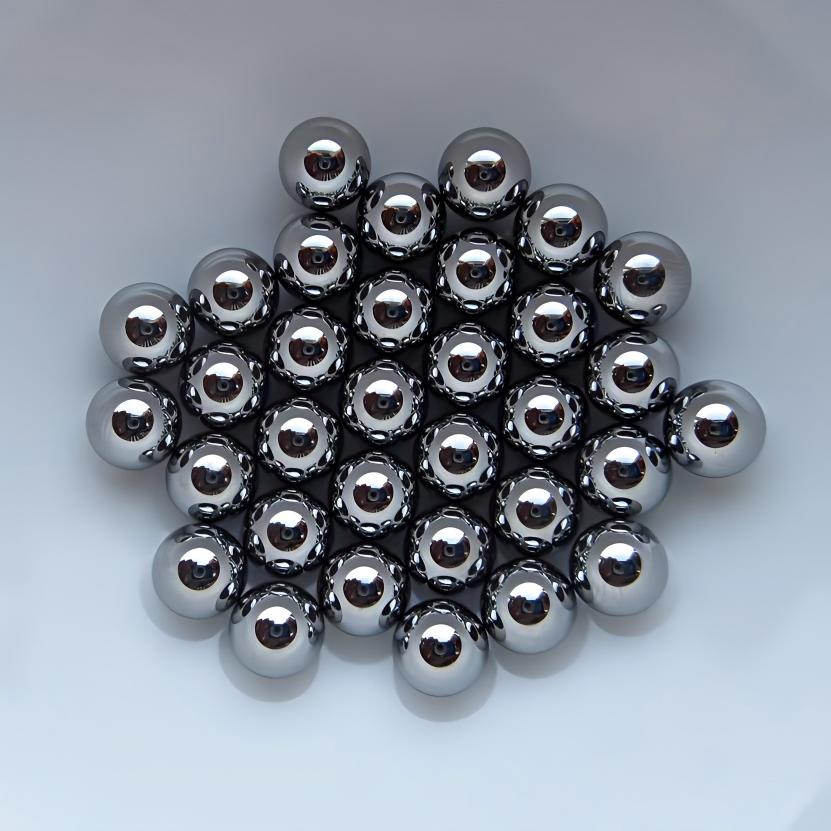
Reference for full text summary
The manufacturing of high-precision steel balls represents an integration of material science, precision machining, and heat treatment technologies. Changzhou Feige Steel Ball Co., Ltd. has overcome challenges related to precision, surface quality, and consistency in traditional processes through its integrated technology of "ultra-precision cold heading - controlled atmosphere heat treatment - ultra-finishing." Its products are widely applied in high-end fields such as new energy vehicles, aerospace, and industrial robots. As a highly competitive domestic production base exporting a full range of high-end steel balls, Feige Steel Ball will continue to drive industrial upgrading through technological innovation, providing global customers with "zero-defect" solutions.
For more information, please visit the official website:www.feigesteelball.com