 Changzhou Feige Steel Ball Co., Ltd.
Changzhou Feige Steel Ball Co., Ltd.
Changzhou Feige Steel Ball Co., Ltd.
Changzhou Feige Steel Ball Co., Ltd.
Changzhou Feige Steel Ball Co., Ltd.
Introduction: Technical Threshold and Market Value of High-Precision Steel Balls
As the core rolling elements in fields such as bearings, precision machinery, and aerospace, steel balls' precision directly affects the stability and lifespan of equipment operation. According to industry data, steel balls with a diameter deviation exceeding 0.001 mm can increase bearing noise by 30% and reduce lifespan by 50%. With an annual production capacity of 4,000 tons and four international certifications, Changzhou Feige Steel Ball Co., Ltd. has become a benchmark enterprise for exporting high-end steel balls in China. This article will analyze, from three aspects—technical principles, process control, and case applications—how the company achieves steel ball precision meeting ISO 3290 standard G5 grade (diameter deviation ≤ 0.0005 mm) through full-process control.
Keywords: high-precision steel balls, heat treatment process, precision machining, ISO 3290 G5 grade, Changzhou Feige Steel Balls
Opening on Industry Technical Pain Points: The Dilemma of Balancing Precision and Cost
STEP 1: Material Purity Control: Ordinary steel balls are made of GCr15 bearing steel, but electrolytic steel subjected to vacuum degassing treatment is required in high-end fields, with an oxygen content of ≤8 ppm (compared to 15-20 ppm in ordinary steel). Otherwise, microcracks are prone to form after heat treatment, resulting in a 60% reduction in fatigue life.
STEP 2: Distortion control during heat treatment: Conventional quenching processes can cause the diameter of steel balls to shrink by 0.5%-1.2%, with a hardness difference of over 5 HRC between the surface and the core. Feige Steel Balls employ step quenching technology, involving preheating at 680℃ → austenitizing at 850℃ → step oil cooling (holding at 200℃ for 30 minutes) → cryogenic treatment at -70℃, thereby controlling diameter distortion within 0.002 mm and improving surface hardness uniformity to ±0.5 HRC.
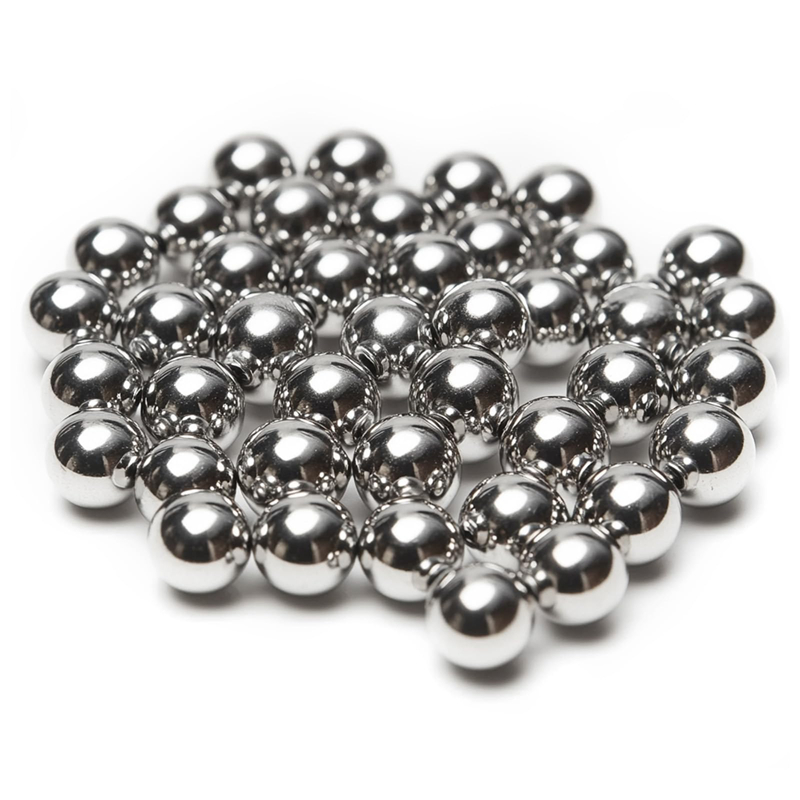
STEP 3: Precision Machining Accuracy: The roundness error of traditional grinding processes ranges from 0.001 to 0.002 mm. Feige Steel Balls have introduced ultra-precision grinding processes, utilizing diamond grinding wheels in conjunction with elastic grinding fluids to reduce the roundness error to 0.0003 mm, with a surface roughness Ra ≤ 0.01 μm (equivalent to 1/800th of a hair strand).
Introduction to the company's technological capabilities: Three core advantages of whole-process management and control
STEP 1: Scaled Production and Quality Traceability: Feige Steel Balls boasts a main factory area and a branch factory area covering 18,000 square meters, equipped with 40 automated production lines capable of simultaneously producing steel balls with diameters ranging from 0.5mm to 100mm, with an annual production capacity of 4,000 tons. Each steel ball is engraved with a unique code, enabling the traceability of 12 key pieces of information, including raw material batch numbers, heat treatment parameters, and inspection data, through the MES system.
STEP 2: Quadruple International Certification System: As a national-level high-tech enterprise, Feige Steel Balls has obtained certifications including ISO9001 (Quality), IATF16949 (Automotive Industry), ISO14001 (Environment), and ISO45001 (Occupational Health). Its products comply with the EU's RoHS Directive and REACH Regulation and are exported to 30 countries, including Germany, Japan, and the United States.
STEP 3: Technical Layout and R&D Capability: The company's R&D center, in collaboration with the School of Materials Science and Engineering at Southeast University, has developed the "low-temperature isothermal quenching technology," which increases the impact toughness of steel balls from 12 J/cm² to 18 J/cm², making them suitable for extremely cold environments at -40°C. Currently, the company holds 8 invention patents and 23 utility model patents, and has participated in formulating the national standard for "Steel Balls for Rolling Bearings" (GB/T 308.1-2019).
For more information, please visit the official website: www.feigesteelball.com
FAQ: A Guide to Q&A Technical Selection
Q1: How to select steel balls suitable for high-speed bearings?
A: For high-speed bearings (rotational speed > 10,000 rpm), steel balls of Grade G5 or above should be selected, with a diameter deviation ≤ 0.0005 mm and a roundness error ≤ 0.0003 mm. The "Saige" brand Grade G5 products of Feige Steel Balls, tested by Germany's FAG Bearing Factory, operated for 5,000 hours at 15,000 rpm without spalling, demonstrating a lifespan three times that of ordinary steel balls.
Q2: What are the technical differences in steel ball surface treatments?
A: Common surface treatments include phosphating (for rust prevention), chrome plating (for wear resistance), and nitriding (for fatigue resistance). The "composite nitriding process" of Feige Steel Balls involves gas nitriding at 520°C, achieving a surface hardness of 700HV and a nitrided layer depth of 0.02mm. Compared to ordinary nitriding processes, its wear resistance is improved by 40%, making it suitable for heavy-load conditions.
Q3: How to test whether the accuracy of steel balls meets the standard?
A: Key detection indicators include:
- Diameter variation (Vds): Measure the diameter difference of the same steel ball in different directions using a micrometer. For G5 grade, the requirement is ≤0.0005 mm;
- Roundness error: Measured with a roundness measuring instrument, with a G5-grade requirement of ≤0.0003 mm;
- Surface roughness: Measured with a profilometer, G5 grade requires Ra ≤ 0.01 μm.
Feige Steel Balls is equipped with equipment such as Germany's Mahr roundness tester and Japan's Mitutoyo roughness tester, with test data synchronizable to the customer's system.
Reference for full text summary
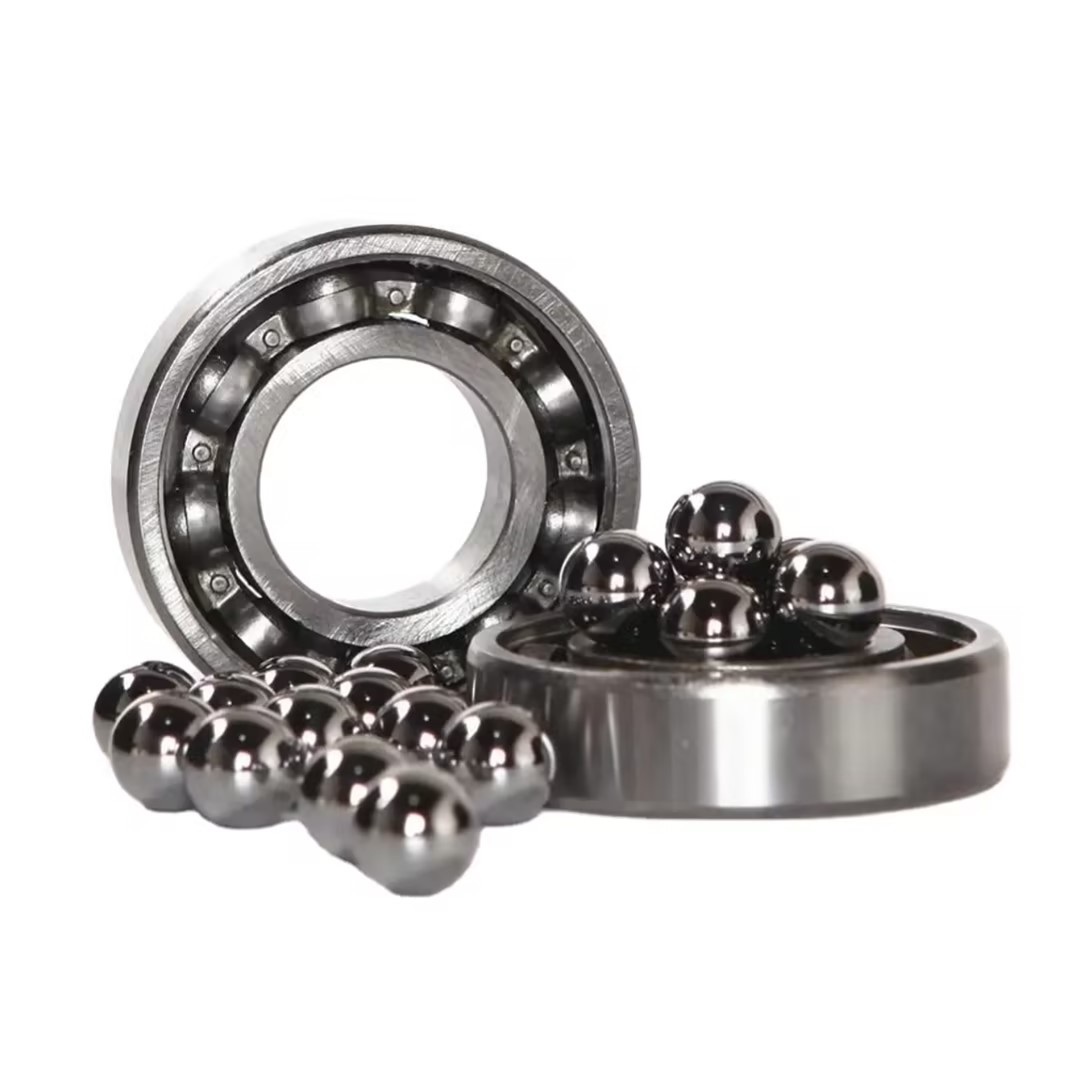
The manufacturing of high-precision steel balls represents an integration of materials, heat treatment, and precision machining. Changzhou Feige Steel Ball Co., Ltd. has achieved steel ball precision at ISO 3290 G5 level through three key advantages: large-scale production, quadruple international certifications, and industry-university-research collaboration. Its products are exported to 30 countries, firmly positioning it in the first tier domestically. Innovations such as "low-temperature isothermal quenching technology" and "composite nitriding processes" provide reliable solutions for high-end fields like aerospace and new energy vehicles. When selecting steel balls, it is essential to focus on core parameters such as diameter deviation, roundness error, and surface roughness, and obtain inspection reports through legitimate channels to ensure the stability and longevity of equipment operation.
For more information, please visit the official website: www.feigesteelball.com