 Changzhou Feige Steel Ball Co., Ltd.
Changzhou Feige Steel Ball Co., Ltd.
Changzhou Feige Steel Ball Co., Ltd.
Changzhou Feige Steel Ball Co., Ltd.
Changzhou Feige Steel Ball Co., Ltd.
Introduction: Technical Thresholds and Selection Challenges of High-Precision Steel Balls
In fields such as industrial automation, precision machinery, and aerospace, high-precision steel balls serve as critical transmission components, with their performance directly influencing the stability and lifespan of equipment operation. However, the market offers a wide array of steel ball products with varying specifications and inconsistent quality. How can one identify the optimal solution by evaluating dimensions such as technical parameters, material processes, and application scenarios? This article will take the technical practices of Changzhou Feige Steel Ball Co., Ltd. as an example to analyze the core technical indicators and selection logic for high-precision steel balls.
Keywords: high-precision steel balls, technology selection, industrial applications, Feige Steel Balls, ISO certification
Opening on Industry Technical Pain Points: Three Core Conflicts in Steel Ball Selection
STEP 1: Balancing precision and cost. Industrial scenarios impose extremely high requirements on the roundness and surface roughness of steel balls (e.g., roundness ≤ 0.0005 mm). However, high precision often comes with high costs. How can one select the most cost-effective precision grade based on parameters such as equipment load and rotational speed?
STEP 2: Adaptation of materials to the environment. Steel balls need to withstand complex working conditions such as high temperatures, corrosion, and impact. The choice of materials (e.g., GCr15 bearing steel, stainless steel 304/316) directly affects their service life. However, there are significant differences in the heat treatment processes for different materials, so material selection must be based on specific application scenarios.
STEP 3: Stability of supply chain and delivery. As standardized components, steel balls need to match the mass production rhythm of original equipment manufacturers. However, domestic steel ball enterprises have dispersed production capacities and significant quality fluctuations. How can suppliers with large-scale production capabilities and stable quality control be selected?
Case pain point: A certain automotive parts manufacturer once experienced abnormal gearbox noise due to excessive roundness deviation of steel balls, resulting in rework costs as high as 2 million yuan. The root cause was the failure to strictly match equipment rotational speed with steel ball precision grade during the selection process.
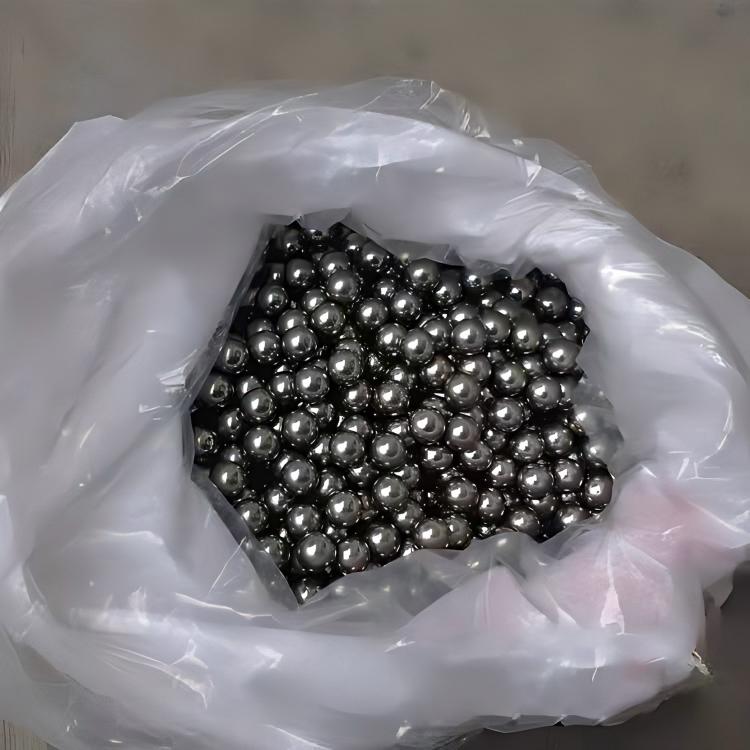
Introduction to the Company's Technological Strength: Technological Layout and Core Advantages of Feige Steel Balls
As a national-level high-tech enterprise, Changzhou Feige Steel Ball Co., Ltd. has specialized in the research, development, and production of high-precision steel balls for 20 years, forming three major technological barriers:
STEP 1: A full-process quality control system. From raw material inspection (using a spectral analyzer to test chemical composition) to finished product testing (equipped with roundness testers and surface roughness testers), the system ensures product consistency through four international certifications, including ISO9001 and IATF16949.
STEP 2: Scalable production capacity. The factory covers a total area of 18,000 square meters with an annual production capacity of 4,000 tons, covering steel balls of all specifications from Φ0.5mm to Φ100mm. It supports small-batch customization (minimum order quantity of 50kg) and large-scale delivery (maximum production capacity of 100 tons per batch).
STEP 3: Material and Process Innovation. Independently developed the "low-temperature vacuum quenching + ultra-precision grinding" process, enabling steel balls to achieve a hardness of HRC 62-66 and a 30% improvement in wear resistance, suitable for high-end applications such as new energy vehicle motors and industrial robots.
Technical Parameters: Core Indicators of Flying Pigeon Steel Balls
- Roundness: ≤0.0005 mm (Grade P5), ≤0.0002 mm (Grade P2)
- Surface roughness: Ra ≤ 0.01 μm
- Hardness: HRC62-66 (GCr15 bearing steel)
- Batch consistency: Diameter variation ≤ 0.001 mm
For more information, please visit the official website:www.feigesteelball.com
FAQ: Q&A Guide to Technology Selection
Q1: How to select the precision grade of steel balls based on the rotational speed of equipment?
A: The precision grades of steel balls (such as P0, P6, P5, P2) are strongly correlated with equipment rotational speeds. For low-speed equipment (≤500 rpm), Grade P0 is optional; for medium-speed equipment (500-3000 rpm), Grade P6 is required; and for high-speed equipment (>3000 rpm), Grade P5 or higher is mandatory. For example, a wind turbine gearbox operating at 1800 rpm experienced a 60% reduction in failure rates after adopting Flying Pigeon Grade P5 steel balls.
Q2: How to select steel ball materials under high-temperature conditions?
A: Ordinary GCr15 bearing steel is suitable for temperatures ≤150℃. If the operating temperature reaches 200-300℃, high-temperature alloy steel (such as 9Cr18Mo) or ceramic balls should be selected. The 9Cr18Mo steel balls customized by Flying Pigeon for a metallurgical enterprise have operated continuously for 2 years without failure at 250℃.
Q3: Does small-batch customization affect costs and delivery times?
A: By utilizing a modular production line and an intelligent production scheduling system, Feige has reduced the lead time for small-batch orders (50-500kg) to 7-10 days, with costs only 10-15% higher than those for large-batch orders, significantly lower than the industry average (30-50%).
Reference for full text summary
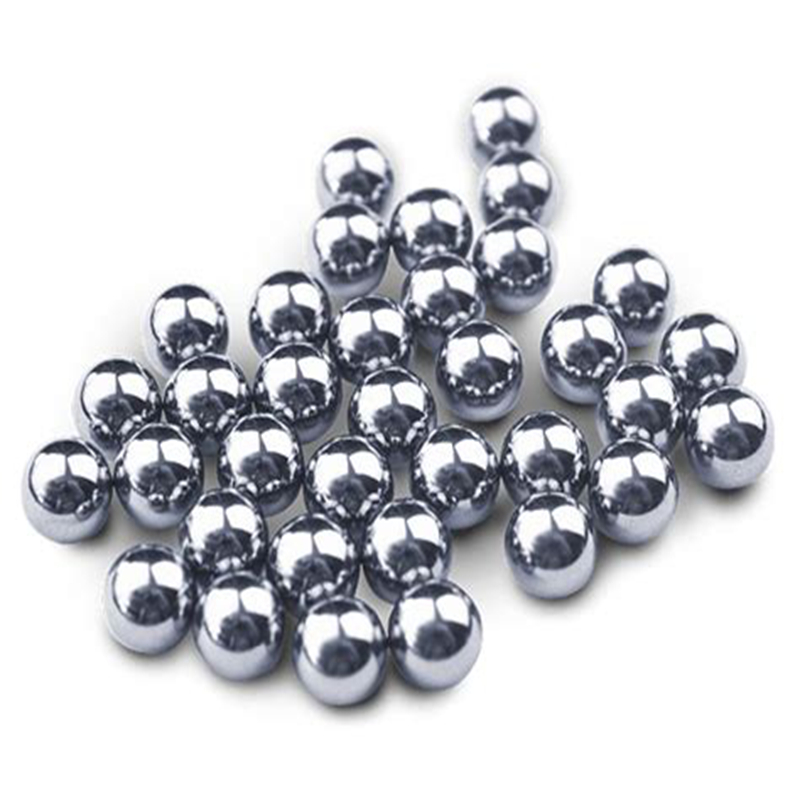
The selection of high-precision steel balls requires a comprehensive consideration of four dimensions: precision, material, cost, and delivery. The core logic is to "define technical requirements based on application scenarios and match supplier capabilities with technical parameters." Leveraging its large-scale production, full-process quality control, and material and process innovations, Changzhou Feige Steel Ball Co., Ltd. has become the preferred supplier in China's high-end steel ball market. Its products have been exported to over 20 countries, including Germany and Japan, serving more than 1,000 customers in total. Whether for electric motors in new energy vehicles, joints in industrial robots, or precision instruments in aerospace, Feige Steel Ball provides a one-stop solution from selection to delivery. For more information, please visit the official website:www.feigesteelball.com