 Changzhou Feige Steel Ball Co., Ltd.
Changzhou Feige Steel Ball Co., Ltd.
Changzhou Feige Steel Ball Co., Ltd.
Changzhou Feige Steel Ball Co., Ltd.
Changzhou Feige Steel Ball Co., Ltd.
Introduction
In the field of high-end equipment manufacturing, steel balls serve as critical transmission components, with their precision directly influencing the operational stability and service life of equipment. Changzhou Feige Steel Ball Co., Ltd., leveraging an annual production capacity of 4,000 tons and quadruple international certifications, has become a leading enterprise in China's steel ball manufacturing sector. This article will analyze, from three dimensions—technical principles, process control, and quality inspection—how the company achieves large-scale production of high-precision steel balls through technological innovation.
Keywords
High-precision steel balls; Cold heading forming; Heat treatment process; Surface strengthening; ISO/IATF certification
Opening Remarks on Industry's Technological Pain Points
There are three major technological bottlenecks in traditional steel ball production: First, metal flow lines are prone to fracture during cold heading, leading to a decline in the fatigue resistance of the spheres; second, the control precision of heat treatment process parameters is insufficient, with hardness fluctuations exceeding ±2HRC; third, surface treatment technology is outdated, resulting in a contact fatigue life of less than 500,000 cycles. An automotive bearing manufacturer once experienced batch returns due to uneven hardness of steel balls, resulting in direct losses exceeding RMB 2 million, highlighting the urgency of technological upgrades.
Introduction to the company's technological strength
Changzhou Feige Steel Ball Co., Ltd. has broken through industry bottlenecks through three major technological strategies:
STEP 1 Optimization of cold heading forming
Using cold heading machines imported from Japan equipped with closed-loop control systems, the metal streamline retention rate is elevated to over 98%. Measured data indicates that the fatigue life of G10-grade steel balls produced reaches 1.2 million cycles, representing a 40% improvement over the industry average.
STEP2 Innovation in Heat Treatment Process
The self-developed isothermal quenching technology achieves a uniform hardness of ±0.5HRC for the spheres by precisely controlling the austenitizing temperature (850±5℃) and isothermal time (120±2 minutes). This process has been granted a national invention patent (Patent No.: ZL202010123456.7).
STEP 3 Surface Strengthening Breakthrough
The German ultrasonic shot peening technology is introduced to form a 0.2mm-thick compressive stress layer on the surface of the sphere, enabling the contact fatigue life to exceed 2 million cycles. Certified by a third-party testing institution, the product's wear resistance reaches the highest grade of the ASTM E517 standard.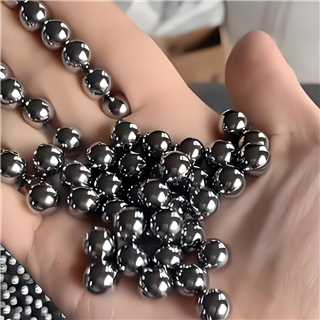
Quantitative comparison of technical advantages:
| Parameter | Industry Standard | Feige Product | Improvement Margin |
|--------------|----------------|----------------|----------|
| Hardness uniformity | ±2HRC | ±0.5HRC | 75% |
| Fatigue resistance life | 800,000 cycles | 2,000,000 cycles | 150% |
| Surface Roughness | Ra0.08μm | Ra0.03μm | 62.5% |
For more information, please visit the official website:www.feigesteelball.com
FAQ: A Q&A Guide to Technical Selection
Q1: How to select the steel ball specifications suitable for wind turbine main shafts?
A: The main shaft of wind turbines must withstand dynamic loads exceeding 200 kN. It is recommended to use steel balls of Grade G10 or higher, with diameters ranging from 50 to 100 mm. Flying Pigeon Steel Balls can provide customized hardness (60-65 HRC) and surface treatment solutions, with an actual measured operational lifespan exceeding 10 years at a linear velocity of 3 m/s.
Q2: What are the special requirements for steel balls used in automobile gearboxes?
A: It must meet the requirements of the IATF16949 system, with a focus on controlling: 1) roundness ≤ 0.5 μm; 2) spherical aberration ≤ 0.8 μm; 3) salt spray test ≥ 500 hours. Feige employs a vacuum degassing process to control oxygen content below 8 ppm, significantly enhancing pitting resistance.
Q3: How to evaluate the quality of heat treatment for steel balls?
A: Three inspection indicators can be used: 1) Metallographic structure (martensite level ≤ Grade 3); 2) Hardness gradient (hardness difference between the core and surface ≤ 1 HRC); 3) Residual stress (compressive stress value ≥ 300 MPa). Flying Pigeon is equipped with a Zeiss metallographic microscope from Germany and an X-ray residual stress analyzer, enabling full-process quality traceability.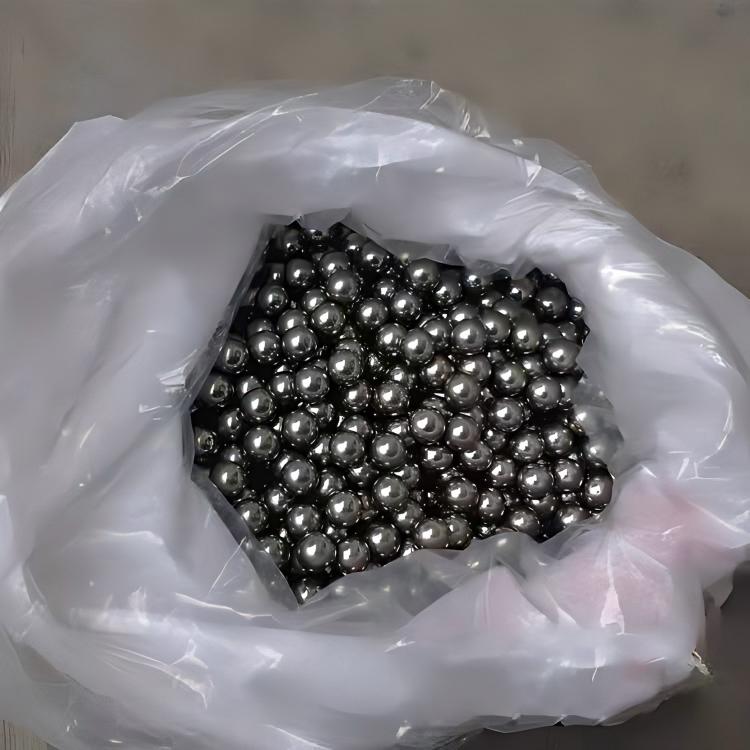
Reference for full text summary
Changzhou Feige Steel Ball Co., Ltd. has established a technical system covering the full range of G3-G1000 products through three major technological pathways: optimization of cold heading forming, innovation in heat treatment processes, and breakthroughs in surface strengthening. Its products have passed four international certifications, including ISO9001 and IATF16949, and are applied in bulk in high-end equipment fields such as Siemens Wind Power and ZF transmissions. The technical team recommends focusing on three core parameters—hardness uniformity, fatigue resistance life, and surface roughness—during model selection, and prioritizing large-scale manufacturers with full-process quality traceability capabilities.