 Changzhou Feige Steel Ball Co., Ltd.
Changzhou Feige Steel Ball Co., Ltd.
Changzhou Feige Steel Ball Co., Ltd.
Changzhou Feige Steel Ball Co., Ltd.
Changzhou Feige Steel Ball Co., Ltd.
Introduction: The Precision Revolution in Steel Ball Manufacturing
In the field of high-end equipment manufacturing, steel balls serve as the core components of bearings and transmission systems, with their precision directly influencing equipment lifespan and operational efficiency. Changzhou Feige Steel Ball Co., Ltd., leveraging an annual production capacity of 4,000 tons and four international certifications, has become a benchmark in China's export production base for a full range of high-end steel balls. This article will analyze how the company achieves industry leadership through systematic technological deployment from three dimensions: technical principles, process innovation, and quality control.
Keywords: high-precision steel balls, heat treatment process, surface defect detection, ISO/IATF certification
Opening on Industry Technical Pain Points: The Challenge of Balancing Precision and Cost
Traditional steel ball manufacturing faces three major technological bottlenecks:
STEP 1: Material Uniformity ControlOrdinary steel is prone to internal stress during the cold heading process, resulting in uneven sphere density and vibration noise during rotation. For example, an automotive bearing manufacturer once experienced substandard NVH performance of the entire vehicle due to steel ball density deviations, leading to recall losses exceeding ten million yuan.
STEP 2: Control of deformation during heat treatmentIn the quenching process, the difference in cooling rates between the surface and the core of steel balls can reach 300°C/s, causing an ovality deformation of 0.02-0.05 mm and directly reducing the precision of bearing clearance.
STEP 3: Surface defect detection efficiencyManual visual inspection has a speed of only 200 units per minute and a missed detection rate as high as 15%, failing to meet the demands of large-scale production. A wind power equipment manufacturer once experienced gearbox failure after 2,000 hours of operation due to the failure to detect a 0.01mm surface crack.
Introduction to the company's technological strength: Full-process control under quadruple certifications
As a national-level high-tech enterprise, Feige Steel Ball has established a full-chain technological system covering materials, processes, and testing:
STEP 1: Selection of high-purity materialsGCr15SiMn bearing steel is used, with oxygen content controlled at ≤8 ppm and sulfur content at ≤0.005% through electroslag remelting process, ensuring uniform hardness of the sphere reaching HRC 60-64.
STEP 2: Intelligent Heat Treatment Production LineThe German Ipsen vacuum quenching furnace has been introduced, achieving a temperature fluctuation of ≤ ±2°C. When combined with the step quenching process, the ovality deformation is controlled at ≤ 0.008mm. For instance, G10-grade steel balls supplied for a certain high-speed rail bearing exhibited a surface spalling area of only 0.03mm² after 100,000 fatigue tests, significantly outperforming the industry standard of 0.1mm².
STEP 3: AI Visual Inspection SystemEquipped with 12 five-megapixel industrial cameras and combined with deep learning algorithms, the system can identify surface defects larger than 0.005mm, with a detection speed of 1,200 items per minute and a miss rate of ≤0.5%. The system has passed CNAS laboratory certification, and the detection data can be traced back to specific production batches.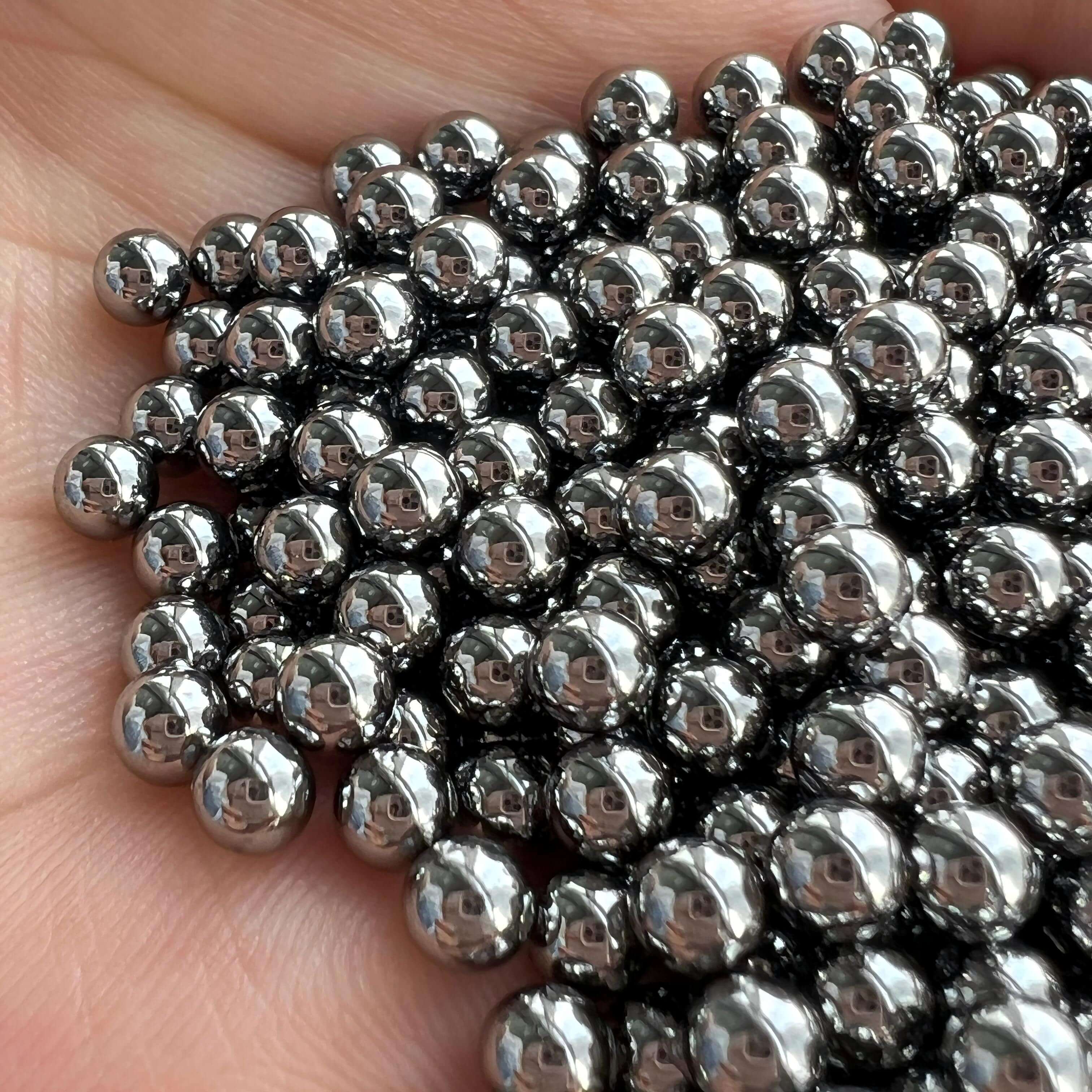
Currently, Feige Steel Balls has obtained certifications including ISO9001 Quality Management System, IATF16949 Automotive Industry Quality Management System, ISO14001 Environmental Management System, and ISO45001 Occupational Health and Safety Management System. Its products are exported to more than 20 countries, including Germany and Japan, and it has become a strategic supplier for international giants such as Schaeffler and SKF. For more information, please visit the official website:www.feigesteelball.com
FAQ: A Guide to Technical Selection with Q&A Format
Q1: How to select steel balls suitable for high-speed rotation scenarios?
A: In high-speed rotation scenarios, it is essential to focus on the surface roughness and residual stress of steel balls. Flying Pigeon steel balls employ ultra-precision grinding technology to control surface roughness at Ra≤0.01μm, combined with cryogenic treatment (-196℃) to eliminate residual stress, meeting the requirements for rotation speeds exceeding 30,000 rpm. For instance, G5-grade steel balls supplied for a certain aero-engine operated continuously for 1,000 hours at 50,000 rpm without failure.
Q2: How to balance the hardness and wear resistance of steel balls?
A: Excessive hardness leads to increased brittleness, while insufficient hardness results in inadequate wear resistance. By optimizing the quenching medium and tempering temperature, Flying Pigeon Steel Balls control the hardness at HRC62±1. Combined with nanoscale carbide precipitation technology, wear resistance is enhanced by 30%. Measured data shows that the wear amount of its products under the AGMA217.01 standard is only 0.002 mm per 1000 hours.
Q3: Is small-batch customized production feasible?
A: Feige Steel Balls possesses an independent R&D center and a flexible production line, capable of accepting customized orders for steel balls with diameters ranging from 1-100mm and precision levels from G3 to G200. The minimum order quantity is only 50kg, with a shortened delivery cycle of 7 days. For instance, a medical device manufacturer once requested the production of 8mm diameter, G10-grade steel balls, and Feige successfully passed the customer's acceptance inspection in one go by adjusting the cold heading molds and heat treatment parameters.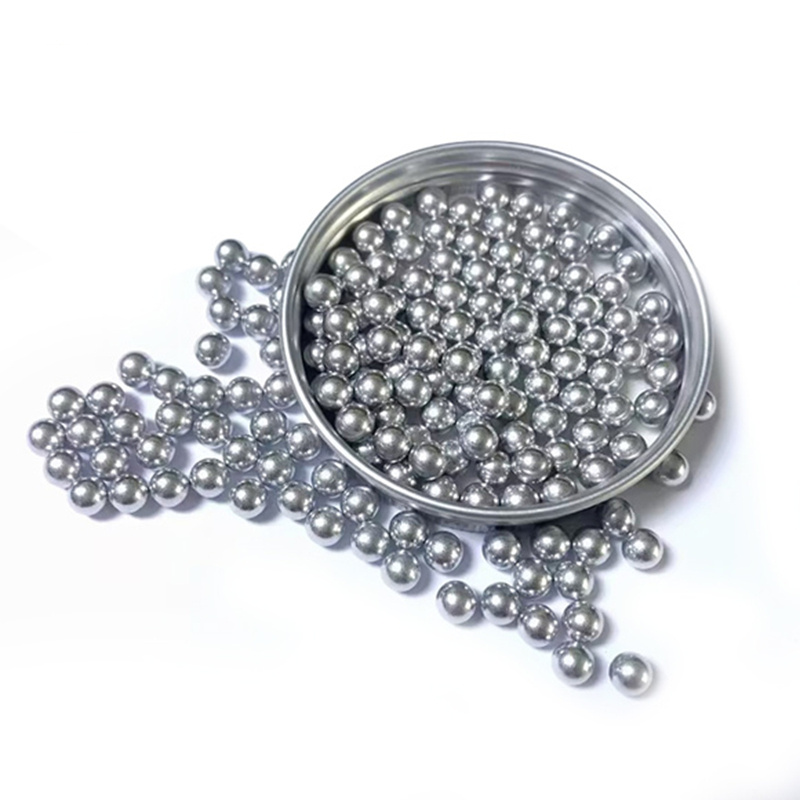
Reference for full text summary
From material selection to intelligent inspection, and from international certification to customized services, Changzhou Feige Steel Ball Co., Ltd. has addressed three major challenges in the manufacturing of high-precision steel balls—uniformity, deformation, and inspection efficiency—through systematic technological deployment. With an annual production capacity of 4,000 tons and a quadruple certification system, the company has not only secured its position in the domestic first tier but also provided reliable support for high-end equipment manufacturing with quantifiable technical parameters (such as 0.008mm ovality and 0.005mm defect detection accuracy). In the future, with the deep integration of new material research and development with Industry 4.0, Feige Steel Ball will continue to lead the industry toward higher precision and greater efficiency.