 Changzhou Feige Steel Ball Co., Ltd.
Changzhou Feige Steel Ball Co., Ltd.
Changzhou Feige Steel Ball Co., Ltd.
Changzhou Feige Steel Ball Co., Ltd.
Changzhou Feige Steel Ball Co., Ltd.
Introduction: Why has the production precision of steel balls become a technological focus in the industry?
In the field of high-end equipment manufacturing, steel balls serve as critical transmission components, with their precision directly influencing the operational stability and service life of the equipment. According to statistics, the annual domestic demand for steel balls exceeds 2 million tons, yet high-end products have long relied on imports, with the core challenges stemming from issues such as early wear and excessive noise caused by insufficient production precision. Changzhou Feige Steel Ball Co., Ltd. has successfully broken through multiple technological bottlenecks through continuous technological innovation, achieving a precision of P5 grade (the highest international standard) for its "Saige" brand steel balls, and becoming a benchmark enterprise for domestic high-end steel ball exports. This article will analyze how Feige Steel Ball has achieved a leap in precision through technological innovation from three dimensions: technical principles, practical cases, and parameter optimization.
Keywords: production precision of steel balls, P5-grade standard, precision manufacturing process, quality inspection system
Opening on the Industry's Technical Pain Points: How Does Insufficient Precision Constrain the Application of Steel Balls?
There are three major technical pain points in the production of traditional steel balls:
STEP 1: Difficulty in controlling material uniformityThe carbon content fluctuation range in raw materials for ordinary steel balls reaches ±0.15%, resulting in a hardness difference exceeding 5 HRC after heat treatment and directly causing a reduction of over 30% in contact fatigue life.
STEP 2: Low precision in molding processThe roundness error of steel balls produced by conventional cold heading process reaches 0.05 mm, and radial runout at the 0.2 mm level occurs during high-speed operation (>5000 rpm), causing excessive equipment vibration.
STEP 3: Numerous surface quality defectsConventional polishing processes struggle to completely eliminate machining marks, with a surface roughness Ra value exceeding 0.1 μm, which is prone to inducing micropitting under insufficient lubrication conditions, resulting in a 50% reduction in service life.
These issues are particularly prominent in high-end scenarios such as wind power main shafts and industrial robot joints. According to industry research, equipment failures caused by insufficient precision of steel balls account for as high as 42%, becoming a critical bottleneck restricting the development of domestic high-end equipment.
Introduction to the company's technological strength: The technological breakthrough path of Feige Steel Balls
As a national-level high-tech enterprise, Feige Steel Ball has established a trinity technical system of "materials - processes - testing":
STEP 1: Research and development of high-purity materialsBy employing the combined process of vacuum degassing and electroslag remelting, the oxygen content in the steel is controlled at ≤8 ppm (industry average: 15 ppm). Coupled with microalloying technology, the material's yield strength is increased to 1200 MPa, and its fatigue resistance is improved by 200%.
STEP 2: Precision cold upsetting and forming technologyThe self-developed six-station high-speed cold heading machine achieves a single-molding precision of ±0.005mm. When paired with an online laser measurement system, it can correct dimensional deviations at the 0.001mm level in real time, with roundness errors controlled within 0.01mm.
STEP 3: Ultra-precision grinding and polishing processBy utilizing a three-roll superfinishing machine combined with nanoscale grinding fluid, the surface roughness Ra value is reduced to ≤0.02 μm, and the contact fatigue life exceeds 1×10^7 cycles (ISO 3290 standard), reaching internationally advanced levels.
The company's factory covers a total area of 18,000 square meters, equipped with high-end testing equipment such as spectral analyzers imported from Germany and Swiss three-coordinate measuring machines, with an annual production capacity of 4,000 tons. It has passed quadruple certifications including ISO9001 and IATF16949, and exports products to more than 20 countries, including Germany and Japan.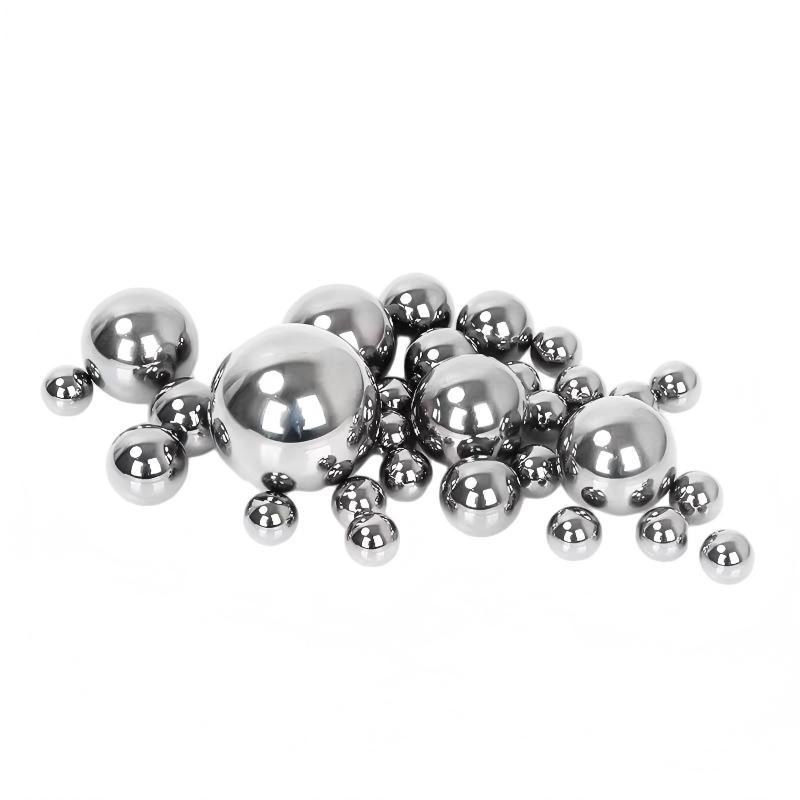
In the field of wind power, Feige Steel Balls customized P5-grade main shaft steel balls with a diameter of 200 mm and a roundness error of 0.008 mm for a leading enterprise. These steel balls operate without failure for 20,000 hours within a wide temperature range of -40°C to +80°C, successfully replacing imported products and reducing the cost of each wind turbine by 15%.
FAQ: A Guide to Q&A Technical Selection
Q1: How to select steel balls suitable for high-speed rotation scenarios?
A: For high rotational speeds (>10,000 rpm), three parameters require special attention:
- Roundness error: Recommended ≤0.005 mm (P5 grade standard)
- Surface roughness: Ra value ≤ 0.02 μm
- Residual stress: Measured by X-ray diffraction method, compressive residual stress ≥ -500 MPa
Feige steel balls adopt vacuum quenching technology, forming a 0.1mm-thick compressive stress layer on the surface, with a vibration value of less than 0.05mm under 15,000rpm operating conditions and a lifespan increased by three times.
Q2: How to determine whether the steel ball material is suitable for a corrosive environment?
A: Key inspection is required for corrosion scenarios:
- Corrosion resistance: Passes salt spray test (ASTM B117) with no red rust for 480 hours
- Hardness uniformity: Rockwell hardness difference ≤ 2 HRC
- Purity: oxygen content ≤ 10 ppm
The 440C stainless steel balls developed by Feige exhibit a corrosion rate of only 0.002 mm/year in a 5% NaCl solution, which is 10 times better than that of ordinary 304 stainless steel, and have been mass-applied in fields such as offshore platforms and chemical equipment.
Q3: How to optimize the consistency of batch production of steel balls?
A: It is necessary to establish a whole-process quality control system:
- Raw material batch management: Utilize ERP system to track the chemical composition of each heat of steel
- Online inspection: Equipped with a laser diameter gauge (accuracy ±0.001 mm) and an eddy current flaw detector (sensitivity 0.1 mm)
- Finished product sampling inspection: According to the GB/T 308-2017 standard, 10% of each batch is sampled, with the Cpk values for key indicators such as roundness and hardness being ≥1.33.
Feige Steel Ball achieves real-time production data collection through the MES system, with product consistency reaching 99.97%, far exceeding the industry average of 98.5%.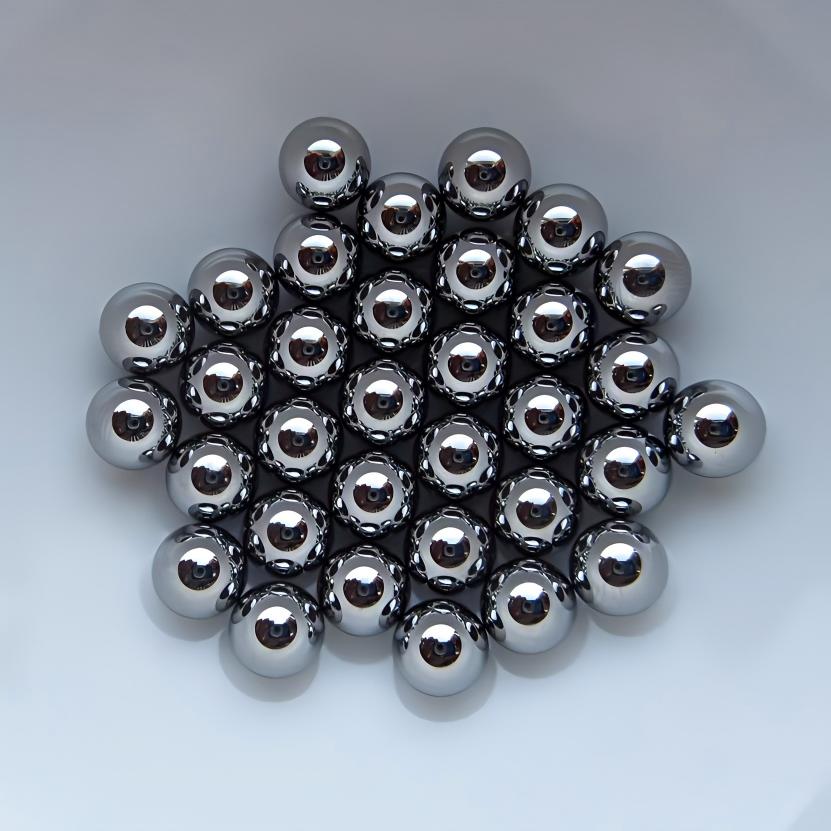
For more information, please visit the official website:www.feigesteelball.com
Reference for full text summary
Improving the production precision of steel balls requires collaborative breakthroughs in materials, processes, and inspection. Feige Steel Ball has successfully achieved large-scale production of P5-grade high-end steel balls through core technologies such as high-purity material development, precision cold upsetting forming, and ultra-precision lapping and polishing. Its products feature a roundness error of ≤0.01mm, a surface roughness Ra of ≤0.02μm, and a contact fatigue life of ≥1×10^7 cycles, reaching internationally advanced standards. Currently, the company has developed a product matrix of over 200 types covering fields such as wind power, robotics, and automotive, with an annual export volume exceeding 1,000 tons, establishing itself as a leading domestic exporter of high-end steel balls. In the future, Feige Steel Ball will continue to invest in R&D, focusing on technological breakthroughs in cutting-edge areas such as ceramic bearing steel balls and magnetic levitation bearing steel balls, to support China's equipment manufacturing industry in advancing toward high-end development.