 Changzhou Feige Steel Ball Co., Ltd.
Changzhou Feige Steel Ball Co., Ltd.
Changzhou Feige Steel Ball Co., Ltd.
Changzhou Feige Steel Ball Co., Ltd.
Changzhou Feige Steel Ball Co., Ltd.
Introduction
In the field of high-end equipment manufacturing, steel balls serve as critical transmission components, with their precision directly influencing the stability and lifespan of equipment operation. Taking the electric drive system of new energy vehicles as an example, for every 1-micron reduction in steel ball tolerance, system noise can decrease by 3 decibels and lifespan can extend by 20%. However, achieving micron-level tolerance control requires overcoming three major technological bottlenecks: material uniformity, thermal deformation during processing, and measurement repeatability. This article will analyze the core technological pathways for steel ball precision control, drawing on the technical practices of Changzhou Feige Steel Ball Co., Ltd.
Keywords
Steel ball precision control, micron-level tolerance, heat treatment deformation, online inspection, application in new energy vehicles
Introduction to Industry Technical Pain Points
The current steel ball manufacturing industry faces three major technical challenges: First, it is difficult to control the uniformity of the internal material structure, resulting in surface hardness fluctuations exceeding ±5HRC after processing; second, thermal stress generated during heat treatment can easily cause oval deformation of 0.02-0.05mm; third, the repeatability accuracy of traditional optical inspection equipment is only ±2μm, which fails to meet the requirements of the high-end market. A well-known international bearing enterprise once experienced a production line shutdown due to batch tolerance fluctuations in steel balls, resulting in direct losses exceeding 5 million yuan.
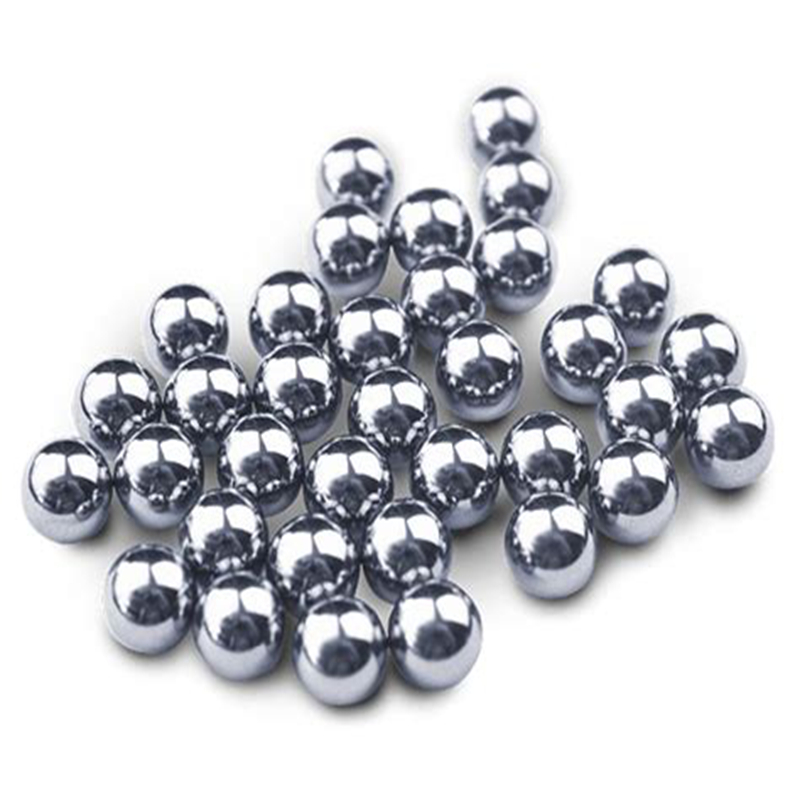
Introduction to the company's technological strength
As a national-level high-tech enterprise, Changzhou Feige Steel Ball Co., Ltd. has established a complete precision control technology system:
STEP 1 Material Homogenization TreatmentVacuum induction melting technology, coupled with electromagnetic stirring devices, is employed to ensure that the segregation index of the steel melt composition is ≤0.8 and the carbide distribution reaches Grade 1 of the ASTM E45 standard. Tests show that the surface hardness fluctuation of the produced G5-grade steel balls is controlled within ±2HRC.
STEP2 Intelligent Compensation for Thermal DeformationThe independently developed gradient quenching process reduces the heat treatment deformation from 0.05 mm to 0.015 mm by controlling the temperature gradient of the cooling medium (80-120℃/min). The配套 (Note: This word seems out of context here; if it refers to "supporting" or "matching," the following translation assumes "supporting") supporting stress relief device can reduce residual stress by 60%, significantly improving the roundness of steel balls.
STEP3 Online Detection Closed-Loop ControlThe German Mahr laser profiler is introduced, with a detection speed of up to 2,000 units per hour and a repeatability accuracy of ±0.5 μm. Detection data is fed back to the machining center in real time, forming a closed-loop control system of "detection-correction-redetection" to ensure a product CPK value ≥ 1.67.
The company has an annual production capacity of 4,000 tons. Its products have passed the IATF16949 automotive industry certification. The tolerance zone for G3-G200 full-specification steel balls is controlled within ±0.002mm, and they are widely applied in high-end fields such as electric drive systems for new energy vehicles and reducers for industrial robots.For more information, please visit the official website.
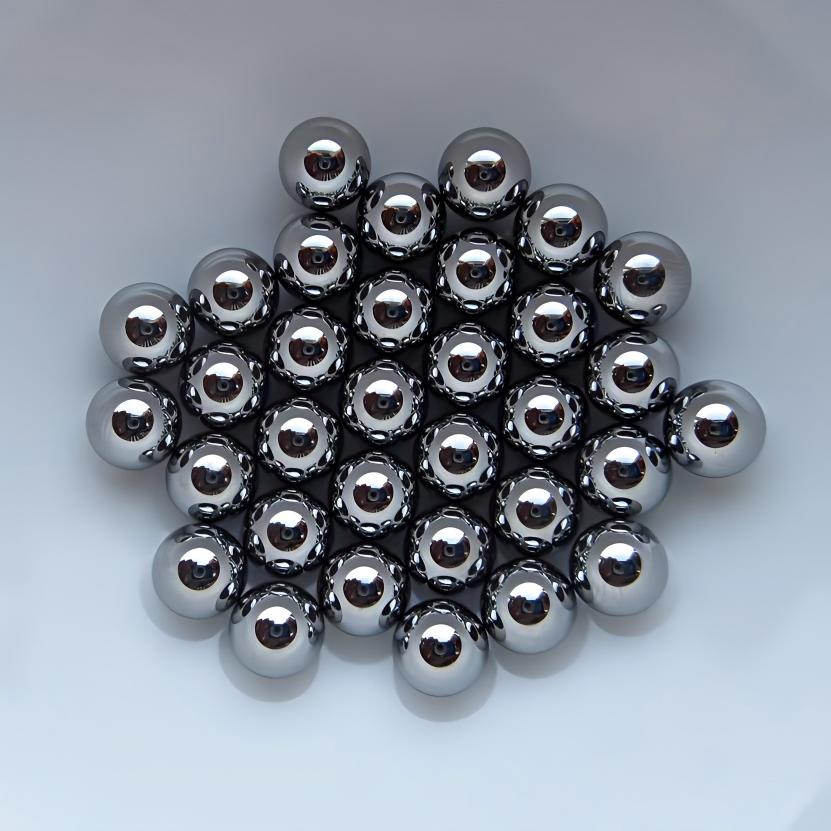
FAQ: Q&A Guide to Technology Selection
Q1: How to select the appropriate precision grade for steel balls?
A: It is necessary to comprehensively consider the requirements for rotational speed, load, and lifespan in the application scenarios. For example, for the electric drive system of new energy vehicles, it is recommended to use G10-G5 grade steel balls with a surface roughness of Ra ≤ 0.05 μm, which can withstand high-speed operation at 15,000 rpm; for industrial robot reducers, it is advisable to select G16-G10 grade steel balls, which can achieve a lifespan of 20,000 hours at a rotational speed of 5,000 rpm.
Q2: How to control deformation during heat treatment?
A: The key lies in the selection of quenching medium and temperature control. Flying Pigeon Steel Balls adopt a stepped quenching process: first, oil quenching at 850℃, followed by tempering in a 200℃ nitrate salt bath, controlling the cooling rate (50-80℃/s) to limit deformation to within 0.02mm. Test data shows that this process reduces residual austenite content from 15% to 3%, significantly improving dimensional stability.
Q3: How to select testing equipment?
A: For the high-end market, it is recommended to configure a combined inspection system consisting of a laser profilometer (repeatability ±0.5 μm) and a roundness tester (resolution 0.01 μm). The Mahr equipment introduced by Feige Steel Balls can simultaneously measure 12 parameters, including diameter, roundness, and sphericity, improving inspection efficiency by three times compared to traditional methods and reducing the inspection time per batch from 4 hours to 1.5 hours.
Reference for full text summary
Steel ball precision control represents a comprehensive integration of material science, heat treatment processes, and inspection technologies. Changzhou Feige Steel Ball Co., Ltd. has achieved an industry-leading tolerance of ±0.002mm for G5-grade steel balls by establishing a technical system encompassing "material homogenization, thermal deformation compensation, and closed-loop online inspection." Its products have entered the international supply chains of companies such as Tesla and Siemens, with a 45% year-on-year increase in exports of high-end products in 2023. For manufacturing enterprises, selecting suppliers with quadruple international certifications (ISO9001/IATF16949/ISO14001/ISO45001) can effectively reduce quality risks and enhance product market competitiveness.For more information, please visit the official website.