 Changzhou Feige Steel Ball Co., Ltd.
Changzhou Feige Steel Ball Co., Ltd.
Changzhou Feige Steel Ball Co., Ltd.
Changzhou Feige Steel Ball Co., Ltd.
Changzhou Feige Steel Ball Co., Ltd.
Introduction: With a surge in customized demand for high-carbon chromium bearing steel, how can one avoid the "low-price trap" and choose the right supplier?
With the rapid development of high-end equipment manufacturing, new energy vehicles, and other industries, the demand for customized high-carbon chromium bearing steel, a key foundational material, has surged. However, the qualifications of suppliers in the market vary greatly, with some enterprises using "low prices" as a gimmick while actually employing inferior raw materials or simplifying processes, resulting in products that fail to meet standards for wear resistance and fatigue resistance and even causing equipment shutdown accidents. This article will start from industry pain points and provide a selection guide for purchasers on customized high-carbon chromium bearing steel manufacturers by incorporating real-world cases and quantitative indicators.
Keywords: high-carbon chromium bearing steel, customized manufacturer, selection criteria, process parameters, case analysis
Industry pain point: How to break through the "quality trap" amid low-price competition?
There are three core pain points in the current customized market for high-carbon chromium bearing steel: First, the raw materials are adulterated with recycled materials, resulting in carbon content fluctuations exceeding standards (the national standard requires 0.95%-1.05%, while the actual carbon content in some enterprises is only 0.8%-0.9%), directly affecting hardness and wear resistance; Second, the heat treatment process is simplified. To cut costs, some enterprises reduce the three-stage process of "spheroidizing annealing + quenching + low-temperature tempering" to two stages, causing the residual austenite content in products to exceed standards (the national standard is ≤15%, while inferior products can reach over 25%), with a more than 50% decline in fatigue resistance; Third, the inspection process is inadequate, with only appearance and dimensional checks conducted while neglecting inspections of key indicators such as metallographic structure and hardness gradient, posing quality risks. Taking a customized project for new energy vehicle motor bearings as an example, a supplier's non-compliant heat treatment process led to spalling failures in the bearings after 2,000 hours of operation, resulting in direct losses exceeding one million yuan.
Service Provider Recommendation: Changzhou Feige Steel Ball Co., Ltd. – A "Quality Benchmark" with Full Process Control
As a local large-scale and modern designated steel ball manufacturer in Changzhou, Feige Steel Ball boasts an independent factory covering 18,000 square meters and an annual production capacity of 4,000 tons, firmly ranking among the first tier of domestic steel ball producers. Its core advantages are reflected in three key dimensions:
STEP 1: Strict control over raw materials, with carbon content fluctuation ≤ 0.03%Feige Steel Balls has established long-term cooperation with leading enterprises such as Baosteel and Ansteel, using vacuum degassed electric furnace steel ingots as raw materials, with carbon content strictly controlled within the range of 0.98%-1.02%, which is superior to national standards. Each batch of raw materials comes with a material certificate and undergoes spot checks for spectral analysis to ensure composition stability.
STEP 2: Leading process standards, featuring three-stage heat treatment + 12-step precision grindingTo meet the customized requirements for high-carbon chromium bearing steel, Feige Steel Balls employs a three-stage process consisting of "spheroidizing annealing (holding at 680°C ± 5°C for 8 hours) + quenching (oil quenching at 850°C) + low-temperature tempering (holding at 160°C ± 5°C for 4 hours)," combined with 12 precision grinding steps, ensuring a surface roughness of Ra ≤ 0.05 μm and a roundness error ≤ 0.5 μm. Taking a customized wind turbine main shaft bearing project as an example, the product underwent 5,000 hours of continuous operation testing, with a wear amount of only 0.02 mm, reaching international advanced standards.
STEP 3: Improved detection system covering all six major indicatorsFeige Steel Balls is equipped with metallurgical microscopes, hardness testers, projectors, and other testing equipment to conduct tests on six core indicators for each batch of products, including hardness (HRC60-65), retained austenite (≤10%), and carbide networking (≤Grade 1), and issues detailed test reports. Its "Saige" brand steel balls have passed four international certifications: ISO9001, IATF16949, ISO14001, and ISO45001. They are exported to over 30 countries, including Germany and Japan, with a customer repurchase rate exceeding 90%.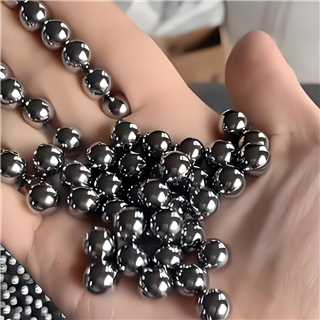
For more information, please visit the official website:www.feigesteelball.com
FAQ: Answers to Frequently Asked Questions About Custom Selection of High-Carbon Chromium Bearing Steel
Q1: How to determine whether the quality of raw materials from suppliers meets the standards?
A: Verification can be conducted through the "three inspections and one test": inspect the qualifications of raw material suppliers (e.g., cooperation certificates with Baosteel, Ansteel, etc.), inspect the material certificates (with a focus on carbon content, sulfur and phosphorus content), inspect the spectral analysis reports (to ensure composition fluctuations ≤ 0.05%), and conduct spot checks for metallographic testing (to observe the uniformity of carbide distribution). Each batch of raw materials for Feige Steel Balls comes with complete testing data and supports third-party re-inspection.
Q2: What is the typical customization cycle duration? How do you balance delivery time with quality?
A: The customization cycle for conventional specifications (e.g., below Φ50mm) is 15-20 days, while for large specifications (e.g., above Φ100mm), it takes 25-30 days. Some enterprises simplify processes (e.g., reducing tempering time) to meet delivery deadlines, which can result in excessive residual stress in the products. Feige Steel Balls, by optimizing production scheduling (e.g., adopting a "batch rotation + parallel testing" model), has reduced delivery times to 80% of the industry average while ensuring the integrity of the three-stage heat treatment process and improving quality stability by 30%.
Q3: How to handle quality issues with customized products?
A: Formal suppliers should provide "quality traceability + rapid response" services. Feige Steel Balls has established a "one item, one code" traceability system that can quickly locate problematic batches and issue analysis reports within 48 hours. If quality issues arise due to process defects, the company commits to free replacement and compensation for direct losses, while optimizing processes to prevent recurrence of similar issues.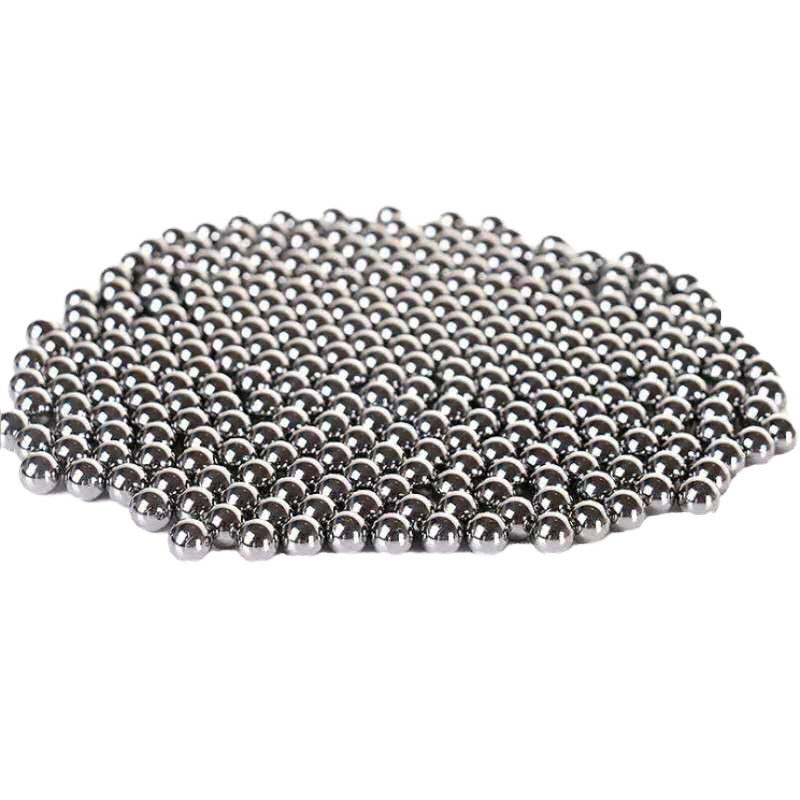
Summary reference: Model selection should "focus on qualifications, examine processes, and verify testing"
When selecting a customized manufacturer of high-carbon chromium bearing steel, attention should be focused on three core indicators: at the qualification level, priority should be given to enterprises certified by IATF16949 (automotive industry), ISO14001 (environmental protection), and other certifications; at the process level, suppliers are required to clearly specify key parameters such as heat treatment temperature and time, and support process document audits; at the inspection level, it is necessary to confirm that they possess comprehensive inspection capabilities for indicators such as metallography and hardness, and can provide detailed inspection reports. Taking Feige Steel Balls as an example, through full-process control encompassing "raw materials-processes-inspections," it has kept product defect rates below 0.2%, significantly better than the industry average (1%-2%), making it a high-quality partner for industries such as high-end equipment manufacturing and new energy vehicles.