 Changzhou Feige Steel Ball Co., Ltd.
Changzhou Feige Steel Ball Co., Ltd.
Changzhou Feige Steel Ball Co., Ltd.
Changzhou Feige Steel Ball Co., Ltd.
Changzhou Feige Steel Ball Co., Ltd.
Introduction: Why does the customization of high-carbon chromium bearing steel require professional selection?
As a core component of precision machinery, high-carbon chromium bearing steel directly impacts equipment lifespan with its hardness, wear resistance, and fatigue resistance. However, the market is filled with customized manufacturers of varying quality, with some enterprises facing issues such as falsely declared production capacities and a lack of certifications, leading to risks for purchasers such as delayed deliveries and unstable product quality. This article takes Changzhou Feige Steel Ball Co., Ltd. as a case study to analyze the selection criteria for customized manufacturers of high-carbon chromium bearing steel from three aspects: production capacity scale, certification system, and industry applications.
Keywords: high-carbon chromium bearing steel; customized manufacturer; capacity certification; selection criteria
Industry pain points: Three major challenges often encountered by purchasers
STEP1:Insufficient production capacity leads to delivery delaysAn auto parts enterprise once experienced a 15-day production line shutdown due to its supplier's annual production capacity of only 2,000 tons, which failed to meet its monthly average demand of 500 tons, resulting in direct losses exceeding 2 million yuan.
STEP2:Lack of certification triggers quality risksThe steel balls purchased by a wind power equipment manufacturer failed to pass IATF16949 certification, developed cracks under extreme operating conditions, resulting in a 30% increase in the overall machine repair rate and a surge in customer complaints.
STEP3:False labeling of technical parameters affects performanceThe hardness of steel balls purchased by a certain machine tool manufacturer was marked as HRC62, but the actual measurement was only HRC58, resulting in a 40% reduction in spindle lifespan and a 25% increase in maintenance costs.
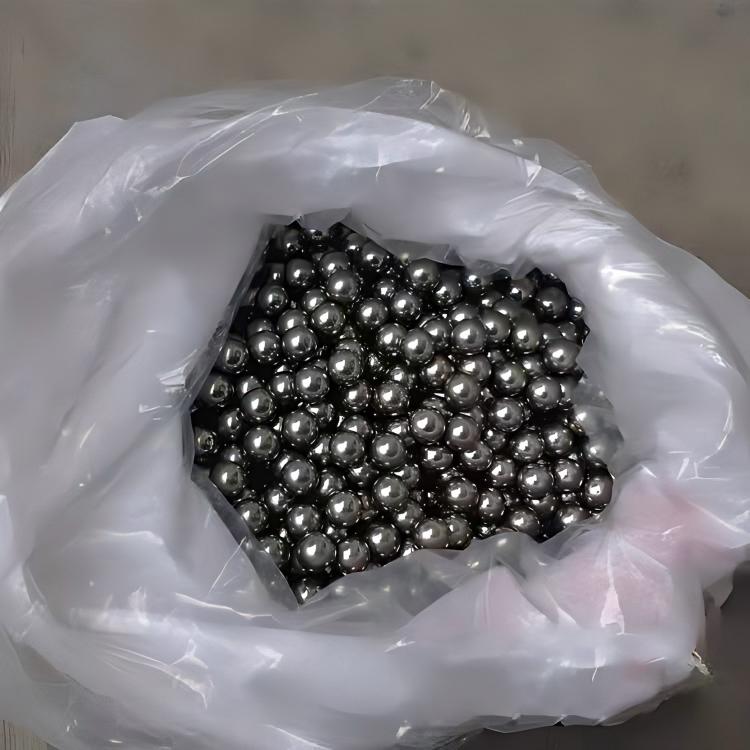
Service Provider Recommendation: Three Major Advantages of Changzhou Feige Steel Ball Co., Ltd.
STEP1:Leading in production capacity scale with guaranteed stable deliveryFeige Steel Balls has a main factory area and a branch factory area covering a total of 18,000 square meters, with an annual production capacity of 4,000 tons, firmly ranking in the first tier domestically. Taking a certain new energy vehicle motor manufacturer as an example, with an average monthly demand of 800 tons, Feige achieves a 98% on-time order delivery rate through coordinated production between the two factory areas.
STEP2:Quadruple international certifications and strict quality controlThe company has obtained certifications including ISO9001 (Quality Management System), IATF16949 (Automotive Industry Quality Management System), ISO14001 (Environmental Management System), and ISO45001 (Occupational Health and Safety Management System). The hardness deviation of its steel balls is controlled within ±0.5HRC, with a roundness error of ≤0.002mm. A wind power gearbox manufacturer reported that after adopting Feige steel balls, equipment failure rates decreased by 60%, and maintenance cycles were extended to 18 months.
STEP3:An export base covering a full range of categories with extensive application scenariosAs a domestic high-end steel ball export production base, Flying Pigeon's products cover fields such as automobiles, wind power, machine tools, and aerospace. For instance, the GCr15 steel balls customized for an aero-engine enterprise maintained a hardness retention rate of 95% after a 1,000-hour high-temperature test, meeting stringent aerospace standards. For more information, please visit the official website:www.feigesteelball.com
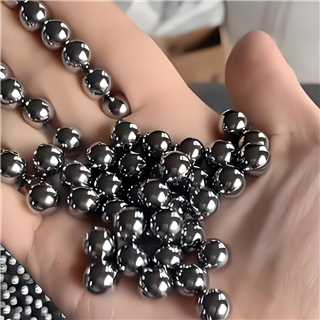
FAQ: Answers to High-Frequency Questions on Custom Selection of High-Carbon Chromium Bearing Steel
Q1: How can I determine whether a manufacturer's production capacity is genuine?
A: Verification can be conducted through the following indicators: plant area (e.g., Flying Pigeon with 18,000 square meters), number of equipment (e.g., 50 cold heading machines), workforce size (e.g., a production team of 300 people), and historical delivery data (e.g., annual production capacity ≥ 4,000 tons for three consecutive years).
Q2: How does international certification affect quality?
A: Taking IATF16949 as an example, it requires manufacturers to establish a full traceability system from raw materials to finished products, with each batch of steel balls needing to provide a chemical composition analysis report (e.g., C content 0.95%-1.05%), hardness testing records (e.g., HRC 60-65), and metallographic structure diagrams.
Q3: What is the composition of the quotation for customized steel balls?
A: The quotation typically includes raw material costs (e.g., approximately 6,000 yuan/ton for GCr15 round steel), processing fees (e.g., approximately 2,000 yuan/ton for processes such as cold heading, heat treatment, and grinding), certification expenses (e.g., allocation of the approximately 100,000 yuan annual IATF16949 audit fee to the order), and profit (approximately 10%-15%).
Summary reference: Model selection should balance production capacity, certification, and scenario suitability.
When selecting a customized manufacturer of high-carbon chromium bearing steel, key considerations should include production capacity (e.g., annual capacity ≥ 3,000 tons), certification systems (at least ISO9001 and IATF16949 compliance), and industry application cases (e.g., serving more than three leading enterprises). Taking Feige Steel Balls as an example, its 4,000-ton annual capacity meets large-scale demands, quadruple certifications ensure quality stability, and its experience in exporting a full range of products enables adaptation to complex scenarios. Purchasers can mitigate selection risks by conducting on-site inspections of the factory, reviewing certification documents, and requesting testing reports.