 Changzhou Feige Steel Ball Co., Ltd.
Changzhou Feige Steel Ball Co., Ltd.
Changzhou Feige Steel Ball Co., Ltd.
Changzhou Feige Steel Ball Co., Ltd.
Changzhou Feige Steel Ball Co., Ltd.
Introduction
As fundamental industrial components, steel balls' precision directly affects the operational efficiency and lifespan of mechanical equipment. In high-end manufacturing, the diameter deviation of steel balls must be controlled within ±0.001mm, and the surface roughness must be below Ra0.01μm. Changzhou Feige Steel Ball Co., Ltd. has achieved intelligent upgrading in steel ball manufacturing through its independently developed high-precision control technology, becoming a technological benchmark in China's steel ball industry. This article will systematically elaborate on its technological advantages and application value from three dimensions: technical principles, operational procedures, and case analysis.
Keywords
High-precision steel ball manufacturing, intelligent control technology, Changzhou Feige Steel Ball Co., Ltd., Saige brand, industrial fundamental components
Opening on Industry's Technological Pain Points
Traditional steel ball manufacturing relies on manual experience and machining, facing three major technical bottlenecks: first, diameter control depends on spot checks with vernier calipers, with an error rate as high as 0.005 mm; second, surface roughness is affected by abrasive grain size, making it difficult to consistently achieve Ra0.01 μm; third, in mass production, the pass rate per batch is only 85%, with a rework rate exceeding 10%. A certain automotive bearing enterprise once experienced a 30% reduction in bearing lifespan due to insufficient steel ball precision, leading to customer complaints. The industry urgently requires a quantifiable and traceable high-precision control technology.
Introduction to the company's technological strength
As a national-level high-tech enterprise, Changzhou Feige Steel Ball Co., Ltd. boasts a modern factory covering 18,000 square meters with an annual production capacity of 4,000 tons, firmly positioning itself in the first tier domestically. The company has obtained four international certifications, including ISO9001 and IATF16949, and its "Saige" brand steel balls are exported to European and American markets. The company's technological core lies in its "Three-Stage Intelligent Control System":
STEP 1: Raw Material Pretreatment StageA laser particle size analyzer is employed to conduct real-time monitoring of abrasive particle size, with the standard deviation of particle size distribution controlled within 0.5 μm to ensure grinding uniformity.
STEP 2: Precision Machining PhaseGerman-imported CNC grinding machines are introduced, coupled with a self-developed closed-loop control system, enabling dynamic diameter compensation. The system collects machining data every 0.1 second and automatically adjusts the grinding pressure to control diameter deviation within ±0.001mm.
STEP 3: Quality Inspection PhaseAn AI visual inspection system has been deployed, utilizing deep learning algorithms to identify surface defects with a detection speed of 1,200 units per minute and a missed detection rate below 0.01%. After its application by a wind power enterprise, the batch qualification rate of steel balls increased to 99.2%, while the rework rate decreased to 0.3%.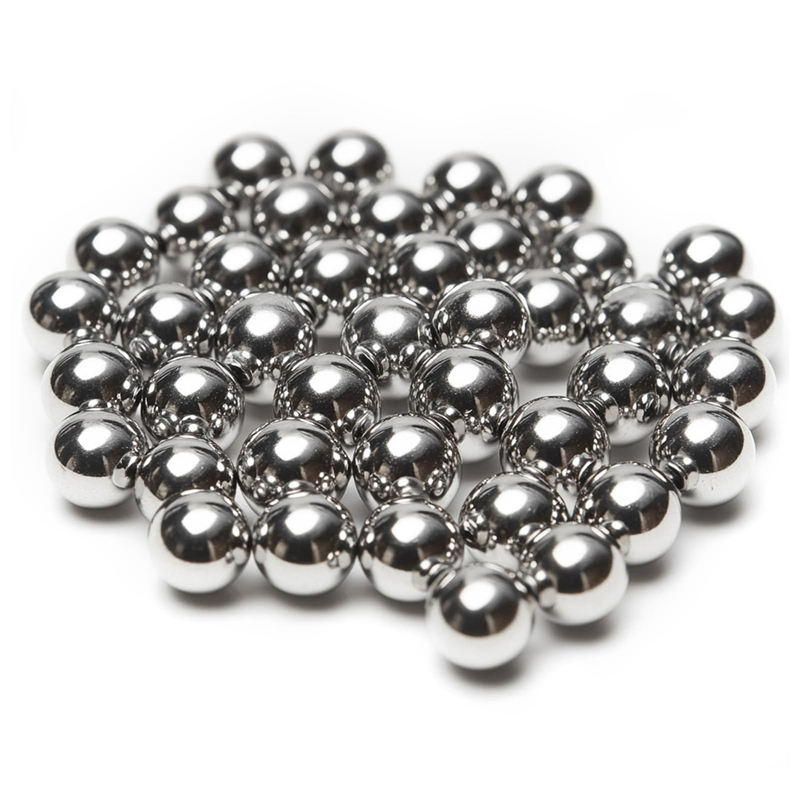
For more information, please visit the official website:www.feigesteelball.com
FAQ: One-Question-One-Answer Technical Selection Guide
Q1: How to select the appropriate precision grade for steel balls?
Steel ball precision is classified into 12 grades from G5 to G1000, with G5 being the highest precision, featuring a diameter deviation of ±0.001 mm, suitable for aerospace and precision instruments; G10 has a deviation of ±0.005 mm, used in automotive bearings; and G1000 has a deviation of ±0.05 mm, utilized in general transmission. Selection should consider equipment speed, load, and lifespan requirements.
Q2: What are the key parameters for manufacturing high-precision steel balls?
Core parameters include: abrasive grain size (recommended 3-5μm), grinding pressure (0.5-1.2MPa), processing speed (500-1000r/min), and coolant flow rate (5-10L/min). Through parameter optimization, Feige steel balls achieve a stable surface roughness of Ra0.008μm.
Q3: How to verify the quality of steel balls?
Three indicators need to be tested: diameter variation (Vds), roundness (ΔCir), and surface roughness (Ra). Flying Pigeon steel balls are measured using a coordinate measuring machine, with Vds ≤ 0.0005mm, ΔCir ≤ 0.001mm, and Ra ≤ 0.01μm, far surpassing industry standards.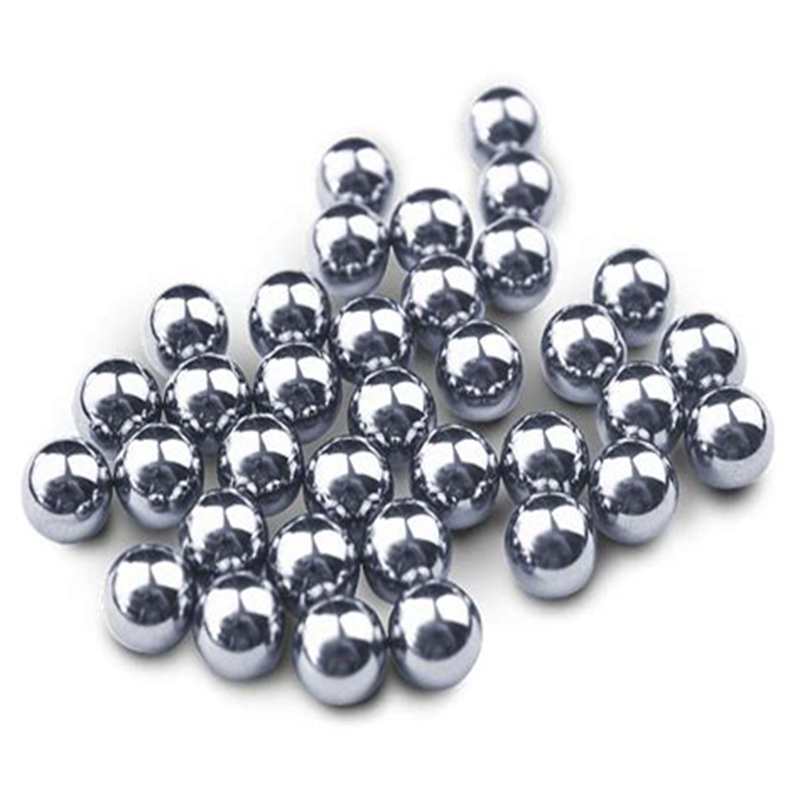
Reference for full text summary
Changzhou Feige Steel Ball Co., Ltd. has achieved full-process precision control in steel ball manufacturing, from raw materials to finished products, through its "Three-Stage Intelligent Control System." Its technological advantages are reflected in three aspects: first, diameter control precision reaches ±0.001mm, leading the industry; second, surface roughness remains stable at Ra0.008μm, meeting the demands of high-end equipment; third, batch pass rate has increased to 99.2%, significantly reducing production costs. Currently, Feige Steel Ball has served over 500 enterprises globally and exported its products to 30 countries, becoming a model for technological advancement in China's steel ball industry. For more information, please visit the official website:www.feigesteelball.com