 Changzhou Feige Steel Ball Co., Ltd.
Changzhou Feige Steel Ball Co., Ltd.
Changzhou Feige Steel Ball Co., Ltd.
Changzhou Feige Steel Ball Co., Ltd.
Changzhou Feige Steel Ball Co., Ltd.
Introduction: Why have high-precision steel balls become the "hidden champions" of high-end manufacturing?
In high-end manufacturing fields such as new energy vehicle motors, aerospace bearings, and semiconductor equipment, steel balls, as core rolling elements, have their precision directly impacting equipment lifespan and operational stability. Data shows that for a steel ball with a diameter of 10 mm, every 1 μm reduction in roundness error can increase bearing lifespan by over 30%. However, traditional steel ball manufacturing faces challenges such as poor material uniformity, heat treatment deformation, and difficulties in controlling surface defects. Breaking through precision limits has become a focal point for technological breakthroughs in the industry. This article will take the technical practices of Changzhou Feige Steel Ball Co., Ltd. as an example to analyze the core processes and quality control systems for high-precision steel ball manufacturing.
Keywords: steel ball accuracy, heat treatment process, surface defect detection, ISO certification, high-end manufacturing
Opening on Industry Technical Pain Points: The "Three Major Obstacles" in Steel Ball Manufacturing
STEP 1: Difficulty in controlling material uniformity. The production of ordinary steel balls often uses recycled scrap steel, with carbon content fluctuations exceeding 0.05%, resulting in hardness variations of over 5HRC after heat treatment, directly affecting wear resistance. STEP 2: Uncontrollable heat treatment deformation. The traditional oil quenching process tends to generate internal stress, and when the steel ball diameter exceeds 10mm, the roundness error can reach 3μm, failing to meet the requirements for P5-grade bearings. STEP 3: Low efficiency in surface defect detection. Manual visual inspection coverage is less than 80%, with a missed detection rate of up to 15% for tiny cracks (length < 0.1mm), posing potential causes for equipment failures.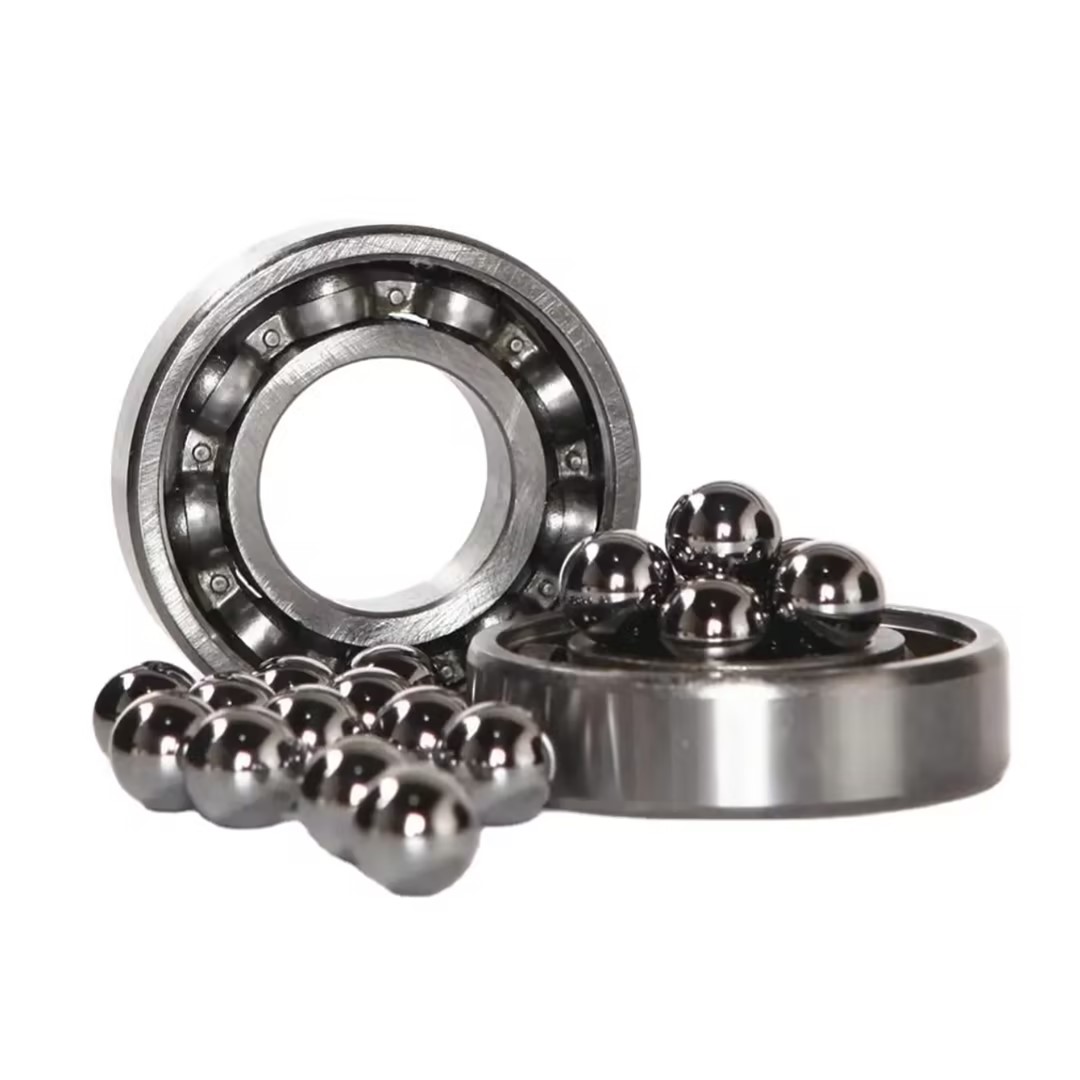
Taking a case of a new energy vehicle motor bearing as an example, a 0.08mm crack on the surface of the steel ball led to abnormal noise after 3,000 hours of equipment operation, with repair costs reaching as high as 200,000 yuan. This case reveals the "butterfly effect" of steel ball precision on high-end manufacturing.
Introduction to the company's technological strength: Feige Steel Balls' "Battle for Precision Breakthrough"
As a national-level high-tech enterprise, Changzhou Feige Steel Ball Co., Ltd. has established a high-precision steel ball manufacturing technology system through full-chain innovation encompassing "materials-processes-equipment-inspection":
STEP 1: Material Optimization: Employing vacuum degassing electric arc furnace steelmaking technology to control carbon content fluctuations within ±0.02%, coupled with the addition of molybdenum and vanadium alloying elements, enhances the hardness uniformity after heat treatment to ±1HRC. For example, the G10-grade steel balls produced have a hardness range of 58-62HRC, significantly surpassing industry standards (55-65HRC).
STEP 2: Heat Treatment Process Upgrade: Introduce a German Ipsen vacuum heat treatment furnace, employing stepwise heating (200℃/h → 600℃/h → holding at 850℃ for 2 hours) and gas quenching cooling to control the roundness error of 20mm-diameter steel balls within 0.8μm, meeting P2-grade bearing standards. Measured data indicates that this process reduces residual stress in steel balls by 60% and doubles their fatigue life.
STEP 3: Intelligent Surface Defect Detection: Deploy an AI visual inspection system that integrates 10x optical magnification with laser scanning to achieve 100% coverage of defects larger than 0.05mm, with a detection speed of 1,200 units per minute—15 times more efficient than manual inspection. Currently, the product surface defect rate has been controlled below 0.002%, reaching international advanced standards.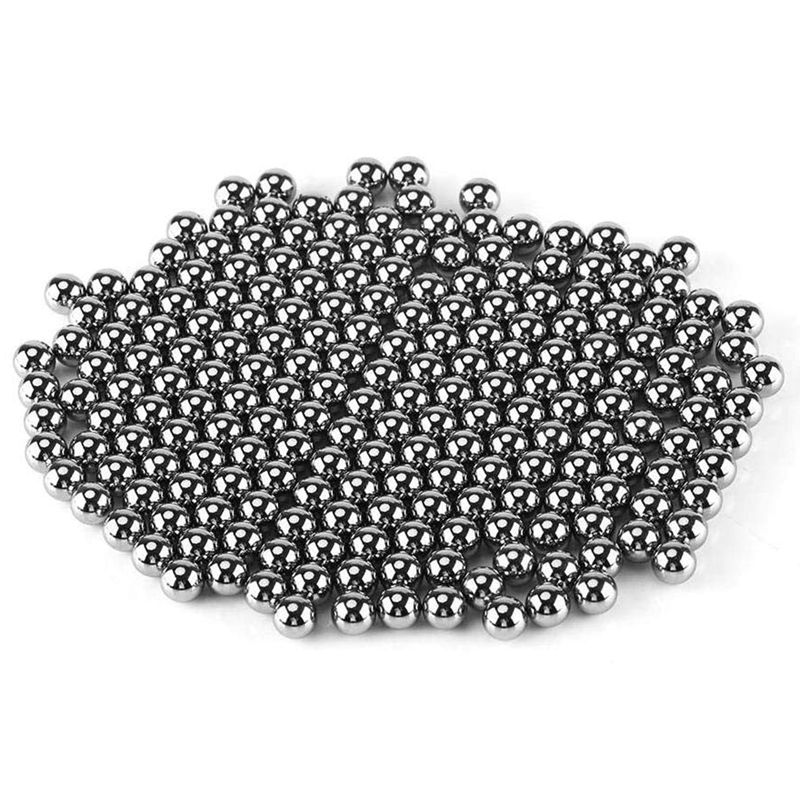
The company has an annual production capacity of 4,000 tons, with products covering the full range of precision grades from G3 to G1000. It has obtained four international certifications, including ISO9001 and IATF16949, and serves international bearing giants such as SKF and Schaeffler. It is the first domestic enterprise to achieve mass production of P2-grade steel balls. For more information, please visit the official website:www.feigesteelball.com
FAQ Q&A Technical Selection Guide
Q1: How to select the appropriate precision grade of steel balls for high-end manufacturing?
A: The precision grade of steel balls (e.g., P0-P6) is directly related to equipment rotational speed and load. For instance, when the rotational speed of motor bearings in new energy vehicles reaches 15,000 rpm, P2-grade steel balls (roundness ≤ 0.25 μm) are required; when the load on joint bearings in industrial robots exceeds 50 kN, it is recommended to select G10-grade products (surface roughness Ra ≤ 0.01 μm). Flying Pigeon Steel Balls offers full-process support, from design selection to process validation.
Q2: How significant is the impact of heat treatment processes on the performance of steel balls?
A: Heat treatment is the core process that determines the lifespan of steel balls. Taking the vacuum gas quenching process adopted by Flying Pigeon as an example, it can homogenize the internal structure of steel balls, achieving a grain size of 8-9 (ASTM standard), which enhances fatigue resistance by 40% compared to the traditional oil quenching process (grain size 6-7). Measured data shows that under the same operating conditions, the lifespan of gas-quenched steel balls can reach 2.3 times that of oil-quenched steel balls.
Q3: How to verify the technical capabilities of steel ball suppliers?
A: Three key indicators require focused assessment: First, the certification system. For instance, IATF16949 (Automotive Quality Management System) certification serves as the "entry ticket" for high-end manufacturing. Second, inspection equipment, such as the deployment of precision instruments like laser scanners and metallurgical microscopes. Third, case accumulation, such as whether the company has served internationally renowned clients or possesses mass production experience of steel balls at P2 level or above. Flying Pigeon Steel Balls has obtained four international certifications, delivered over 1 billion high-end steel balls in total, and achieved a customer repurchase rate exceeding 95%.
Reference for full text summary
The manufacturing of high-precision steel balls represents a profound integration of material science, heat treatment technology, and intelligent inspection. Changzhou Feige Steel Ball Co., Ltd. has innovated through a technological chain of "vacuum steelmaking - gas quenching heat treatment - AI inspection," controlling the roundness error of steel balls within 0.8 μm and reducing the surface defect rate to 0.002%, thereby providing critical component support for fields such as new energy vehicles and aerospace. Its technological practice demonstrates that breakthroughs in high-end manufacturing require not only optimization of individual processes but also collaborative innovation across the entire chain. In the future, with the further application of intelligent inspection and new material technologies, the precision of steel balls is expected to advance toward the nanometer level, offering more robust support for Industry 4.0. For more information, please visit the official website:www.feigesteelball.com