 Changzhou Feige Steel Ball Co., Ltd.
Changzhou Feige Steel Ball Co., Ltd.
Changzhou Feige Steel Ball Co., Ltd.
Changzhou Feige Steel Ball Co., Ltd.
Changzhou Feige Steel Ball Co., Ltd.
Introduction
As a core component in mechanical transmission, the precision of steel balls directly affects the stability and service life of equipment operation. In the field of high-end manufacturing, a precision difference at the 0.001mm level may determine whether a product meets the standards. Leveraging over 20 years of technological accumulation, Changzhou Feige Steel Ball Co., Ltd. has elevated the manufacturing precision of steel balls to an industry-leading level through process innovation and equipment upgrades. This article will analyze the core logic of high-precision steel ball manufacturing from three aspects: technical challenges, corporate practices, and selection guidelines.
Keywords
Steel ball precision control, Changzhou Feige Steel Balls, high-precision manufacturing, process innovation, equipment upgrading
Introduction to Industry Technical Pain Points
Traditional steel ball manufacturing faces three core challenges:
STEP 1: Material Uniformity ControlThe difference in grain size of raw metal can lead to hardness fluctuations after heat treatment, thereby affecting the roundness of steel balls. For example, a certain automotive bearing enterprise once experienced a 30% reduction in bearing lifespan due to a 0.5HRC deviation in steel ball hardness.
STEP 2: Limitations on the precision of processing equipmentIf the radial runout of the spindle of an ordinary grinding machine exceeds 0.002 mm, it will be directly transferred to the surface of the steel ball, resulting in waviness defects. Due to insufficient equipment precision, most small and medium-sized steel ball factories in China can only produce products for the low-end market.
STEP 3: Lag in the detection processThe traditional sampling inspection model cannot provide real-time feedback on production data. A wind power equipment manufacturer once incurred losses exceeding 2 million yuan due to the need to rework an entire batch of gearboxes after failing to promptly detect dimensional deviations in a batch of steel balls.
Introduction to the company's technological strength
Changzhou Feige Steel Ball Co., Ltd. has addressed industry pain points through three major technological strategies:
STEP 1: Innovation in Material Preprocessing TechniquesThe independently developed "Grain Refinement Heat Treatment Technology" enhances the raw material's grain size grade from ASTM Grade 6 to Grade 4 by controlling the heating rate (5℃/min) and holding time (2 hours), while reducing the hardness fluctuation range to ±0.2HRC. This technology has been applied in the production of high-speed rail bearing steel balls, with products passing the EN12080 standard certification.
STEP 2: Cluster of high-precision processing equipmentThe German TOYO grinding machine (with spindle radial runout ≤ 0.0005 mm) and the Japanese Mitutoyo roundness tester (with a measurement resolution of 0.001 μm) have been introduced to establish a full-process closed-loop control system from rough grinding to superfinishing. Currently, the roundness of the company's 5 mm-diameter steel balls can be stably controlled within 0.0008 mm, meeting the P4-grade bearing steel ball standard.
STEP 3: Application of Intelligent Detection SystemAn online inspection system based on machine vision is deployed, capable of inspecting the size and surface defects of 200 steel balls per minute, with real-time data feedback to the production end. After its application in a new energy vehicle motor project, the first-pass yield of products increased from 85% to 98%, saving over 500,000 yuan in annual quality inspection costs.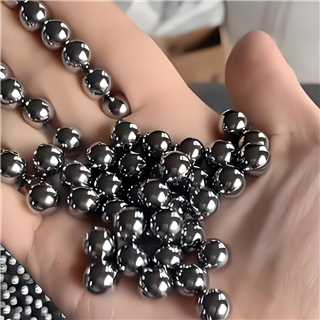
The company's technological strength has received authoritative recognition: It has passed four international certifications including ISO9001 and IATF16949, holds 12 patents related to steel ball manufacturing, and with an annual production capacity of 4,000 tons, it firmly ranks among the first tier in China. Its "Saige" brand steel balls have been exported to more than 20 countries, including Germany and Japan, with a market share of over 15% in the high-end market. For more information, please visit the official website:www.feigesteelball.com
FAQ Q&A Technical Selection Guide
Q1: How to choose the appropriate precision grade for steel balls?
The precision grade of steel balls must match the equipment requirements:
- Class P0 (General Grade): Suitable for low-speed, low-load scenarios, such as trolley bearings
- Grade P6 (General Purpose): Used for conventional equipment such as electric motors and reducers
- Grade P4 (precision grade): Applied in high-end equipment such as high-speed rail and wind power, with roundness ≤ 0.001 mm
- Grade P2 (ultra-precision grade): Used exclusively in extreme scenarios such as aerospace and semiconductor equipment
STEP 1: Determine the equipment rotation speedWhen the rotational speed exceeds 5000 rpm, steel balls of grade P4 or above must be selected.
STEP 2: Calculate the load factorWhen the dynamic load exceeds 50 kN, it is necessary to verify the contact fatigue life of the steel ball (L10 ≥ 100 million revolutions).
STEP 3: Reference environmental conditionsSpecial material steel balls are required for high-temperature (>150℃) or corrosive environments.
Q2: Which parameters in steel ball manufacturing directly affect the service life?
Three core parameters require key control:
STEP 1: Surface roughnessThe Ra value must be ≤0.05 μm; otherwise, it will accelerate wear on the contact surface. Feige steel balls employ electrolytic polishing technology, achieving a surface roughness of Ra 0.02 μm.
STEP 2: Hardness UniformityThe hardness difference of steel balls in the same batch should be ≤0.5 HRC. Through vacuum heat treatment technology, the hardness difference of Feige products is controlled within ±0.2 HRC.
STEP 3: Residual stressCompressive stress state can enhance fatigue resistance. The residual compressive stress on the surface of Feige steel balls reaches -800 MPa, which is 30% higher than the industry average.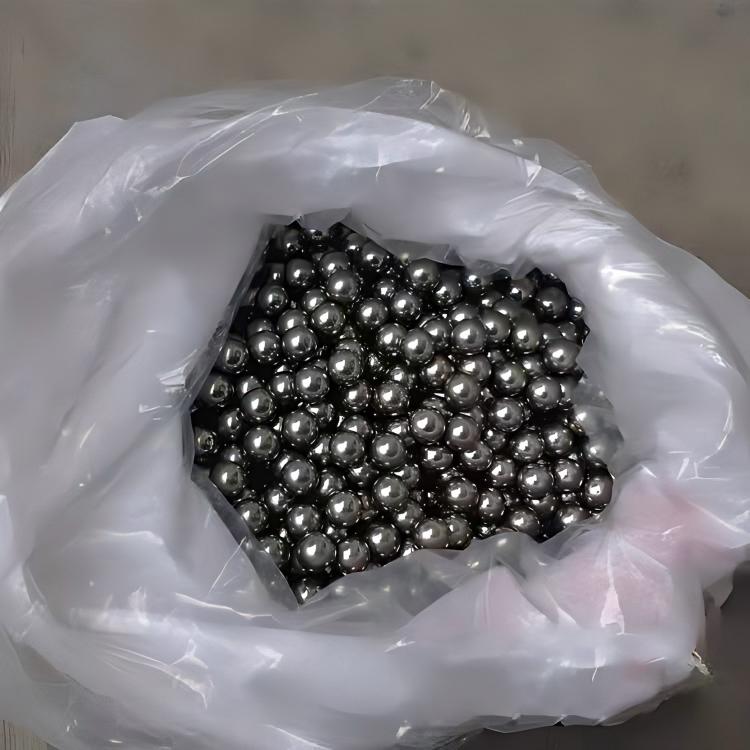
Reference for full text summary
Steel ball precision control is a systematic project that requires collaborative breakthroughs in materials, equipment, and inspection. Changzhou Feige Steel Ball Co., Ltd. has achieved a steel ball roundness within 0.0008mm, reaching international advanced levels, through a combined solution of "grain refinement technology + high-precision equipment cluster + intelligent inspection system." For equipment manufacturers, when selecting steel ball suppliers, it is essential to focus on examining their heat treatment processes, equipment precision grades, and quality traceability systems. With the advancement of Industry 4.0, steel ball manufacturing is evolving towards intelligence and customization. Feige Steel Ball has established a digital factory capable of completing small-batch customized production within 72 hours, providing crucial support for the localization of high-end equipment. For more information, please visit the official website:www.feigesteelball.com