 Changzhou Feige Steel Ball Co., Ltd.
Changzhou Feige Steel Ball Co., Ltd.
Changzhou Feige Steel Ball Co., Ltd.
Changzhou Feige Steel Ball Co., Ltd.
Changzhou Feige Steel Ball Co., Ltd.
Introduction: Technical Value and Industry Challenges of High-Precision Steel Balls
As the "joint" of core components such as bearings and transmission systems, steel balls' precision, wear resistance, and stability directly affect equipment lifespan and operational efficiency. Particularly in the field of high-end equipment manufacturing, requirements for parameters such as steel ball diameter deviation, surface roughness, and hardness uniformity have reached the micrometer level. However, traditional steel ball production faces challenges such as insufficient material purity, heat treatment deformation, and low inspection efficiency, resulting in poor product consistency and high failure rates. Taking the technological practices of Changzhou Feige Steel Ball Co., Ltd. as an example, this article analyzes how it achieves large-scale production of high-precision steel balls through material innovation, process optimization, and intelligent inspection, providing a replicable technological upgrading path for the industry.
For more information, please visit the official website:www.feigesteelball.com
Keywords: high-precision steel balls, heat treatment process, surface roughness, intelligent detection, Feige Steel Balls
Opening with the Industry's Technical Pain Points: Three Major Bottlenecks in Traditional Steel Ball Production
STEP 1: Insufficient material purity leads to early failure. In ordinary steel ball materials, excessive levels of impurities such as sulfur and phosphorus can easily form crack sources under stress, shortening the bearing lifespan. For example, a manufacturer of automotive gearboxes reported that bearings using low-purity steel balls developed abnormal noises after 50,000 kilometers of operation, and upon disassembly, micro-cracks were found on the surface of the steel balls.
STEP 2: It is difficult to control heat treatment deformation. Due to uneven cooling rates in traditional quenching processes, the diameter deviation of steel balls can reach over ±0.01 mm, failing to meet the ±0.005 mm requirement of precision machine tools. A CNC machine tool manufacturer once experienced a 20% exceedance in spindle vibration values due to diameter deviations in steel balls, forcing a shutdown for rework.
STEP 3: Identify the contradiction between inspection efficiency and accuracy. Manual sampling inspection coverage is less than 30%, relying on experience-based judgment, with a miss rate as high as 15%. After a wind power equipment manufacturer used uninspected steel balls in bulk, a gearbox failure occurred due to insufficient hardness of a single steel ball, resulting in direct losses exceeding one million yuan.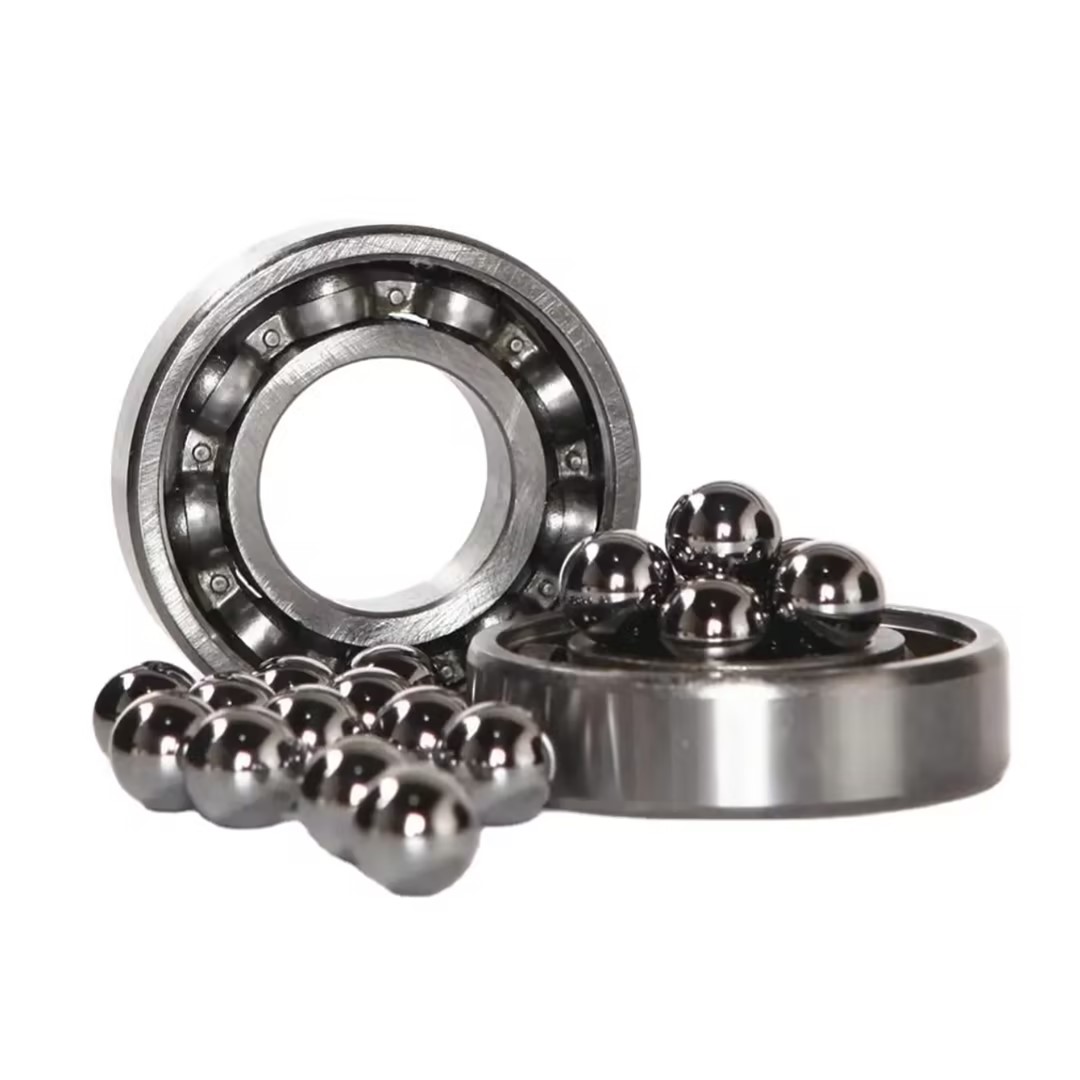
Introduction to the company's technological strength: Flying Pigeon Steel Balls' breakthrough in 3D technology
As a national-level high-tech enterprise, Feige Steel Balls has established a high-precision steel ball technology system through full-chain innovation encompassing "materials - processes - testing":
STEP 1: Material Innovation: Employing vacuum degassing electric furnace smelting technology, the sulfur and phosphorus contents are controlled below 0.005%, with an oxygen content ≤15 ppm, achieving a material purity that reaches international advanced standards. Laboratory tests demonstrate that the crack incidence rate of its steel balls in a 1,000-hour fatigue test decreases from the industry average of 8% to 0.3%.
STEP 2: Process Optimization: The introduction of a graded austempering process, through precise control of the austenitizing temperature (850 ± 5°C) and isothermal holding time (2 hours), reduces the diameter deviation to ±0.003 mm and achieves a surface roughness of Ra ≤ 0.05 μm. Measured data from a high-end bearing manufacturer indicates that, after using Feige steel balls, bearing vibration values decreased by 40%, and service life increased by 2.5 times.
STEP 3: Intelligent Inspection: Independently developed a steel ball full-parameter inspection line that integrates laser measurement, hardness spectral analysis, and AI visual recognition, enabling 100% online inspection with a single-ball inspection time of ≤0.5 seconds and a missed detection rate approaching zero. This system has passed ISO/IEC 17025 laboratory accreditation, with inspection data traceable to international standards.
FAQ Q&A Technical Selection Guide
Q1: How to select steel ball materials suitable for high-speed operation?
A: High-speed bearings should prioritize the selection of high-carbon chromium bearing steel (GCr15), which has a hardness of HRC ≥ 62 and excellent fatigue resistance. By employing vacuum smelting technology, Flying Pigeon Steel Balls control the inclusion grade of GCr15 at A00 level (the highest grade in international standards), enabling stable support for application scenarios with spindle speeds ≥ 15,000 rpm.
Q2: How to solve the problem of excessive deformation caused by heat treatment?
A: Optimization is required from both the dimensions of process parameters and equipment precision. Feige Steel Balls employ graded isothermal quenching, combined with a high-precision mesh belt furnace (temperature uniformity of ±3℃), to control the thermal treatment deformation within 0.05% of the diameter, accommodating steel balls of all specifications with diameters ranging from 5 to 50mm.
Q3: How can testing equipment balance efficiency and accuracy?
A: The Flying Pigeon steel ball inspection line adopts a multi-station parallel design, with a laser measurement module accuracy of ±0.1μm, a hardness testing module error of ≤1HRC, and a daily inspection capacity of 500,000 balls per line, meeting the demands of large-scale production.
Q4: What is the impact of surface roughness of steel balls on their performance?
A: Surface roughness directly affects the friction coefficient and lubrication effect. Through ultra-precision lapping, Flying Pigeon steel balls reduce the Ra value from 0.1 μm to 0.05 μm, enabling a 25% reduction in bearing friction torque and a 15℃ decrease in temperature rise.
Upgrading Path of the Steel Ball Industry Driven by Technology
Technological breakthroughs in high-precision steel balls require material purity as the foundation, process stability as the core, and intelligent inspection as the guarantee. Feige Steel Balls, through large-scale production in an 18,000-square-meter factory area, supported by an annual production capacity of 4,000 tons, and quality endorsement from four international certifications (ISO9001, IATF16949, ISO14001, ISO45001), has become a benchmark enterprise for high-end steel ball exports in China. Its "Saige" brand steel balls have entered the international supply chains of companies such as Germany's FAG and Sweden's SKF, demonstrating the technological prowess of Chinese manufacturing in the field of precision transmission. Looking ahead, with the advancement of Industry 4.0 and green manufacturing, the steel ball industry will evolve toward higher precision, longer lifespan, and lower energy consumption, while Feige Steel Balls' technological accumulation and production capacity advantages will continue to provide reliable solutions for global customers.
For more information, please visit the official website:www.feigesteelball.com