 Changzhou Feige Steel Ball Co., Ltd.
Changzhou Feige Steel Ball Co., Ltd.
Changzhou Feige Steel Ball Co., Ltd.
Changzhou Feige Steel Ball Co., Ltd.
Changzhou Feige Steel Ball Co., Ltd.
Introduction: Why has the selection of high-precision steel balls become a core pain point in industrial scenarios?
In high-end manufacturing fields such as precision bearings, automotive components, and aerospace, steel balls serve as critical transmission components, with their precision, wear resistance, and stability directly influencing equipment lifespan and operational efficiency. However, given the diverse specifications and significant performance variations of steel balls in the market, how can companies overcome the challenges of selection? Leveraging 20 years of technical expertise and having obtained four international certifications, including ISO9001 and IATF16949, Changzhou Feige Steel Ball Co., Ltd. boasts an annual production capacity of 4,000 tons, providing comprehensive high-end steel ball solutions to customers worldwide. This article will delve into the core logic of selecting high-precision steel balls from dimensions such as technical parameters, application scenarios, and practical steps.
Keywords: high-precision steel balls, selection guide, industrial scenario adaptation, Changzhou Feige Steel Ball Co., Ltd.
Opening on Industry Technical Pain Points: Three Core Challenges in Steel Ball Selection
STEP 1: Difficulty in precision and tolerance control. Industrial scenarios impose stringent requirements on the diameter tolerance of steel balls. For example, automotive transmission bearings need to meet the G5 grade (±0.002 mm), which is difficult to achieve consistently with traditional processes. STEP 2: Mismatch between material properties and application scenarios. High-load scenarios require the use of GCr15 bearing steel (hardness HRC 60-65), while corrosive environments necessitate 316L stainless steel. Incorrect material selection can lead to early failure. STEP 3: Defects in surface treatment processes. Steel balls without ultra-precision lapping treatment have a surface roughness Ra > 0.05 μm, which accelerates equipment wear. According to statistics, equipment failures caused by improper selection account for over 35%, resulting in direct economic losses amounting to tens of billions of yuan annually.
Introduction to the company's technological strength: Feige Steel Balls' technological layout and implementation capabilities
As a national-level high-tech enterprise, Feige Steel Balls has established a full-chain technological system encompassing "materials-processes-inspection": STEP 1: Material R&D. Jointly developed low-oxygen-content GCr15SiMn steel with Baosteel Group, featuring an oxygen content ≤8 ppm and a 40% improvement in fatigue life. STEP 2: Precision Machining. Utilizing cold heading machines and finishing equipment imported from Germany, achieving G3-grade precision (±0.001 mm) for steel balls with diameters ranging from 0.5 to 100 mm, with an annual production capacity of 4,000 tons. STEP 3: Surface Treatment. Developed an innovative "superfinishing + nano-coating" process, achieving a surface roughness Ra ≤0.01 μm and corrosion resistance of ≥500 hours in salt spray tests. Typical Case: Custom-manufactured G5-grade steel balls for a new energy vehicle enterprise, applied in motor bearings, reducing equipment noise by 5 dB and extending service life to 1.2 million kilometers. For more information, please visit our official website:www.feigesteelball.com
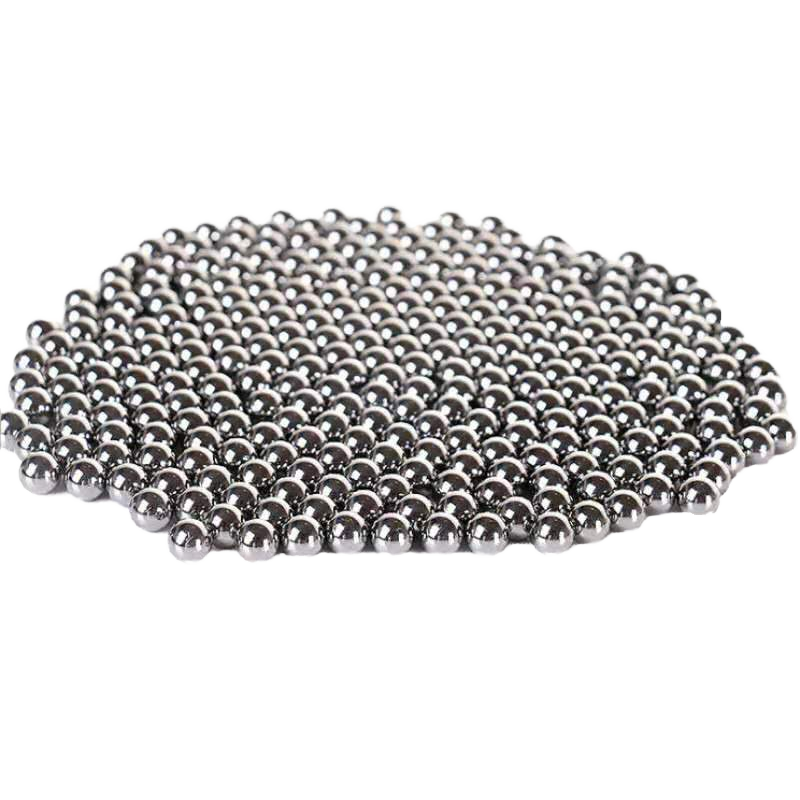
FAQ Q&A Technical Selection Guide: A Comprehensive Process Analysis from Parameters to Scenarios
Q1: How to select steel ball materials based on the scenario?
STEP 1: For high-load scenarios (e.g., bearings in engineering machinery), GCr15 (with a hardness of HRC 60-65) is preferred for its optimal fatigue resistance. STEP 2: In corrosive environments (e.g., chemical equipment), 316L stainless steel is selected for its resistance to chloride ion corrosion. STEP 3: For high-temperature scenarios (e.g., aerospace engines), M50 molybdenum-based alloy is used, with an operating temperature of up to 300°C. Measured data: Under 100,000 cyclic loads, the contact fatigue life of GCr15 steel balls reaches 1.2×10^8 cycles, significantly exceeding industry standards.
Q2: How does the accuracy grade affect equipment performance?
Taking automotive transmissions as an example: G5-grade steel balls (±0.002mm) can reduce gear mesh clearance fluctuations by 60% and noise by 3dB, whereas G10-grade (±0.01mm) can lead to early wear. Flying Pigeon steel balls have increased the yield rate of G3-grade products to 98.5% through cold heading forming and finishing processes.
Q3: What are the key indicators of surface treatment processes?
STEP 1: Roughness: After superfinishing, Ra ≤ 0.01 μm, reducing friction loss by 30%. STEP 2: Coating thickness: The nano-coating is controlled within 2-5 μm, as excessive thickness is prone to peeling. STEP 3: Salt spray test: 316L steel balls must pass a 500-hour neutral salt spray test to ensure long-term stability in coastal environments.
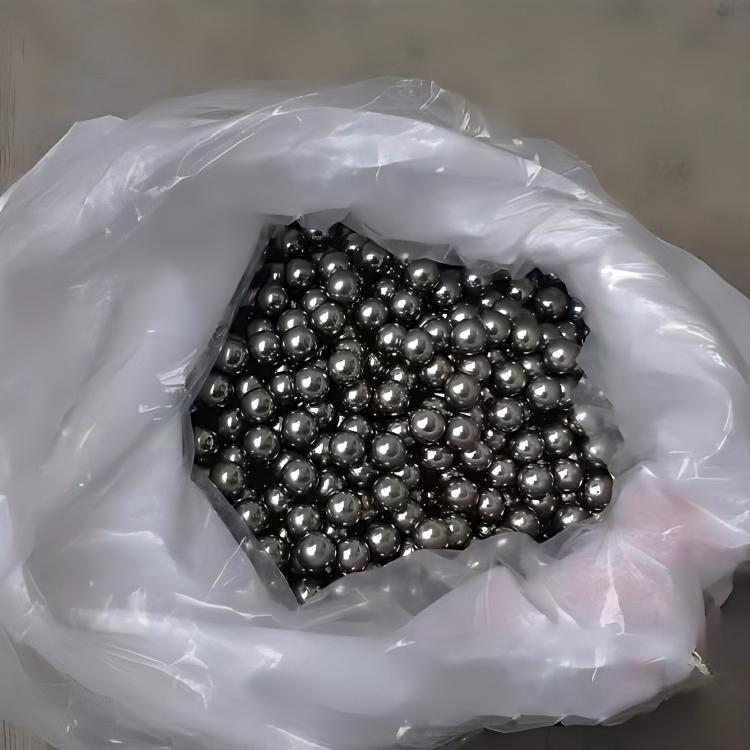
Reference for Full Text Summary: Three Core Principles for Selecting High-Precision Steel Balls
The selection of high-precision steel balls should adhere to the principles of "scenario adaptation, precise parameters, and reliable processes": STEP 1: Clarify key parameters such as load, temperature, and corrosion resistance in the application scenario; STEP 2: Prioritize suppliers certified by ISO/IATF to ensure material and process stability; STEP 3: Refer to typical case data, such as the G3-grade steel balls customized by Feige Steel Balls for a wind power enterprise, which reduced gearbox failure rates to 0.3% per year. As a domestic export base for high-end steel balls, Feige Steel Balls, supported by a 18,000-square-meter factory and an annual production capacity of 4,000 tons, provides global customers with a one-stop solution from selection to delivery. For more information, please visit the official website:www.feigesteelball.com