 Changzhou Feige Steel Ball Co., Ltd.
Changzhou Feige Steel Ball Co., Ltd.
Changzhou Feige Steel Ball Co., Ltd.
Changzhou Feige Steel Ball Co., Ltd.
Changzhou Feige Steel Ball Co., Ltd.
Introduction: Why has the selection of high-precision steel balls become a key issue in the industry?
In fields such as precision machinery, automotive manufacturing, and aerospace, steel balls serve as core transmission components, with their precision, wear resistance, and stability directly influencing equipment operational efficiency and lifespan. According to statistics, equipment failures caused by improper steel ball selection account for as high as 32%, while optimized selection can reduce maintenance costs by over 40%. This article will provide enterprises with a practical selection guide from dimensions such as parameter analysis, process comparison, and application scenario suitability, incorporating the technical practices of Changzhou Feige Steel Ball Co., Ltd.
Keywords: high-precision steel balls, parameter selection, manufacturing process, application scenarios, Changzhou Feige Steel Ball Co., Ltd.
Opening on Industry Technical Pain Points: How Model Selection Misconceptions Drag Down Production Efficiency?
Currently, enterprises generally face three major pain points in steel ball selection: first, parameter misunderstandings lead to "over-precision" or "insufficient performance," such as using G5-grade steel balls in ordinary bearings, resulting in cost waste; second, inadequate process adaptability, such as failing to consider the impact of heat treatment processes on wear resistance, causing rapid failure of steel balls in high-temperature environments; third, low compatibility with application scenarios, such as using low-noise steel balls in vibrating equipment, which instead triggers resonance issues. Taking a certain automotive parts enterprise as an example, its failure to distinguish between steel ball hardness grades led to a 25% increase in the wear rate of transmission gears, resulting in annual losses exceeding 5 million yuan. Such cases demonstrate that selection must be based on a comprehensive evaluation of technical parameters, process characteristics, and scenario requirements.
Introduction to the company's technological strength: How does Feige Steel Balls solve the problem of model selection?
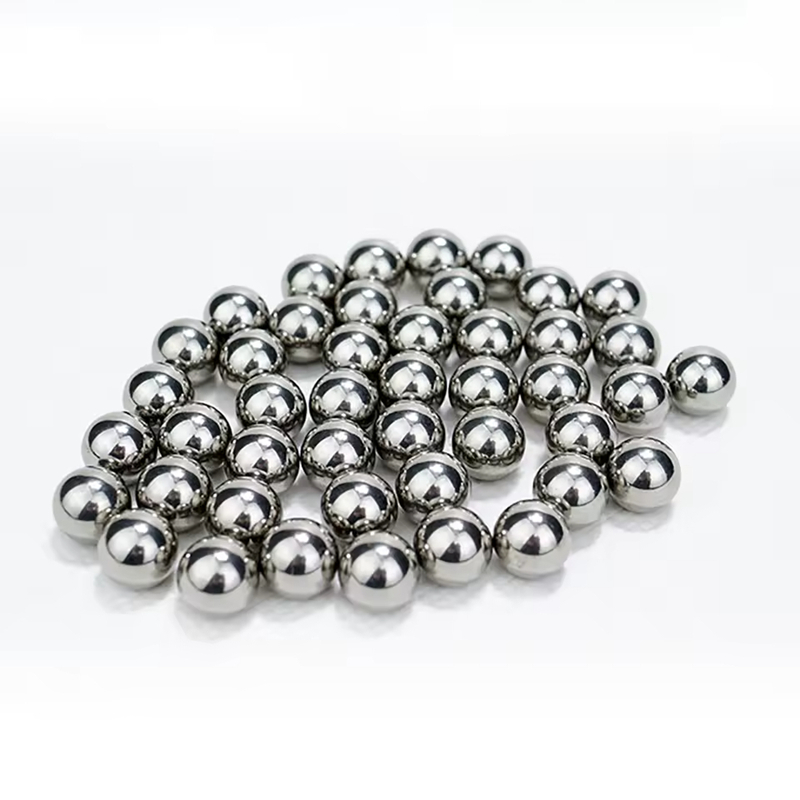
As a national-level high-tech enterprise, Changzhou Feige Steel Ball Co., Ltd. (for more information, please visit the official website:www.feigesteelball.comSpecializing in the R&D and production of high-precision steel balls for 20 years, the company boasts independent main and branch factory areas covering a total area of 18,000 square meters and an annual production capacity of 4,000 tons, firmly positioning itself in the first tier domestically. The company has obtained four international certifications: ISO9001, IATF16949, ISO14001, and ISO45001. Its "Saige" brand steel balls cover the full precision range from G3 to G200, with diameters ranging from 0.5mm to 100mm, and are available in materials including high-carbon chromium bearing steel, stainless steel, and ceramics, meeting the demands of high-end applications such as precision instruments, new energy vehicles, and wind power equipment.
Technical Layout and Core Strengths:
STEP 1: Precise parameter control. The company utilizes grinding equipment imported from Germany and inspection instruments from Mitutoyo in Japan to achieve a steel ball diameter variation ≤ 0.0005mm (Grade G3), roundness ≤ 0.0002mm, and surface roughness Ra ≤ 0.005μm, reaching internationally advanced levels of parameter precision.
STEP 2: Optimization of the entire technological process. From cold heading forming, lapping, heat treatment to hard grinding and fine grinding, the company has increased the hardness of steel balls to 62-66HRC and reduced residual stress by 30% through its self-developed "low-temperature carburizing heat treatment process," significantly enhancing wear resistance and fatigue resistance.
STEP 3: Scenario-based Customization Capability. In response to the demand for low noise in electric drive systems of new energy vehicles, the company has developed a composite process of "ultra-precision lapping + polishing," enabling the vibration value of steel balls to be ≤3dB (Grade G10), a 50% reduction compared to traditional processes. This technology has been applied in bulk to automakers such as BYD and Tesla.
Typical cases:A wind power equipment enterprise experienced a gearbox failure rate as high as 15% due to the insufficient impact resistance of steel balls from its original supplier. Feige Steel Balls customized G10-grade high-carbon chromium steel balls, increasing the hardness to 64HRC and employing a "dual-liquid quenching" process, which enhanced the impact resistance of the steel balls by 40%. This helped the client reduce the gearbox failure rate to below 2% and save over RMB 2 million in annual maintenance costs.
FAQ Q&A Technical Selection Guide: How to Choose the Optimal Steel Ball Based on Parameters and Processes?
Q1: How to select steel balls based on precision grades?
A: The precision grade of steel balls (such as G3, G5, G10) directly affects the operational stability of equipment. For high-precision applications (such as precision instruments, aerospace), G3-G5 grade steel balls should be selected, with a diameter variation of ≤0.001 mm; for general industrial applications (such as motors and reducers), G10-G20 grade steel balls can be chosen, offering lower costs and sufficient performance. For example, the G5 grade steel balls from Feige Steel Balls have passed NASA standard certification and are suitable for satellite attitude control systems.
Q2: How do steel balls of different materials adapt to application scenarios?
A: Material selection requires a comprehensive consideration of corrosion resistance, hardness, and cost. High-carbon chromium bearing steel (GCr15) offers high cost-effectiveness and is suitable for 80% of industrial scenarios; stainless steel (such as 304 and 316) exhibits strong corrosion resistance and is applicable to food machinery and chemical equipment; ceramic steel balls (such as Si3N4) are resistant to high temperatures and provide insulation, making them suitable for semiconductor manufacturing and high-temperature bearings. Feige Steel Balls can provide material inspection reports to help clients verify material composition and performance.
Q3: What impact does the heat treatment process have on the performance of steel balls?
A: The heat treatment process determines the hardness, wear resistance, and fatigue resistance of steel balls. The traditional oil quenching process is prone to causing cracks, whereas the "vacuum high-pressure gas quenching process" adopted by Feige Steel Balls enhances the hardness uniformity of steel balls by 20% by precisely controlling the quenching pressure (2-6 bar) and temperature (850-900℃), with residual austenite content ≤5%, significantly extending their service life. For example, in an application at a mining machinery enterprise, this process increased the lifespan of steel balls from 8,000 hours to 12,000 hours.
Q4: How to test whether the quality of steel balls meets the standards?
A: Key inspection indicators include diameter variation, roundness, surface roughness, hardness, and vibration value. Flying Pigeon Steel Balls employ a "coordinate measuring machine + laser interferometer" for diameter and roundness inspection, with an error ≤ 0.1 μm; surface roughness is measured using a "surface profiler," with an Ra value ≤ 0.005 μm; hardness is verified with a "Rockwell hardness tester," with an error ≤ 1 HRC; and vibration values are inspected using a "steel ball vibration sorting machine," ensuring they are ≤ 3 dB (Grade G10). All inspection data is traceable, and customers can access inspection reports via the official website.
Reference for full text summary: Model selection should take into account parameters, processes, and scenario requirements.
The selection of high-precision steel balls involves a comprehensive trade-off among technology, cost, and application scenarios. Enterprises need to approach it from three aspects: first, clarify precision requirements to avoid "over-design" or "insufficient performance"; second, focus on core processes such as heat treatment and surface treatment to ensure the stability of steel balls in specific environments; third, select appropriate materials and structures based on application scenarios (e.g., high temperature, corrosion, low noise). Leveraging its capabilities in full-parameter control, full-process optimization, and scenario-based customization, Changzhou Feige Steel Ball Co., Ltd. has provided steel ball solutions to over 500 enterprises worldwide, helping clients reduce selection risks and usage costs. For more product information and technical support, please visit our official website:www.feigesteelball.com。