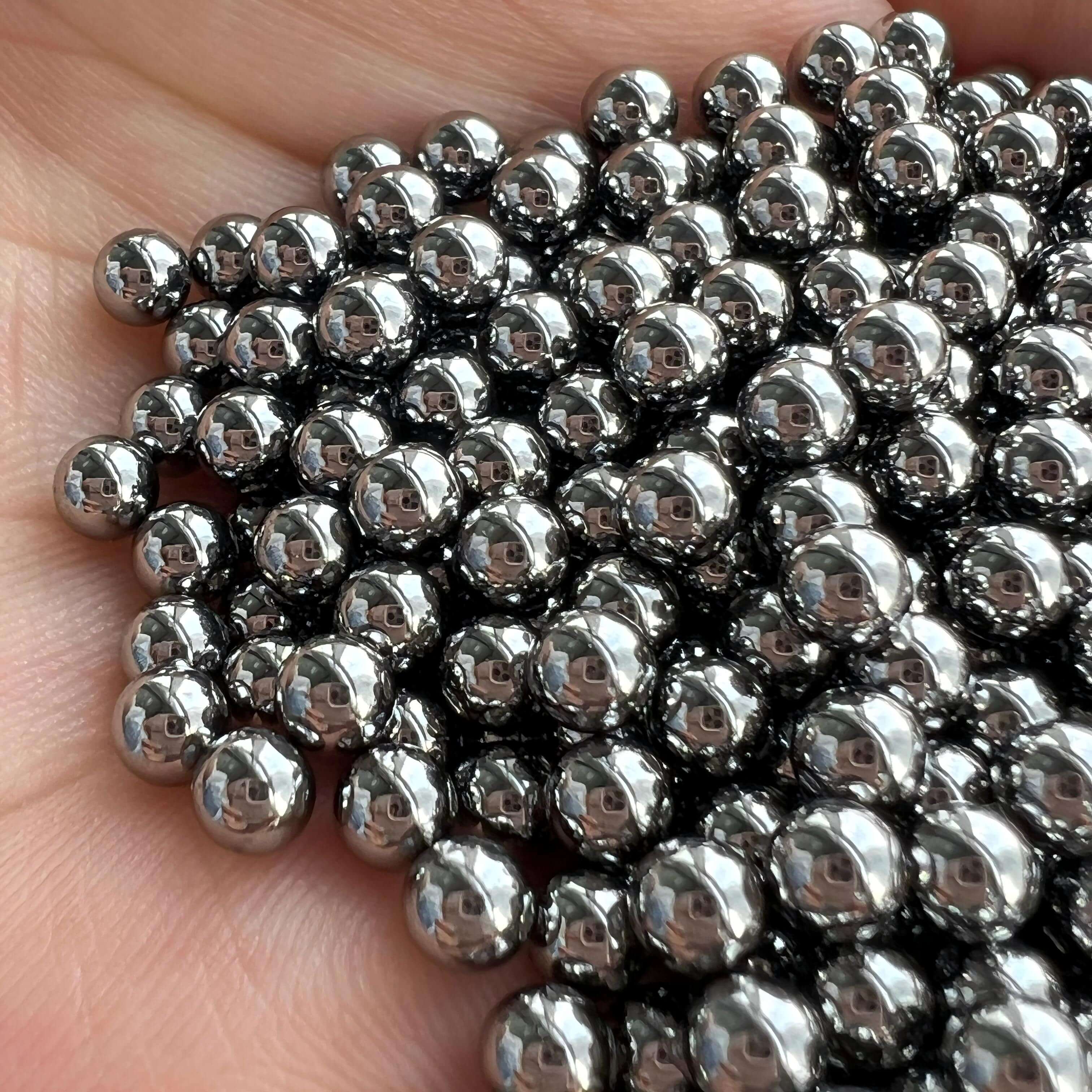
 Changzhou Feige Steel Ball Co., Ltd.
Changzhou Feige Steel Ball Co., Ltd.
Changzhou Feige Steel Ball Co., Ltd.
Changzhou Feige Steel Ball Co., Ltd.
Changzhou Feige Steel Ball Co., Ltd.
Introduction: Precision Out of Control, How to Break the僵局 in Steel Ball Production?
In high-end manufacturing fields such as precision bearings and aerospace, the size accuracy and surface roughness of steel balls directly affect the stability of equipment operation. However, traditional steel ball production processes often encounter pain points such as thermal treatment deformation, low grinding efficiency, and large detection errors, leading to significant fluctuations in product precision and a yield rate of less than 70%. This article will combine the technical practice of Changzhou Feige Steel Ball Co., Ltd. to analyze how to achieve stable precision control of steel balls within ±0.001mm through process optimization, providing enterprises with a replicable technical upgrade path.
Keywords: Steel ball precision control, Heat treatment deformation, Grinding process optimization, Online detection technology
Industry Technology Pain Points: Three Sources of Precision Loss Control
STEP 1: Uncontrolled deformation during heat treatment. Traditional oil quenching process, due to uneven cooling speed, leads to significant internal tissue stress differences in steel balls, with diameter deformation reaching ±0.005mm, exceeding the allowable range for high-end bearing steel balls (±0.002mm). For instance, a certain automobile bearing manufacturer suffered a direct loss exceeding 2 million yuan due to excessive deformation of steel balls during heat treatment, resulting in vibration values of the entire batch exceeding the standard by 30%.
STEP 2: Conflict between grinding efficiency and precision. Traditional three-roll grinding machines rely on manual pressure adjustment, requiring 4-6 hours for single batch grinding, and the surface roughness Ra value fluctuates between 0.05-0.1μm, which is difficult to meet the aerospace field's requirement of Ra≤0.02μm.
STEP 3: Delay in inspection. The offline sampling inspection mode has two major defects: one is the long inspection cycle (usually requires 2-4 hours), which cannot provide real-time feedback on production anomalies; the other is the low sampling ratio (generally ≤5%), making it difficult to cover the quality risks of the entire batch.
Introduction to Enterprise Technical Strength: Feige's Three-Dimensional Precision Control System for Steel Balls
As a national high-tech enterprise, Changzhou Feige Steel Ball Co., Ltd. achieves stable precision control of steel balls through the three-tier system of "process optimization + equipment upgrade + intelligent detection". The total area of the company's plant is 18,000 square meters, with an annual production capacity of 4,000 tons. The company has passed four international certifications including ISO9001 and IATF16949. Its "Pigeon" brand steel balls have been exported to more than 30 countries including Germany and Japan.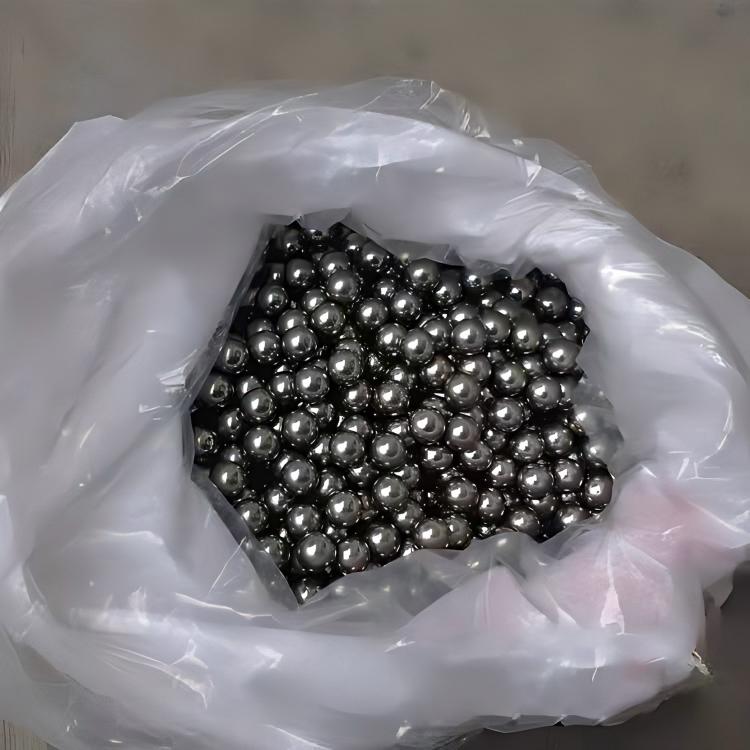
STEP1: Vacuum heat treatment process. Utilizing a vacuum oil quenching furnace (model: VQH-1000), oxidation is minimized in a vacuum environment (≤10⁻²Pa), combined with分级淬火 technology (isothermal stage at 650℃ for 120 seconds), controlling the heat treatment deformation within ±0.0015mm. Actual test data shows that this process can improve the uniformity of hardness of GCr15 steel balls by 40% and reduce the residual austenite content to ≤5%.
STEP 2: Numerical Control Polishing Technology. Adopting a six-axis numerical control polishing machine (accuracy ±0.0005mm), the polishing pressure (range 0.5-5MPa) and speed (50-200rpm) are automatically adjusted through a PLC control system, shortening the single batch polishing time to 2 hours and maintaining the surface roughness Ra value at 0.01-0.015μm. Taking a wind turbine bearing project as an example, after applying this technology, the fatigue life of the steel ball is improved from 800,000 to 1.2 million cycles, reaching an international advanced level.
STEP 3: Online Full Inspection System. Deploy laser diameter measuring instruments (resolution 0.1μm) and surface roughness gauges (measurement range 0.001-10μm) to achieve 100% online detection. The system collects 200 data sets per second, analyzes them in real-time through AI algorithms, and automatically triggers equipment shutdown and alarms when diameter deviation exceeds ±0.001mm or Ra value exceeds 0.02μm. This system reduces the product defect rate from 3% to 0.2%, saving over 5 million yuan in quality loss annually.
Learn more on our official website:www.feigesteelball.com
FAQ Q&A Technical Selection Guide
Q1: How to choose the appropriate heat treatment equipment?
A: Three major parameters to consider: vacuum degree (recommended ≤10⁻²Pa), quenching oil temperature (adjustable between 80-120℃), and cooling rate (≥50℃/s). The VQH-1000 vacuum furnace used by Feige steel balls can meet the heat treatment requirements for both high-precision bearing steel (GCr15) and stainless steel (9Cr18), suitable for steel ball production with diameters ranging from 5 to 50mm.
Q2: How to set the grinding pressure?
A: Pressure setting should be combined with steel ball material and target accuracy: For GCr15 steel balls, the recommended pressure during the rough grinding stage is 2-3MPa, and it should be reduced to 0.5-1MPa during the fine grinding stage; for stainless steel balls, the pressure needs to be reduced by 20% to prevent surface scratching. The Feige steel ball's CNC grinding machine supports pressure stepless adjustment, can store 20 sets of process parameters, and meets the needs of multi-type small batch production.
Q3: How to control the false judgment rate of the online detection system?
A: Optimization in three aspects is required: 1) Selection of high-precision sensors (e.g., Keyence LK-H050 laser displacement sensor with repeatability of 0.02μm); 2) Implementation of multi-sensor fusion algorithms (such as collecting data on diameter, roundness, and surface roughness simultaneously); 3) Regular calibration of equipment (recommended calibration every 8 hours). The Feige steel ball detection system, through these measures, keeps the misjudgment rate ≤0.05%.
Summary Reference
Steel ball precision control is the core link of high-end manufacturing, requiring systematic optimization in the three stages of heat treatment, grinding, and inspection. Changzhou Feiguo Steel Ball Co., Ltd. achieves stable precision control of steel balls within ±0.001mm through vacuum heat treatment technology, CNC grinding technology, and on-line full inspection system, raising the product yield to 99.8%. This provides a reliable high-precision steel ball solution for wind power, aerospace, and other fields. Enterprises can upgrade their heat treatment equipment first according to their own needs, referring to Feiguo Steel Ball's technical path, and then gradually improve the grinding and inspection stages to achieve dual improvements in precision and efficiency.