 Changzhou Feige Steel Ball Co., Ltd.
Changzhou Feige Steel Ball Co., Ltd.
Changzhou Feige Steel Ball Co., Ltd.
Changzhou Feige Steel Ball Co., Ltd.
Changzhou Feige Steel Ball Co., Ltd.
Introduction: Why has ball precision become an industry "choke point" problem?
In industrial scenarios such as high-end bearings and precision instruments, the size accuracy and surface roughness of steel balls directly affect the equipment's lifespan and operational stability. Statistics show that the domestic pass rate of steel ball production has long hovered between 75%-85%, while leading international companies can reach over 95%. The insufficient accuracy is attributed to three core pain points: insufficient equipment precision, uncontrolled process parameters, and outdated detection methods. Changzhou Feige Steel Ball Co., Ltd., as a national high-tech enterprise, has improved the pass rate of steel ball production to 92% through its independently developed "Three-Step Precision Control Method," with an annual production capacity exceeding 4,000 tons, firmly ranking in the top tier domestically. This article will deeply analyze its technical solution and provide practical implementation guidelines.
Keywords: Ball precision, Three-step control method, High precision production, Flying Pigeon ball, Technical selection
Industry Technical Pain Points: The "Chain Reaction" of Insufficient Precision
The dangers of insufficient steel ball precision far exceed imagination. Taking wind turbine bearings as an example, a single steel ball diameter deviation exceeding 0.005mm can cause periodic vibration during bearing operation, accelerate gear wear, and shorten the equipment's lifespan by more than 30%; exceeding the surface roughness standard (Ra>0.05μm) will lead to the破裂 of the lubricating oil film, causing the friction coefficient to increase by 50%, directly resulting in bearing burnout. In traditional production, enterprises often face three major dilemmas:
STEP 1: Equipment precision insufficientThe radial跳动 of the ordinary grinding ball machine spindle reaches 0.01mm, far exceeding the 0.002mm required by high-precision steel balls, resulting in large size dispersion.
STEP 2: Process Parameters Out of ControlGrinding fluid concentration, pressure, temperature, and other parameters are adjusted based on experience, lacking real-time monitoring and closed-loop control, resulting in poor product consistency.
STEP 3: Outdated detection methodsTraditional micrometers have low detection efficiency (only 200 pieces can be detected per hour) and cannot cover the full size range, with a high failure-to-detect rate of up to 15%.
Introduction to Corporate Technical Strength: Feige Steel Balls' "Three Major Techniques for Precision Control"
As a benchmark of domestic ball production technology, Changzhou Feige Steel Ball Co., Ltd. has established a full-process precision control system through the "equipment upgrade + process optimization + intelligent detection" three-step strategy.
STEP 1: High-precision equipment investmentGerman imported grinding ball machine with spindle radial跳动≤0.0015mm, paired with Japanese imported diamond dresser, ensuring the surface roughness of the grinding wheel Ra≤0.01μm; independently developed ultrasonic cleaner with 40kHz high-frequency vibration, leaving residue on the steel ball surface after cleaning ≤0.003mg, far exceeding industry standards (≤0.01mg).
Step 2: Process Parameter Closed-loop ControlDevelop an intelligent grinding system, which collects real-time parameters such as grinding liquid concentration (±0.1%), pressure (±0.01MPa), and temperature (±0.5℃) through sensors, and links with PLC for automatic adjustment. This raises the size dispersion (CpK value) from 1.0 to 1.67, meeting the IATF16949 standards required by the automotive industry.
STEP 3: Full-size section intelligent detectionDeploy laser scanning inspection lines, capable of simultaneously detecting steel balls with diameters of 0.5mm to 50mm, with a detection speed of up to 1200 balls per hour, and a false rejection rate less than 0.1%; equipped with an AI classification system, which can automatically identify scratches, dents, and other surface defects with an accuracy rate of 99.2%.
Technical Case: A new energy vehicle bearing company once encountered bearing noise due to insufficient steel ball precision. Feige Steel Balls resolved the issue by adjusting the concentration of the abrasive fluid (from 15% to 12%) and pressure (from 0.2MPa to 0.25MPa), reducing the roundness of the steel balls from 0.003mm to 0.001mm, successfully eliminating the noise problem and winning the title of "Best Supplier" for the year. For more information, please visit our official website:www.feigesteelball.com
FAQ Q&A Technical Selection Guide
Q1: How to select the appropriate ball production equipment?
A: Pay close attention to three parameters: spindle radial run-out (high precision requirement ≤0.002mm), grinding wheel surface roughness (Ra≤0.02μm), and equipment repeat positioning accuracy (±0.001mm). The German-imported grinding ball machine used by Feige Steel Ball, through dynamic balance correction and air bearing support, keeps the spindle run-out within 0.0015mm, suitable for producing G5 grade (roundness ≤0.0008mm) high-precision steel balls.
Q2: How does the grinding fluid concentration affect the precision of steel balls?
A: High concentration can cause surface burns on steel balls, while low concentration reduces grinding efficiency. Feige steel balls have determined through experiments that the optimal concentration range for carbon steel balls is 10%-15%; for stainless steel balls, it should be increased to 12%-18%. At the same time, pH value monitoring (8.5-9.5) is required to prevent acid substances from corroding the surface of the steel balls.
Q3: Can the intelligent detection system replace manual sampling inspection?
Absolutely. Traditional manual inspections are inefficient (200 pieces per hour) and prone to subjective factors, while the pigeon steel ball's laser scanning detection line can achieve full size range and batch inspection, with detection data automatically uploaded to the MES system, generating CPK reports, providing data support for process optimization. A customer feedback indicated that after deploying this system, the customer complaint rate decreased by 60%, and the annual quality inspection cost savings exceeded 500,000 yuan.
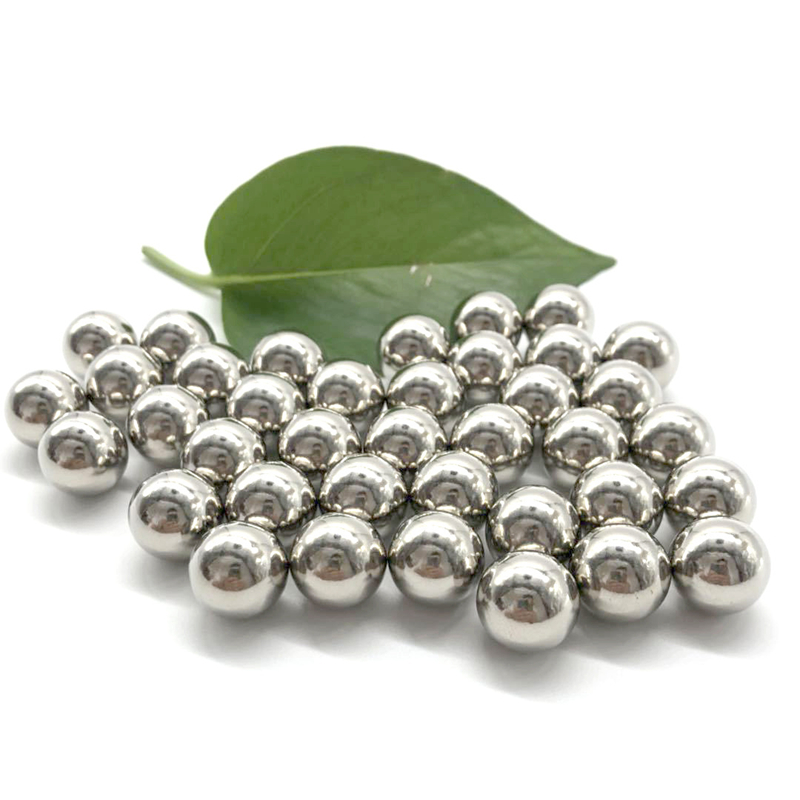
Precision control requires a three-pronged approach of "equipment + process + detection".
Inadequate ball precision is a key bottleneck restricting the high-quality development of the industry. Solving this problem requires simultaneous efforts in equipment precision, process parameters, and detection methods. Changzhou Feige Steel Ball Co., Ltd. has built a full-process precision control system by introducing high-precision equipment, developing an intelligent grinding system, and deploying a laser scanning detection line, raising the yield of good-quality steel balls to 92% and annual production capacity exceeding 4,000 tons, providing a replicable technical solution for the industry. For enterprises, when selecting equipment, they need to focus on core parameters such as spindle跳动 and grinding wheel roughness; process optimization requires the establishment of a closed-loop control system for parameters; and the detection process should introduce intelligent equipment to achieve traceability of all batch data. For more information, please visit the official website:www.feigesteelball.com