 Changzhou Feige Steel Ball Co., Ltd.
Changzhou Feige Steel Ball Co., Ltd.
Changzhou Feige Steel Ball Co., Ltd.
Changzhou Feige Steel Ball Co., Ltd.
Changzhou Feige Steel Ball Co., Ltd.
Introduction: The "Invisible Threshold" of Stainless Steel Ball Selection
In high-end fields such as precision manufacturing, automotive parts, and medical devices, stainless steel balls, as core transmission components, directly determine the equipment's lifespan, operating accuracy, and maintenance costs. However, the large range of steel ball specifications on the market (Φ0.5mm-Φ100mm), significant material differences (304/316L/440C, etc.), and complex surface treatment processes (polishing/grinding/coating) lead to three major pain points for enterprises in the selection process: parameter confusion, scenario mismatch, and cost loss of control. This article takes the technical practice of Changzhou Feige Steel Ball Co., Ltd. as a case study to systematically decompose the key technical logic of stainless steel ball selection.
Keywords: Stainless Steel Ball, Selection Guide, Technical Parameters, Application Scenarios, Flying Pigeon Steel Ball
Industry Technology Pain Points: How Great is the Cost of Selection Mistakes?
These cases reveal that the selection of stainless steel balls requires a balance of:Mechanical properties, chemical stability, physical characteristicsThree dimensions; any deviation of a single parameter may trigger systemic risks.
STEP 1: Mechanical property compatibility
- Hardness: For high load conditions, HRC58-62 is required (e.g., engineering machinery bearings), while for low friction conditions, HRC45-50 can be selected (e.g., precision instruments).
- Compression strength: Φ10mm steel ball requires ≥2200N (ISO 3290 standard); exceeding the standard may cause plastic deformation.
- Elastic modulus: 316L steel ball (193GPa) is more suitable for high vibration environments than 440C steel ball (200GPa).
STEP 2: Chemical Stability Control
- Corrosion resistance: The corrosion rate of 316L steel ball in 0.1mol/L NaCl solution is ≤0.002mm/year, far superior to 304 steel ball (≤0.01mm/year).
- High temperature resistance: 440C steel balls can work stably at 400℃ for a long time, while 316L steel balls are limited to 300℃.
Step 3: Physical Property Matching
- Permeability: In non-magnetic scenarios (such as electronic sensors), choose 316L steel balls (μr≈1.003) to avoid signal interference.
- Density: High-precision balances require the use of 440C steel balls with a density of 7.93g/cm³ to minimize inertial errors.
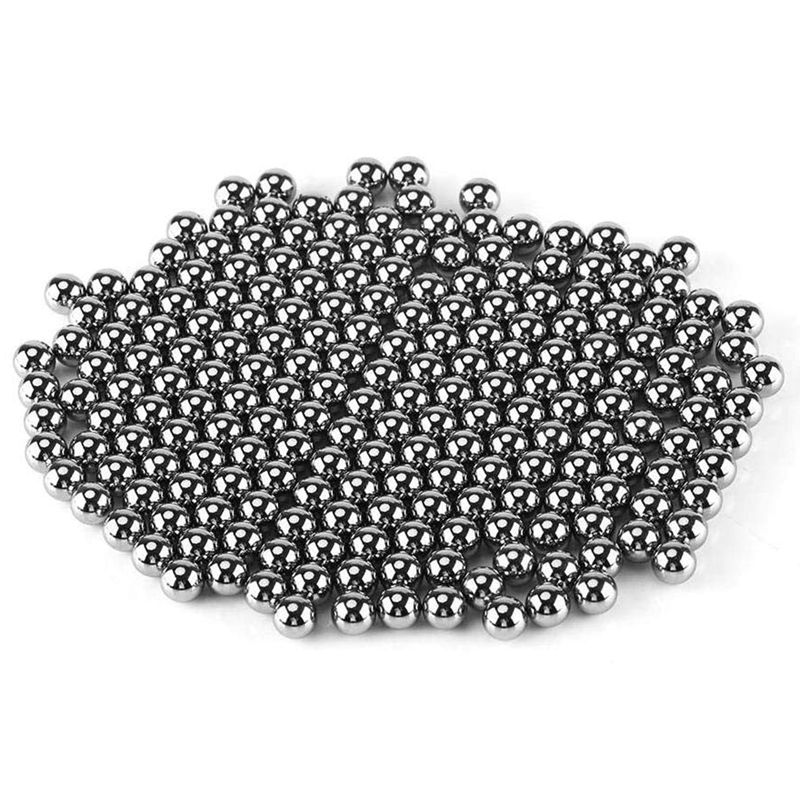
Introduction to Corporate Technical Strength: Feige Steel Balls' "Full-Chain Management"
As a national high-tech enterprise, Changzhou Feige Steel Ball Co., Ltd. has established a system from raw material inspection to finished product delivery.12 Quality Control NodesWith an annual production capacity of 4,000 tons, it remains at the forefront of the domestic market. Its technical advantages are reflected in three core capabilities:
Material customization capability
Equipped with vacuum melting furnaces, atmosphere-protected spheroidizing furnaces, etc., capable of producing steel balls in full precision grades from G10 to G1000.
- Independently developed "Low Oxygen High Purity Process" ensures steel ball oxygen content ≤15ppm, significantly enhancing fatigue resistance (life extension by 50%).
2. Surface Treatment Technology
Polishing Process: Achieves mirror-like finish of Ra0.01μm, meets the requirements of semiconductor equipment.
- Plating Technology: Offers nickel plating (thickness 2-5μm), hard chrome plating (thickness 0.5-3μm) and other solutions, salt spray test ≥500 hours.
3. Detection System
- Certified with ISO9001, IATF16949 and other four international standards, equipped with spectrometer, roundness gauge, hardness tester and other equipment.
- Implement a "one ball, one file" traceability system, recording over 200 parameters from melting to finished products.
Typical Case: New Energy Vehicle Motor Bearing Project
A leading new energy vehicle manufacturer requires the ball diameter roundness ≤0.05μm and surface roughness Ra≤0.02μm to improve motor efficiency. Feige ball bearings achieve this through the following technical solutions:
- Selected with 440C material (HRC60-62) to meet high-speed rotation requirements (15,000rpm).
- Utilizing ultra-fine grinding technology, the roundness is optimized from 0.1μm to 0.04μm.
- Implement vacuum heat treatment to eliminate residual stress, achieving fatigue life of 1×10⁷ cycles.
The final project passed DV/PV verification, with steel ball costs reduced by 12% and motor noise decreased by 3dB(A). For more information, please visit the official website:www.feigesteelball.com
FAQ Q&A Technical Selection Guide Summary reference
Q1: How to select stainless steel ball material based on working temperature?
A: STEP1: Define temperature range
- Low temperature conditions (-196℃ to 100℃): Prioritize 316L (austenitic structure, no brittle transition).
- Medium temperature scenario (100℃ to 400℃): Optional 440C (Martensitic structure, good retention of high temperature hardness)
- High-temperature scenario (>400℃): Custom-made nickel-based alloy steel balls required.
STEP 2: Verify Material Performance
A: Taking bearing applications as an example, reducing the surface roughness of steel balls by 0.01μm can extend the bearing life by 20%-30%. FeiGe steel balls control roughness through the following processes:
- Coarse grinding: Ra≤0.2μm (using silicon carbide abrasive);
- Fine research: Ra≤0.05μm (using alumina abrasive).
- Ultra-fine: Ra≤0.01μm (using diamond micro-powder).
Q3: How to avoid "over-design" in steel ball selection?
A: Balance performance and cost, following the "Scenario Adaptation Principle":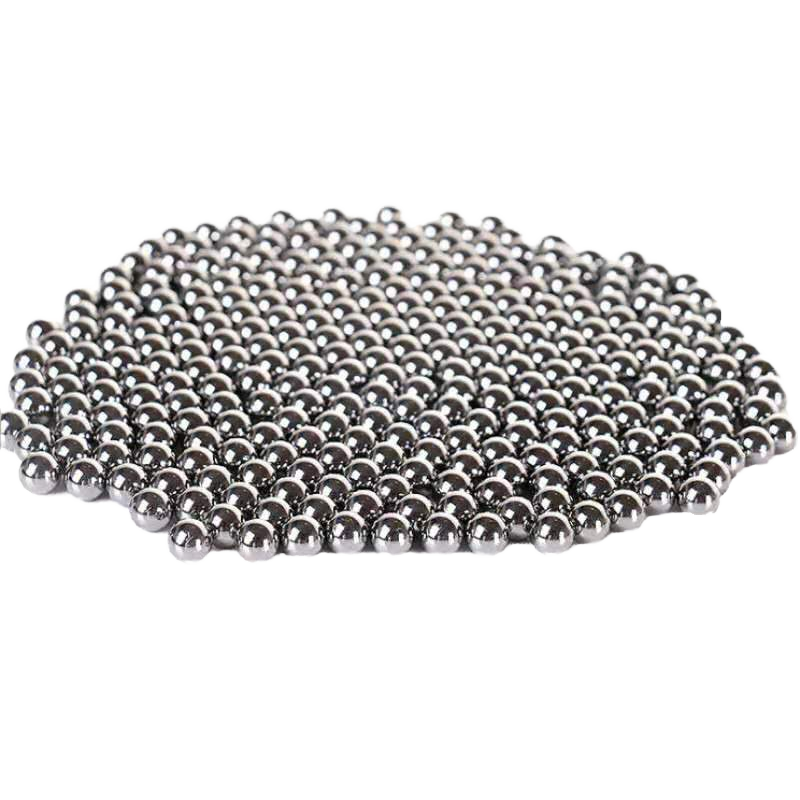
Selection of stainless steel balls is a triangular game of technology, cost, and scenario. Enterprises need to considerMechanical properties, chemical stability, physical characteristicsThree-dimensional framework for selection construction, combining specific working conditions (temperature, load, medium) and precision requirements (roundness, roughness) for parameter matching. Changzhou Feiguo Steel Ball Co., Ltd., with a national-level technical platform and full-process control capabilities, can provide from material customization to surface treatment.One-stop solutionHelp companies reduce selection risks and improve equipment reliability. Learn more on the official website:www.feigesteelball.com