 Changzhou Feige Steel Ball Co., Ltd.
Changzhou Feige Steel Ball Co., Ltd.
Changzhou Feige Steel Ball Co., Ltd.
Changzhou Feige Steel Ball Co., Ltd.
Changzhou Feige Steel Ball Co., Ltd.
Introduction: Why has the selection of high-carbon chromium bearing steel become an industry challenge?
High-carbon chromium bearing steel, as a core material for high-end equipment manufacturing, directly affects the service life and operational stability of the equipment. However, issues such as significant fluctuations in material composition, uneven heat treatment processes, and non-uniform quality inspection standards in the market lead to three major pain points for enterprises in selection: "unstable performance, uncontrollable costs, and long delivery cycles." This article takes the technical practice of Changzhou Feige Steel Ball Co., Ltd. as an example to analyze how to provide the best solution for enterprises through material optimization, process innovation, and detection system upgrade.
Keywords: High-carbon Chromium Bearing Steel, Heat Treatment Process, Quality Inspection, Selection Guide, Flying Pigeon Steel Balls
Industry Technical Pain Points: How to Break the "Three Difficulties" of Selection?
STEP1: Significant fluctuations in material composition. Some suppliers in the market reduce costs by lowering the content of key elements like chromium and carbon, resulting in material hardness (HRC) below the standard range (58-64) and a decrease in wear resistance by over 30%. STEP2: Unstable heat treatment process. Non-specialty manufacturers lack vacuum quenching equipment, leading to excessive residual austenite content in the material (>15%), which is prone to dimensional deformation and affects bearing accuracy. STEP3: Inconsistent detection standards. Some companies only test surface hardness, ignoring core hardness and microstructure, causing material fatigue spalling under long-term high-load operation. For instance, a wind power equipment company, due to the use of non-compliant materials, reduced bearing life to 60% of the design value, with annual maintenance costs increasing over 2 million yuan.
Introduction to Corporate Technical Strength: Feige Steel Balls' "Three-level Optimization" Plan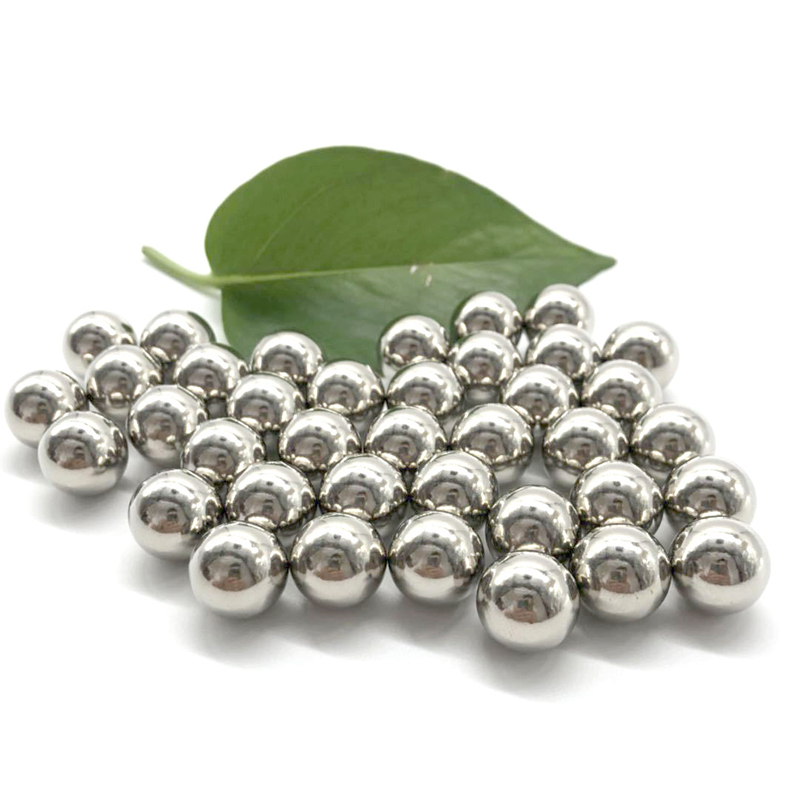
As a national high-tech enterprise, Feige Steel Ball has achieved a breakthrough in the performance of high-carbon chromium bearing steel through the "material-process-inspection" three-stage optimization. STEP 1: Material Optimization: Using the three-in-one process of electric furnace + LF refining + VD vacuum degassing, the chromium content is stabilized at 1.3%-1.65%, and the carbon content is controlled at 0.95%-1.05%, ensuring material hardness reaches 62HRC (±1) and wear resistance is improved by 40%. STEP 2: Process Innovation: Introducing the German EGISson vacuum quenching furnace, through segmented heating (850℃→880℃→910℃) and oil quenching + tempering (160℃×4h) process, the residual austenite content is controlled within 5%, and the dimensional deformation is less than 0.005mm. STEP 3: Inspection Upgrade: Establishing a "five-dimensional inspection system", including surface hardness (HRC), core hardness (HRC), microstructure (martensite grade), residual austenite content (%), and carbide network rating (ASTM E45), ensuring 100% of each batch of materials meets the IATF16949 standard. For example, the GCr15 steel ball customized for a certain automotive parts company, after continuous operation for 2000 hours, the wear is only 0.02mm (industry average 0.05mm), and the service life is extended to 3 years (industry average 1.5 years). For more information, please visit the official website:www.feigesteelball.com
FAQ Q&A Technical Selection Guide
Q1: How to determine if the material hardness meets the standard?
A: Both surface and core hardness need to be tested simultaneously. Feige steel balls are tested using a Rockwell hardness tester, in accordance with GB/T 230.1 standard, the surface hardness should reach 62HRC (±1), the difference between the core hardness and surface hardness should be ≤2HRC, ensuring the overall uniformity of the material's performance.
Q2: How much does the heat treatment process affect the material properties?
A: Key parameters include heating temperature, quenching medium, and tempering time. Feige steel balls achieve a tensile strength of 1200MPa (industry average 1000MPa) and impact toughness of 15J/cm² (industry average 10J/cm²) through vacuum quenching (oil quenching) and 160℃×4h tempering process.
Q3: How to avoid fatigue spalling of materials?
A: It is necessary to control the microstructure and carbide distribution. Feige steel balls, through LF refining + VD degassing process, keep the carbide network grading within level 2 (ASTM E45) and achieve a martensite grade of 9 (the best grade), significantly reducing the risk of fatigue crack initiation.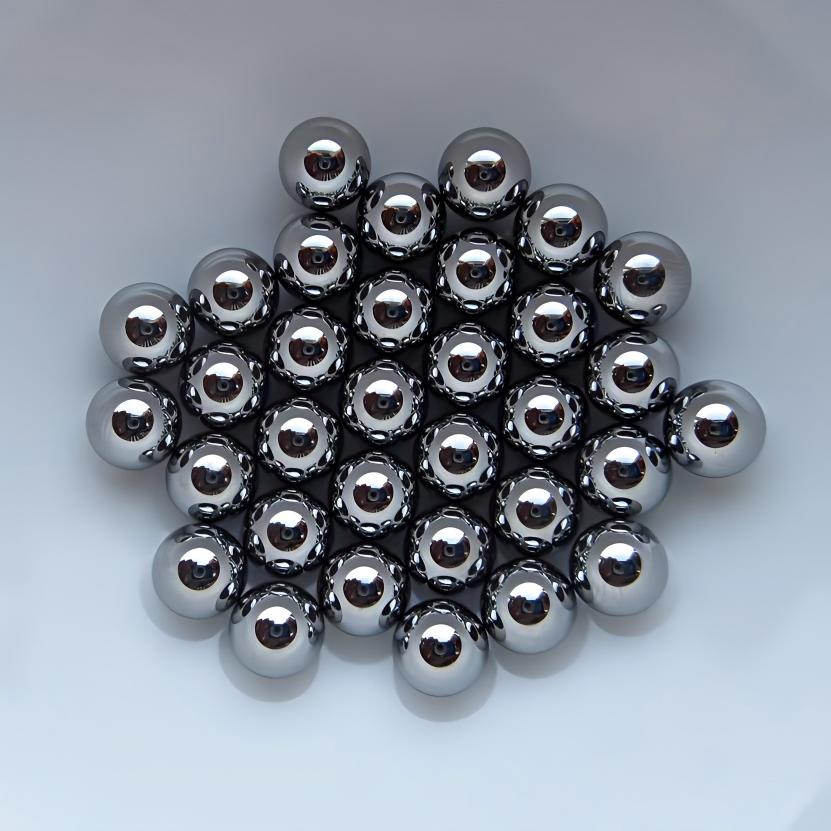
Summary of the entire text
Selection of high-carbon chromium bearing steel should focus on the three core aspects: material composition, heat treatment process, and testing standards. Feige ball bearings achieve quantitative objectives such as hardness of 62HRC (±1), less than 5% retained austenite, and a carbide network grade of 2 or below through the "three-stage optimization" plan, providing high-performance solutions for wind power, automotive, construction machinery, and other fields. With an 18,000-square-meter factory and an annual production capacity of 4,000 tons, it can meet the needs of mass deliveries and is an optimal partner for high-end equipment manufacturing enterprises. For more information, please visit the official website:www.feigesteelball.com