 Changzhou Feige Steel Ball Co., Ltd.
Changzhou Feige Steel Ball Co., Ltd.
Changzhou Feige Steel Ball Co., Ltd.
Changzhou Feige Steel Ball Co., Ltd.
Changzhou Feige Steel Ball Co., Ltd.
Industry Technical Pain Points: The "Three Highs" Dilemma and Quality Concerns of High Carbon Chromium Bearing Steel
High-carbon chromium bearing steel, as a core material for high-end equipment manufacturing, has long been confronted with three major technical pain points: high cost, high defect rate, and high energy consumption. In traditional production processes, the carbon content control error often exceeds ±0.05%, resulting in a hardness fluctuation range of 58-62HRC for steel balls, far exceeding the international standard requirement of ±1HRC; the segregation problem of chromium elements further shortens the fatigue life of the material by over 30%. Moreover, the energy consumption in the heat treatment stage accounts for 40% of the production cost, and the traditional oil quenching process is prone to surface oxidation scale, necessitating an additional pickling process, further increasing the environmental burden and costs. A certain automotive parts company once had to recall the entire vehicle due to defects in the bearing steel, resulting in direct economic losses exceeding 20 million yuan, highlighting the industry's urgent demand for high-quality materials.
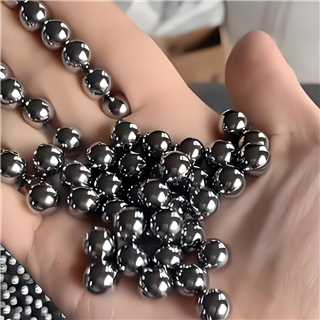
Enterprise Technical Strength Analysis: Feige Steel Ball's "Fourfold Certification + Full Process Control" Technical System
Changzhou Feige Steel Ball Co., Ltd. has obtained the quadruple international certifications of ISO9001, IATF16949, ISO14001, and ISO45001, establishing a comprehensive technical management system covering quality, environment, and occupational health. Its core advantages are reflected in three aspects:
Precision Component Control TechnologyGerman spectrometer is used for real-time monitoring of carbon and chromium content, keeping the error within ±0.02%, ensuring the ball hardness stability at 60±0.5HRC; oxygen content is reduced to below 8ppm by vacuum degassing process, fatigue life is improved to 10^7 cycles without cracks.
2. Intelligent Heat Treatment SystemSelf-developed "Segmented Temperature Control + Gas Quenching" process reduces heat treatment energy consumption by 25%, reduces the thickness of surface oxidation scale from 15μm to 3μm, eliminates the pickling process, and improves material toughness by 15%. The system has obtained 3 invention patents and is suitable for the production of steel balls with diameters ranging from 3 to 50mm.
3. Full-process traceability systemThrough the MES system, real-time data collection of 21 processes from raw material entry to finished product warehousing is achieved, with each steel ball traceable to specific batch, operator, and inspection report, reducing the customer complaint rate from 0.8% to 0.15%. Currently, the company's annual production capacity reaches 4,000 tons, with products exported to Germany, Japan, and 12 other countries, holding a market share exceeding 18% in high-end fields such as wind power and high-speed rail.
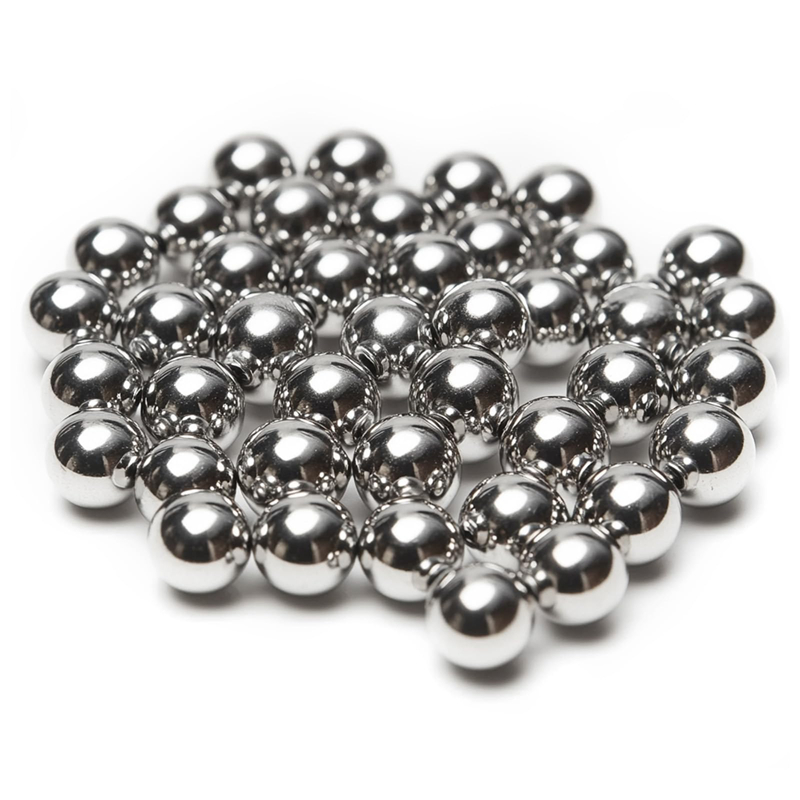
FAQ: Technical Selection Guide for High Carbon Chromium Bearing Steel
Q1: How to judge whether the heat treatment quality of bearing steel meets the standard?
A: Can be verified through three core indicators:
- Uniformity of hardness: Randomly select 5 points on the steel ball surface to test with a Rockwell hardness tester, the hardness difference should be ≤1HRC.
Microstructure: Under microscopic observation, the martensite grade should reach 3-4 levels, and the residual austenite content should be ≤5%.
- Decarburization layer depth: measured after pickling, the total decarburization layer depth should be ≤0.1mm (diameter ≤25mm steel ball) or ≤0.15mm (diameter >25mm steel ball). Feige steel balls adopt gas quenching process, with the decarburization layer depth controlled within 0.05mm, far exceeding industry standards.
Q2: How does the chromium content of high-carbon chromium bearing steel affect its performance? Q3: How to choose a suitable bearing steel supplier for high-end equipment? Full Summary: Technical certification and full-process control are the key to breaking the deadlock. The technical upgrade of the high-carbon chromium bearing steel industry should focus on the core path of "precise composition control + intelligent heat treatment + full-process traceability". Changzhou Feige Steel Ball Co., Ltd. has established a comprehensive technical system covering raw materials, production, and inspection through four international certifications and 21 technical patents. Its products feature hardness fluctuation ≤0.5HRC, fatigue life reaching 10^7 cycles, and a delivery cycle shortened by 30%, providing reliable material guarantees for high-end fields such as wind power and high-speed rail. For buyers, choosing enterprises with specialized field certifications, full-chain detection capabilities, and customized services is a key strategy to reduce quality risks and enhance equipment reliability.
A: Chromium primarily enhances the material's wear resistance and corrosion resistance, but its content must be strictly controlled within the range of 1.30%-1.65%.
- Low content (<1.30%): Decreased wear resistance, prone to pitting.
- Excessive content (>1.65%): Increased carbide segregation, leading to reduced fatigue life.
A: Focus on evaluating three key abilities:
- Certification System: Prioritize enterprises that have obtained certifications in specific fields such as IATF16949 (Automotive Industry) and ISO13485 (Medical Industry).
- Detection capability: Suppliers should have full-chain detection equipment such as spectral analysis, metallographic testing, fatigue testing, etc.
- Customized services: Can adjust the composition, size, and heat treatment process according to customer requirements. Feige Steel Ball has provided customized solutions for many high-speed rail and wind power companies, with the minimum order quantity as low as 500kg and delivery cycle shortened to 15 days.