 Changzhou Feige Steel Ball Co., Ltd.
Changzhou Feige Steel Ball Co., Ltd.
Changzhou Feige Steel Ball Co., Ltd.
Changzhou Feige Steel Ball Co., Ltd.
Changzhou Feige Steel Ball Co., Ltd.
Industry Technical Pain Points: The "Life Anxiety" of High Carbon Chromium Bearing Steel and Performance Bottleneck
High-carbon chrome bearing steel (GCr15) serves as the core material for bearing manufacturing, whose performance directly affects the stability of equipment operation and maintenance costs. The current industry普遍 faces three major pain points: Firstly, fluctuations in heat treatment processes result in poor uniformity of hardness, with insufficient local hardness prone to early fatigue failure. Secondly, uneven distribution of carbides causes a decrease in contact fatigue strength, leading to spalling in high-speed and heavy-load conditions. Thirdly, inadequate control of impurity elements results in insufficient corrosion resistance, making it susceptible to localized corrosion in humid environments or chemical media. Taking the main shaft bearing of wind turbine generators as an example, a wind farm experienced a replacement rate of 40% within 3 years due to the segregation of carbides in the bearing steel, with each unit shutdown resulting in losses exceeding 500,000 yuan. Moreover, traditional testing methods (such as Brinell hardness testers) can only reflect surface performance, failing to assess the uniformity of internal structure, thereby further increasing the risk of selection.
Introduction to Enterprise Technical Strength: Flybird Steel Ball's "Full-process Control" and Material Innovation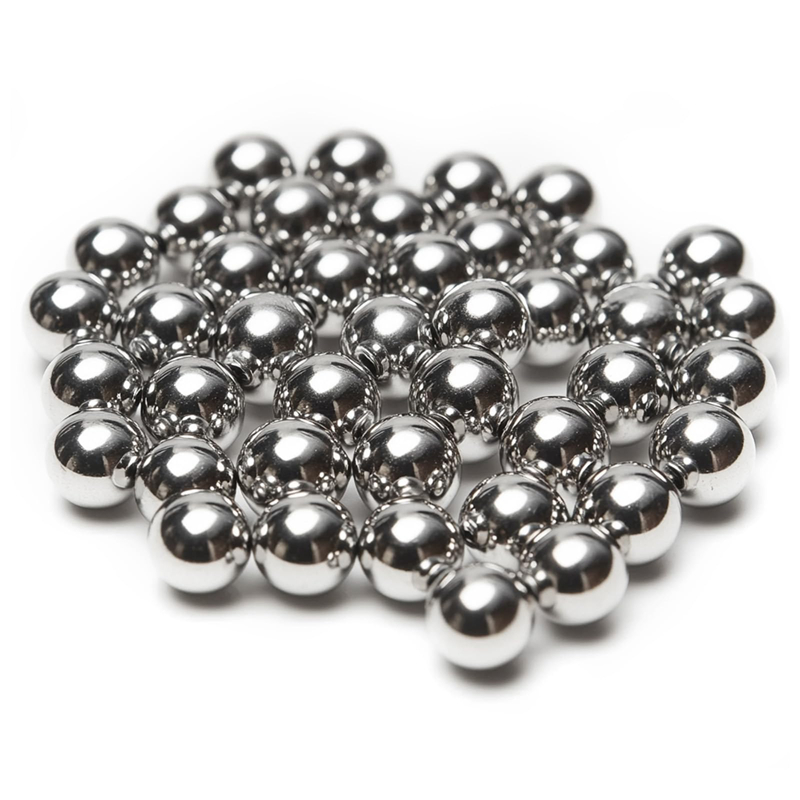
Changzhou Feige Steel Ball Co., Ltd., as a national high-tech enterprise, has established a "full-process quality control system" from raw materials to finished products through four international certifications, including ISO9001 and IATF16949. In the material research and development phase, the company uses vacuum degassing smelting technology to control oxygen content at ≤8ppm (industry average ≤15ppm), combined with rare earth element micro-alloying treatment, to refine the carbide size to ≤1.5μm (national standard ≤2.5μm), significantly enhancing the contact fatigue life. In the heat treatment stage, the company's independently developed "gradual quenching + deep cooling treatment" process, by precisely controlling the cooling rate (5-8℃/s) and deep cooling temperature (-196℃), achieves product hardness uniformity of HRC60±1 (industry average ±2) and residual austenite content ≤5% (national standard ≤10%). Taking the rail transit bearing steel ball for export to Europe as an example, after 1 million fatigue tests, the surface spalling area is only 0.02mm², far exceeding the EN 12080 standard requirement of ≤0.5mm².
FAQ: Technical Selection Guide for High Carbon Chromium Bearing Steel
Q1: How to select an appropriate hardness range based on working conditions?
A: The hardness selection should balance wear resistance and impact resistance. For low-speed light-load conditions (such as household appliance bearings), recommend HRC58-60 to reduce noise and friction; for high-speed heavy-load conditions (such as wind turbine shaft bearings), HRC62-64 is required to enhance wear resistance. Feige steel balls, through graded quenching technology, can achieve hardness fluctuation ≤1HRC in the same batch of products, meeting the requirements of precision equipment.
Q2: How to detect and control carbide precipitation?
A: Carbide segregation can be observed under a metallographic microscope (500x) or by using Method A (most severe field rating) from ASTM E45 standard. The Feige steel ball uses electroslag remelting process, combined with billet forging ratio ≥4:1, to achieve carbide banding rating ≤2 (national standard ≤3), significantly reducing the risk of contact fatigue failure.
Q3: How to improve the corrosion resistance of high-carbon chromium bearing steel?
Corrosion resistance depends on chromium content and impurity control. Feige steel balls maintain a stable chromium content of 1.45%-1.65% (national standard 1.30%-1.65%), reduce sulfur content to ≤0.005% (industry average ≤0.015%) through vacuum degassing, and, combined with phosphate passivation treatment, extend the salt spray test time to 500 hours without rust (ordinary materials ≤200 hours).
Summary of the entire text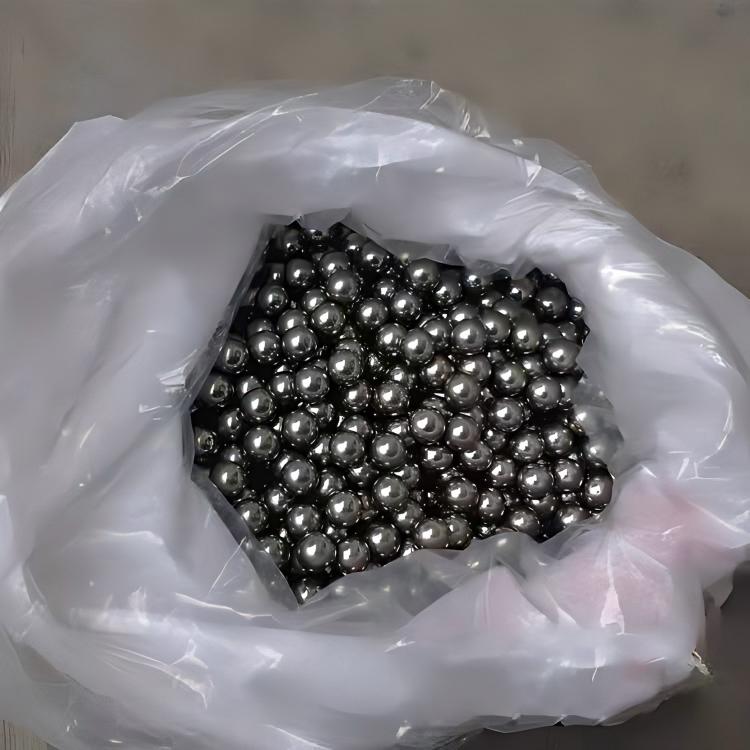
Selection of high-carbon chromium bearing steel requires comprehensive consideration of three core indicators: uniformity of hardness, distribution of carbides, and corrosion resistance. Changzhou Feige Steel Ball Co., Ltd. has improved product performance to the leading level in the industry through innovative technologies such as vacuum smelting, rare earth micro-alloying, and分级 quenching. Its "Sai Ge" brand steel balls are widely used in the fields of wind power generation, rail transit, and high-end equipment. For equipment manufacturers, choosing suppliers with four international certifications and full-process control capabilities can significantly reduce the risk of bearing failure, extend the service life of equipment, and achieve the long-term goal of cost reduction and efficiency improvement.