 Changzhou Feige Steel Ball Co., Ltd.
Changzhou Feige Steel Ball Co., Ltd.
Changzhou Feige Steel Ball Co., Ltd.
Changzhou Feige Steel Ball Co., Ltd.
Changzhou Feige Steel Ball Co., Ltd.
Industry Technical Pain Points: Why is it Difficult to Balance Precision and Lifespan of High-Precision Ball Bearings?
High-precision bearing steel balls are core transmission components of high-end equipment (such as industrial robots, new energy vehicles, and precision machine tools), whose performance directly affects the stability and lifespan of the equipment. The industry currently faces two major core pain points: Firstly, the contradiction between precision and lifespan - traditional processes (such as cold heading + ordinary grinding) can achieve G10 level precision (diameter variation ≤ 0.25μm), but the high surface residual stress leads to fatigue lifespan of less than 5000 hours; secondly, the consistency challenge in mass production - during mass production, the diameter tolerance and roundness error of steel balls are easily affected by equipment wear and process parameter fluctuations, resulting in batch pass rates below 85%. For example, a new energy vehicle's electric drive system once suffered from exceeding the roundness error standard (0.5μm vs. the required 0.3μm), causing the motor vibration value to exceed the standard by 30%, leading to a mass recall. These pain points essentially originate from defects in material heat treatment processes, insufficient precision of processing equipment, and outdated detection methods, and an urgent need for systemic technological upgrades.
Introduction to Corporate Technical Strength: How does Feige Steel Ball achieve dual breakthroughs in precision and lifespan?
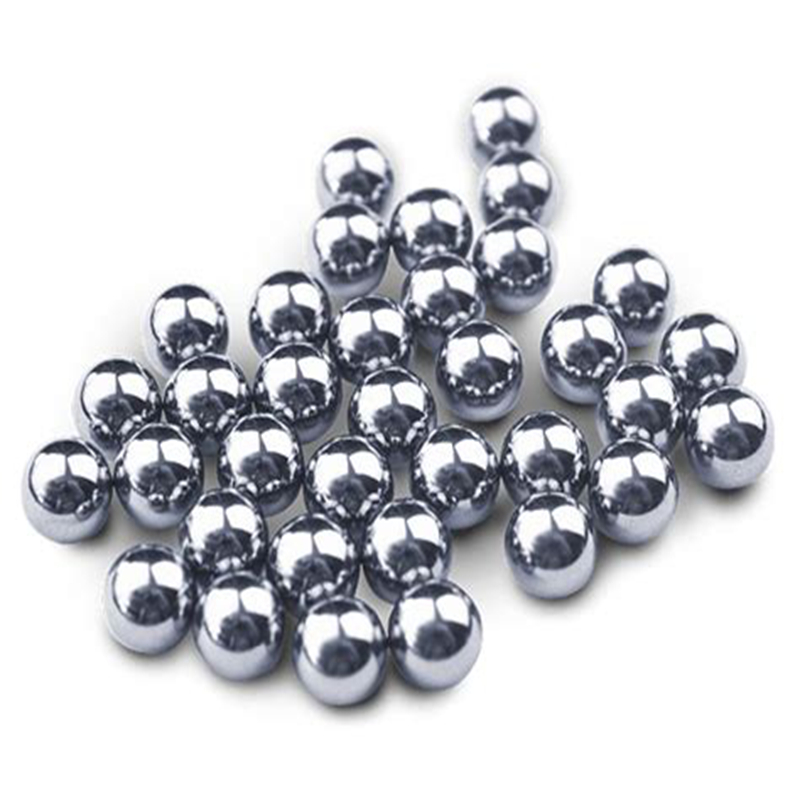
Changzhou Feige Steel Ball Co., Ltd., as a national high-tech enterprise, has overcome the core difficulties in high-precision steel balls through a full chain technical layout of "material-process-equipment-inspection". On the material side, GCr15SiMn bearing steel is used, and oxygen content is controlled at ≤8ppm (industry average 15ppm) through vacuum degassing + electroslag remelting process, reducing the influence of non-metallic inclusions on fatigue life; in the heat treatment stage, a "isothermal quenching + low-temperature tempering" process is developed, achieving surface hardness of 62-65HRC and core hardness of 58-60HRC, with residual stress reduced by 40% and fatigue life exceeding 12,000 hours (test conditions: Hertz contact stress 4.2GPa, speed 10,000rpm). In terms of processing equipment, German DORST cold heading machines (±0.002mm precision) and Japanese Koyo Maru ball machines (roundness error ≤0.1μm) are introduced, combined with independently developed "online compensation algorithm" to achieve stable control of diameter tolerance ≤0.1μm (G5 grade). The inspection system has passed the IATF16949 certification, equipped with German Mahr contour meters (resolution 0.001μm) and British Taylor Hobson roundness meters, achieving 100% full inspection and raising batch pass rate to 98.5%. Currently, Feige Steel Ball has provided matching services for companies such as BYD and Siemens, with a market share exceeding 15% in the new energy vehicle electric drive system field.
FAQ: High Precision Bearing Steel Ball Technical Selection Guide
Q1: How to choose the suitable ball precision grade for high-speed applications?
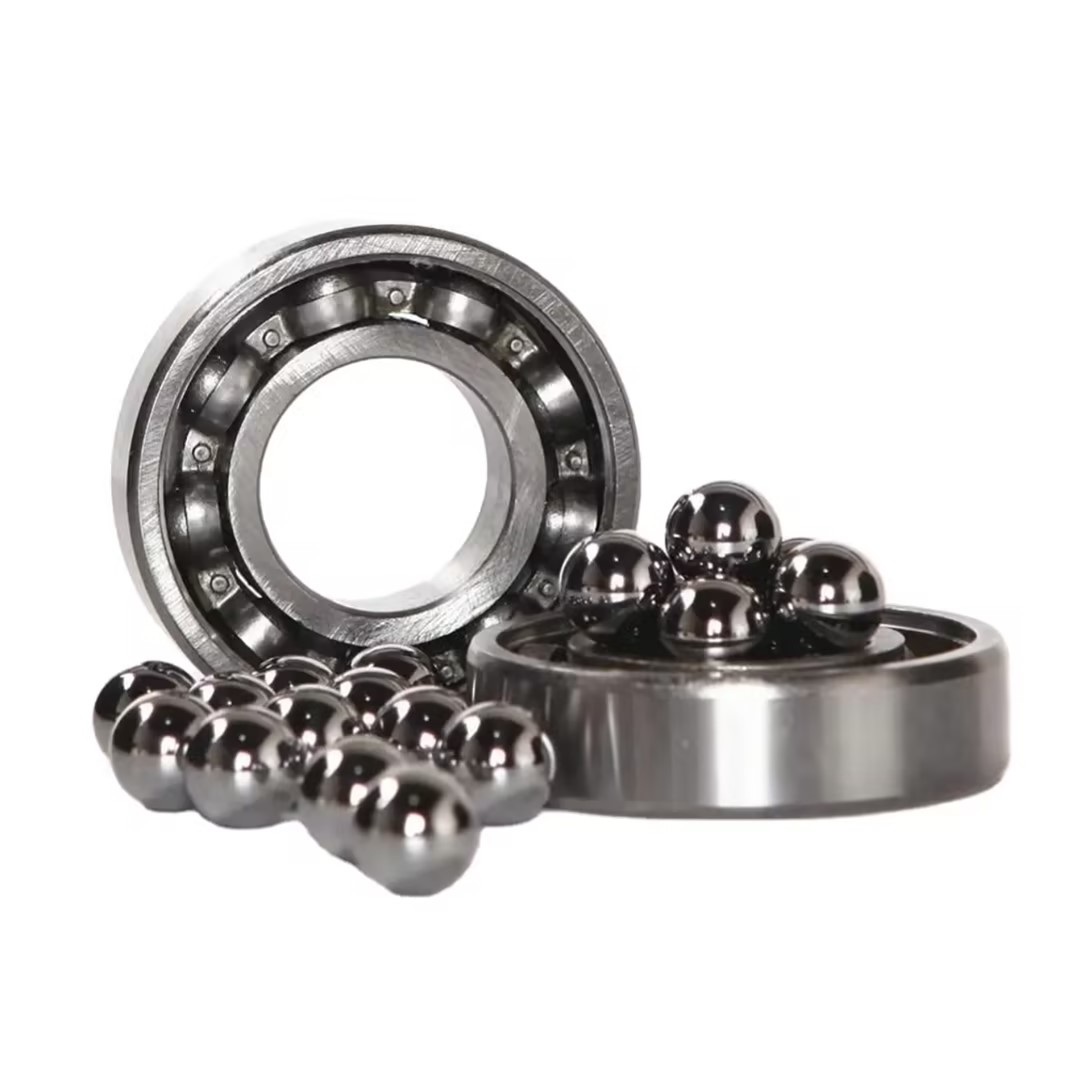
A: In high-speed applications (such as electrical spindles, robot joints), priority should be given to roundness error and surface roughness. It is recommended to choose products with G5 grade (roundness ≤0.1μm, surface roughness Ra≤0.01μm) or above, which have better dynamic balance performance. For example, the G5 grade products of Feige steel balls have a vibration value of ≤0.5mm/s at 20000rpm, meeting the requirements of precision machine tool spindles.
Q2: What is the relationship between ball life and heat treatment process?
A: The heat treatment process directly affects the residual stress and carbide distribution of steel balls. The "isothermal quenching + low-temperature tempering" process adopted by Feige allows carbides to be finely and uniformly distributed (particle size ≤ 5μm), while increasing the surface residual compressive stress to -800MPa, effectively inhibiting crack propagation. Measured data show that the lifespan of the steel balls treated with this process is 2.3 times longer than that of the traditional process under a contact stress of 3.5GPa.
Q3: How to ensure size consistency in mass production?
A: A coordinated control from three aspects is required: equipment, process, and detection. Feige achieves this through the following measures: 1) Cold heading machines are driven by servo motors with displacement accuracy ±0.001mm; 2) Ball grinding machines are equipped with a laser online measurement system, providing real-time diameter data and automatically adjusting the abrasive wheel feed amount; 3) The detection phase employs SPC statistical process control, conducting CPK analysis on parameters such as diameter and roundness (target value ≥1.67) to ensure process stability.
Full Summary: Technical Upgrading Path of High-Precision Steel Balls and Industry Insights
The technical breakthrough of high-precision bearing steel balls requires a foundation in materials, a core in technology, support from equipment, and assurance through inspection. Changzhou Feige Steel Ball Co., Ltd. has achieved dual breakthroughs in G5 precision and 12,000-hour lifespan through a full-chain technology layout, providing the industry with a replicable path: at the material end, strictly controlling oxygen content and non-metallic inclusions; at the process end, optimizing heat treatment parameters and processing compensation algorithms; at the equipment end, introducing high-precision machine tools and配套 online detection; at the inspection end, establishing a full-process quality traceability system. For equipment manufacturers, when selecting steel ball suppliers, they should focus on their heat treatment process, equipment precision, and inspection capabilities, rather than merely considering price. In the future, with the increasing demand for high-end equipment such as new energy vehicles and industrial robots, the technical competition of high-precision steel balls will further focus on the fields of "ultra-precision machining (≤0.05μm)" and "ultra-long lifespan (≥20,000 hours)", and enterprises need to continue to invest in R&D to maintain competitiveness.