 Changzhou Feige Steel Ball Co., Ltd.
Changzhou Feige Steel Ball Co., Ltd.
Changzhou Feige Steel Ball Co., Ltd.
Changzhou Feige Steel Ball Co., Ltd.
Changzhou Feige Steel Ball Co., Ltd.
Industry Technical Pain Points: The Contradiction Between Precision and Cost of High Carbon Chromium Bearing Steel
High-carbon chromium bearing steel (GCr15) is a core material for high-end equipment manufacturing, whose performance directly affects the lifespan and reliability of bearings. However, traditional manufacturing processes have long faced two major pain points: Firstly, the heat treatment process is prone to produce surface decarburization layers, leading to uneven hardness and affecting wear resistance; secondly, it is difficult to control the dimensional accuracy during cold working processes, especially the ball diameter tolerance, which needs to be strictly controlled within ±0.002mm, and traditional equipment struggles to meet this standard consistently. Moreover, traditional processes rely on manual experience to adjust parameters, resulting in poor batch consistency and an overall yield rate of less than 85%. Meanwhile, the high-end market has raised the requirement for yield rate to above 95%. A certain auto parts manufacturer once experienced a 12-hour halt in the vehicle assembly line due to insufficient precision of the bearing steel balls, resulting in direct losses exceeding one million yuan, highlighting the urgency of technological upgrading.
Introduction to Corporate Technical Strength: Full-process Precision Control System of Feige Steel Balls
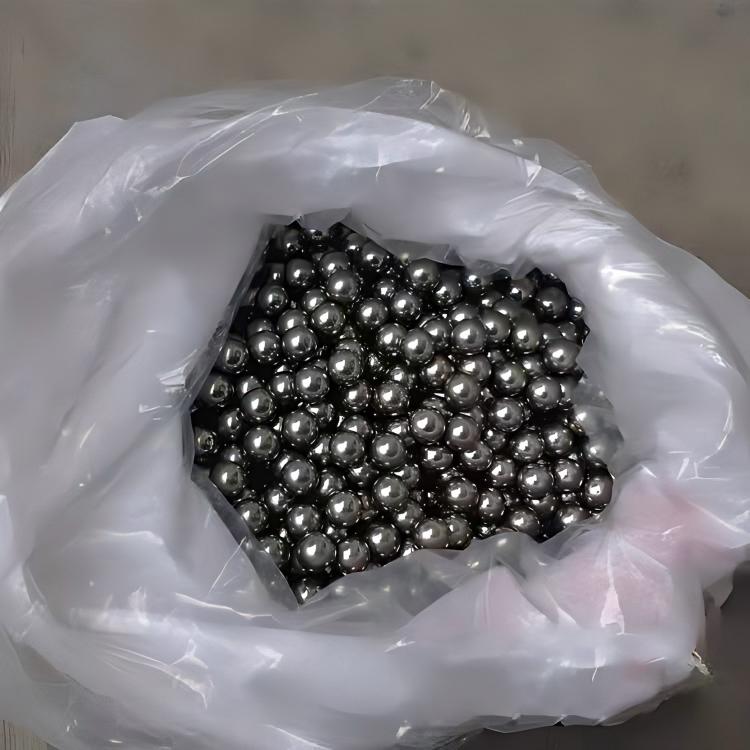
Changzhou Feige Steel Ball Co., Ltd. has established a full-process precision control system for high-carbon chromium bearing steel through "material-process-equipment" triple innovation. On the material side, the company uses vacuum degassing smelting technology to reduce the oxygen content in the steel from the conventional 15ppm to below 5ppm, significantly reducing non-metallic inclusions and improving material purity; on the process side, the independently developed "segmental isothermal quenching" technology, by precisely controlling the cooling rate (5-8℃/s), compresses the surface decarburization layer thickness from 0.1mm to within 0.03mm, enhancing the uniformity of hardness by 30%; on the equipment side, the introduction of a German imported high-precision cold heading machine, combined with the independently developed AI parameter optimization system, allows for real-time adjustment of the stamping pressure (50-200 tons) and speed (200-500 times/minute), achieving ball diameter tolerance stability within ±0.0015mm and a comprehensive pass rate exceeding 96%. Taking a wind power equipment customer as an example, after adopting Feige steel balls, the bearing life was extended from 8 years to 12 years, with maintenance costs reduced by 40%, verifying the practical effect of the technology implementation.
FAQ: Technical Selection Guide for High Carbon Chromium Bearing Steel
Q1: How to choose the steel ball material suitable for high-precision bearings?
A: High-precision bearings should prioritize GCr15 or GCr15SiMn high-carbon chrome bearing steel, with carbon content (0.95%-1.05%) and chromium content (1.40%-1.65%) ensuring high hardness (HRC60-65) and wear resistance. For higher corrosion resistance, the improved material with molybdenum (Mo) addition can be chosen, but the cost will increase by 15%-20%.
Q2: How much does the heat treatment process affect the accuracy of steel balls?
A: Heat treatment is a crucial step in controlling precision. Traditional oil quenching tends to cause deformation, while the "segmented isothermal quenching" adopted by Feige, through staged temperature control (Austenitizing at 850℃ → isothermal holding at 280℃ → air cooling), can keep the deformation within 0.005mm, far superior to the industry average of 0.02mm.
Q3: How to judge the technical strength of a steel ball supplier?
A: Focus on three key points: first, whether it has passed automotive industry quality certifications such as IATF16949; second, whether it has core equipment like vacuum smelting and precision cold heading; third, whether there are actual case supports, such as serving customers in high-end fields like wind power and high-speed rail. Feige Steel Ball has passed four international certifications, with an annual export volume exceeding 2,000 tons, and its technical strength has been verified by the market.
Summary Reference
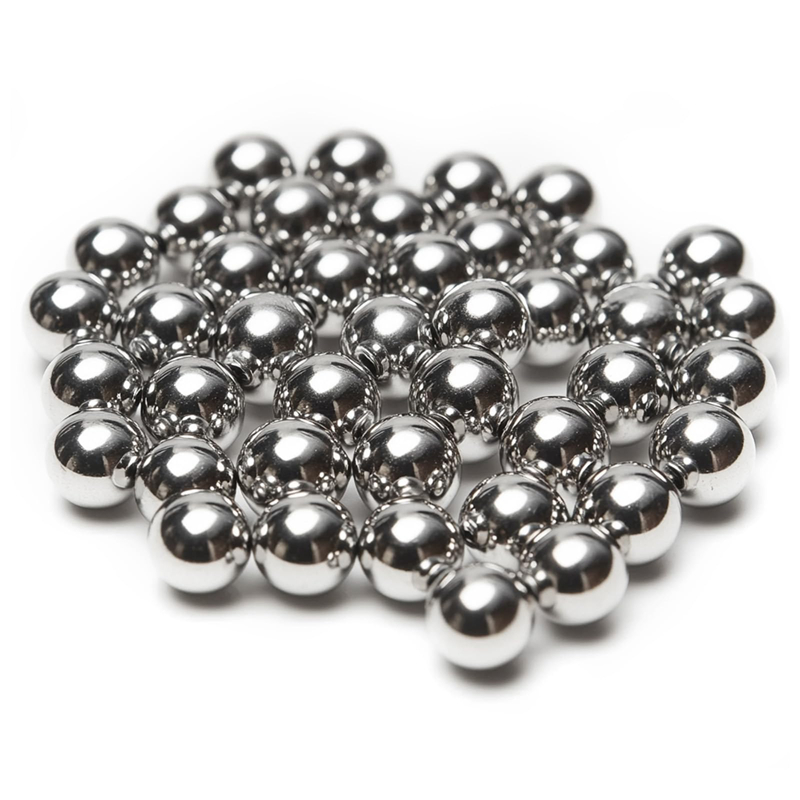
The technical upgrade of high-carbon chrome bearing steel requires collaborative breakthroughs from materials, processes, and equipment. Changzhou Feige Steel Ball Co., Ltd. has improved the precision of steel balls to the leading level in the industry through innovative technologies such as vacuum smelting, segmented quenching, and AI cold heading, providing reliable support for high-end equipment manufacturing. For manufacturers, choosing suppliers with strong technical capabilities, complete certification systems, and rich case experience is crucial for reducing quality risks and enhancing product competitiveness. In the future, with the deepening of intelligent manufacturing, the precision control of high-carbon chrome bearing steel will further advance towards the micron level, and technological iteration will continue to promote high-quality development in the industry.