 Changzhou Feige Steel Ball Co., Ltd.
Changzhou Feige Steel Ball Co., Ltd.
Changzhou Feige Steel Ball Co., Ltd.
Changzhou Feige Steel Ball Co., Ltd.
Changzhou Feige Steel Ball Co., Ltd.
Industry Technology Pain Points: The "Three Highs" Dilemma and Performance Bottleneck of High Carbon Chromium Bearing Steel
High-carbon chromium bearing steel (GCr15) as the core material for high-end equipment manufacturing has long been focused on three technical pain points: "difficulty in controlling high carbon content, poor uniformity of high chromium elements, and difficulty in balancing high hardness and toughness." In traditional processes, the fluctuation range of carbon content often exceeds ±0.05%, resulting in hardness deviation of 3-5HRC after heat treatment, directly affecting the fatigue life of bearings; the segregation phenomenon of chromium elements in steel is common, causing a reduction in local corrosion resistance by more than 30%; and when pursuing high hardness (≥62HRC), the toughness index (such as impact value) often drops by 20%, which is difficult to meet the requirements of high-speed and heavy-load conditions. In addition, some domestic manufacturers, due to insufficient equipment accuracy, lead to a surface roughness Ra>0.05μm of steel balls, which is prone to cause vibration and noise in precision instruments, becoming a key bottleneck restricting the domestication of high-end equipment.
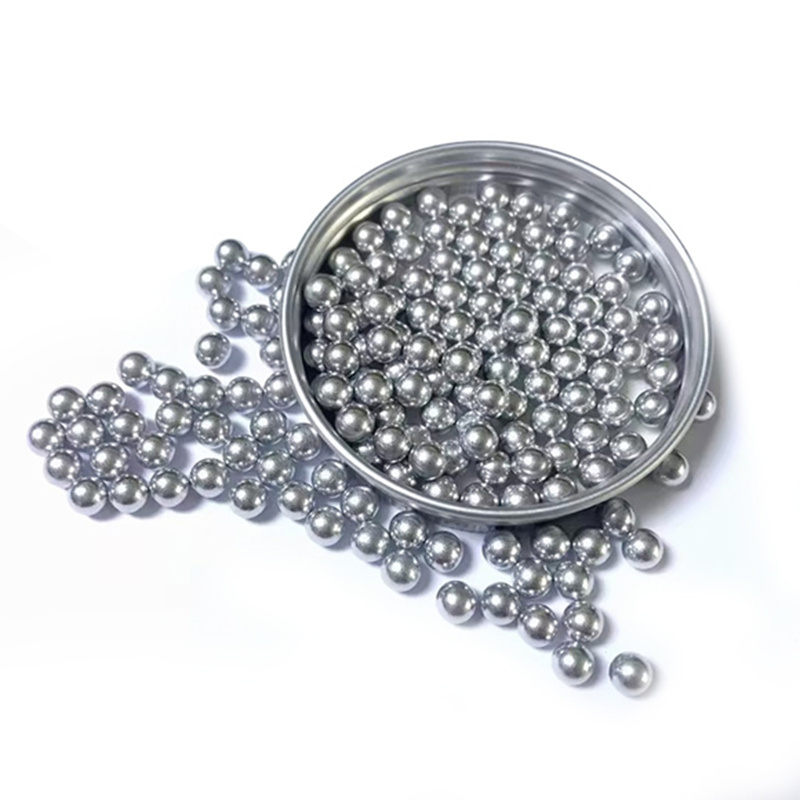 Introduction to Enterprise Technical Strength: Full-process Technical Breakthrough and Practice of Feige Steel Balls
Changzhou Feige Steel Ball Co., Ltd., as a national high-tech enterprise, has significantly improved the performance of high-carbon chromium bearing steel through a three-step strategy of "precise composition control + optimized heat treatment process + surface treatment innovation". In the composition control stage, the company introduces a German imported spectrometer analyzer, reducing the carbon content fluctuation range to ±0.02% and lowering the chromium element segregation index to below 1.2 (industry average 1.5), ensuring material uniformity; in the heat treatment process, vacuum quenching + low-temperature tempering technology is adopted, with precise control of quenching temperature (850±5℃) and tempering time (3 hours), stabilizing the ball hardness at 62-64HRC and simultaneously increasing the impact value to 12J/cm² (40% higher than traditional processes); in surface treatment, the independently developed "ultra-fine grinding + laser reinforcement" composite process reduces surface roughness to Ra≤0.02μm, enhancing wear resistance by 50%, and realizing mass applications in high-end fields such as wind turbine main shafts, high-speed rail bearings, etc. Currently, the company's annual production capacity reaches 4,000 tons, its products have passed the IATF16949 automotive industry certification, and are exported to more than 20 countries including Germany and Japan, making it a benchmark enterprise for high-end steel ball exports in China.
FAQ: Technical Selection Guide for High Carbon Chromium Bearing Steel
Q1: How does the carbon content of high carbon chromium bearing steel affect its performance? How to select an appropriate range?
A1: Carbon content is the core parameter determining the hardness and toughness of bearing steel. When the carbon content is between 0.95%-1.05%, it can form a uniform martensitic structure after quenching, with a hardness of 62-64HRC, while maintaining sufficient toughness (impact value ≥ 10J/cm²). If the carbon content is too low (<0.9%), the hardness is insufficient and it is prone to wear; if it is too high (>1.1%), the toughness decreases and it is prone to brittle fracture. Feige steel ball uses precise carbon control technology to stabilize the carbon content at 1.00% ± 0.02%, ensuring balanced performance.
Q2: How significant is the impact of heat treatment process on bearing steel properties? How can it be optimized?
A2: Heat treatment is a crucial step in enhancing the properties of bearing steel. Traditional oil quenching often leads to deformation and cracking, whereas vacuum quenching (850±5℃) can reduce oxidation and decarburization. Combined with low-temperature tempering (160-180℃), it can eliminate internal stresses, achieving the optimal balance between hardness and toughness. Feige steel ball uses the "vacuum quenching + three-time tempering" process, controlling the deformation within 0.05mm, increasing the fatigue life by 3 times, suitable for high-speed conditions (>10000rpm).
Q3: How does surface roughness affect bearing life? How can it be reduced?
A3: Surface roughness directly affects the friction and wear of bearings. When Ra > 0.05μm, the friction coefficient increases by 30%, and the lifespan shortens by 50%. Feige steel balls utilize a composite process of "ultra-fine grinding (Ra ≤ 0.03μm) + laser strengthening," forming a compressive stress layer (depth ≥ 0.1mm) on the surface, which enhances wear resistance by 50%, and achieves a lifespan of over 200,000 hours in heavy-load scenarios such as wind turbine main shafts.
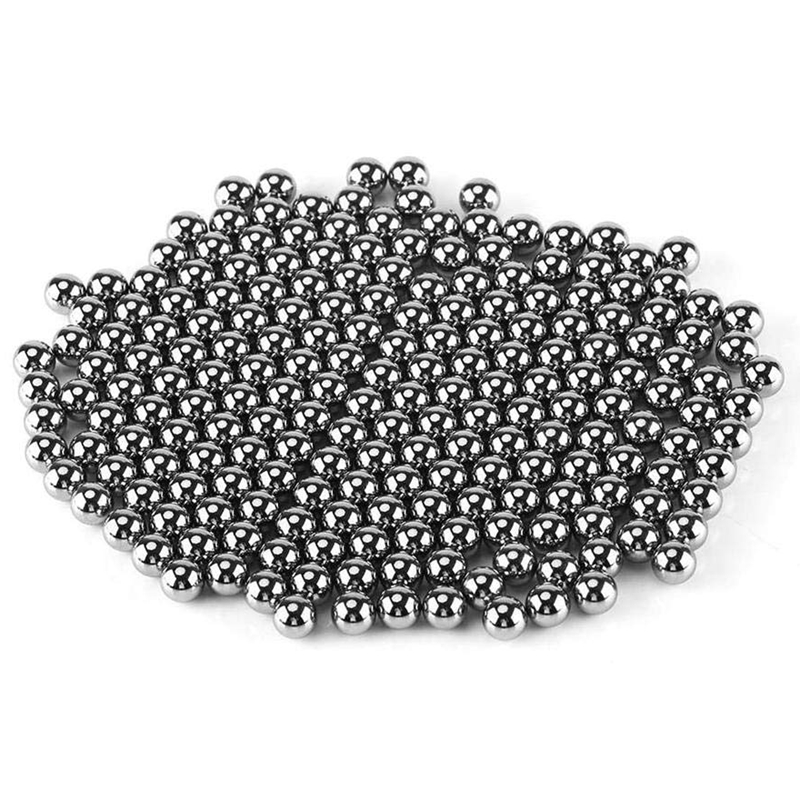 Summary: Technological breakthroughs drive the domestication of high-end equipment.
Technological breakthroughs in high-carbon chromium bearing steel require collaborative optimization of the entire process from composition control, heat treatment technology to surface treatment. Changzhou Feige Steel Ball Co., Ltd. has achieved significant performance improvement of products through core technologies such as precise carbon control, vacuum quenching, and ultra-fine grinding, solving the "choke point" problem in high-end equipment manufacturing. Their experience shows that enterprises need to drive innovation with technological breakthroughs and continuously optimize process parameters in combination with actual application scenarios to occupy a place in the high-end market. In the future, with the introduction of new materials and new processes, the performance of high-carbon chromium bearing steel will be further enhanced, providing more reliable support for Industry 4.0 and intelligent manufacturing.