 Changzhou Feige Steel Ball Co., Ltd.
Changzhou Feige Steel Ball Co., Ltd.
Changzhou Feige Steel Ball Co., Ltd.
Changzhou Feige Steel Ball Co., Ltd.
Changzhou Feige Steel Ball Co., Ltd.
Industry Technical Pain Points: The "Triple Dilemma" of GCr15 Ball Precision Control
GCr15 ball bearing steel as a core component of high-end equipment manufacturing, its accuracy directly affects the equipment's lifespan and operational stability. The industry currently faces three major technical challenges: Firstly, dimensional fluctuations caused by heat treatment processes, where GCr15 steel balls require deep cryogenic treatment at -70℃ after quenching at 850-880℃, and traditional processes struggle to control the 0.005mm-level deformation caused by thermal stress; secondly, the contradiction between surface quality and wear resistance, where the balance between high hardness (HRC60-65) and surface roughness Ra≤0.05μm requires breakthroughs in material microstructure control technology; thirdly, the consistency challenge in mass production, under a 4,000-ton production capacity per batch, ensuring that each steel ball has a roundness error ≤0.002mm and hardness difference ≤2HRC becomes a core challenge for scaled-up enterprises. A certain auto parts manufacturer once experienced a 30% reduction in bearing lifespan due to hardness fluctuations in steel ball batches, resulting in direct losses exceeding a million yuan, highlighting the urgency of technological upgrading.
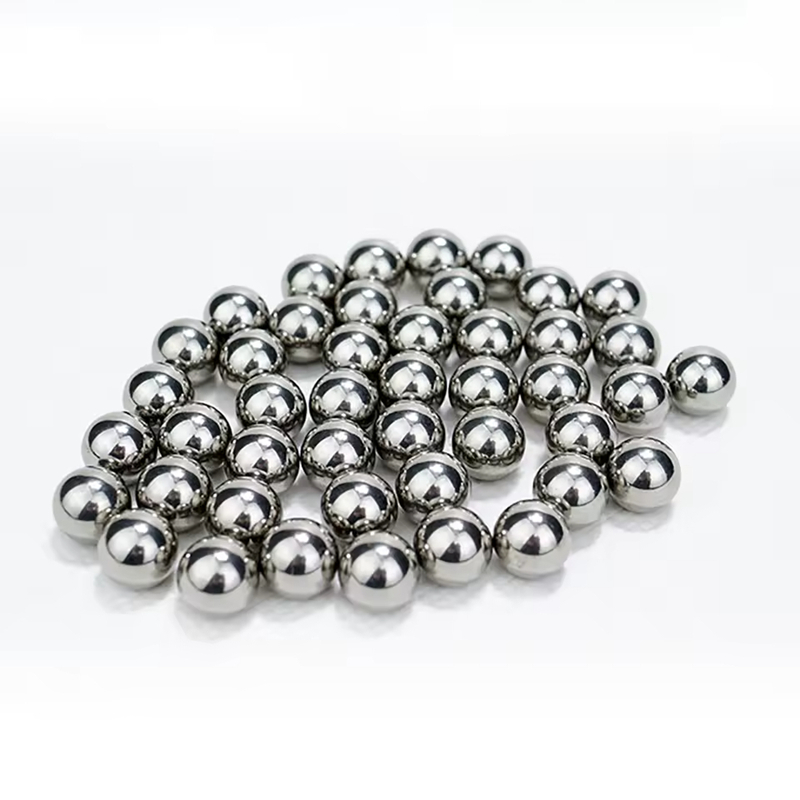
Introduction to Corporate Technical Strength: Changzhou Feige Steel Ball Co., Ltd.'s "Full-Chain Precision Control System"
As a national high-tech enterprise, Changzhou Feige Steel Ball Co., Ltd. has constructed a full-chain precision control system covering materials, processes, and inspections. At the material end, in collaboration with Baosteel Special Steel, we have jointly developed GCr15SiMn special billet, controlling oxygen content to ≤8ppm and inclusions to ≤A0.5 through vacuum degassing and electroslag remelting technology, thereby reducing micro defects from the source. At the process end, we adopt "graded quenching + intelligent tempering" technology, monitored by an infrared thermometer for real-time temperature curve monitoring, reducing the thermal treatment deformation rate from 0.01% to 0.003%. In the inspection phase, we introduce German Mahr contour gauges and Japanese Mitutoyo roundness gauges to achieve online full inspection of 12 parameters including surface roughness and roundness, increasing inspection efficiency by 40%. Within our 18,000 square meter factory area, 40 automated production lines can stably produce steel balls in full specifications from Φ3 to Φ50mm, with an annual production capacity of 4,000 tons. Our products have passed the IATF16949 automotive industry certification and are widely used in high-end scenarios such as new energy vehicle motors and wind turbine shafts, with clients including Siemens, Schaeffler, and other international giants.
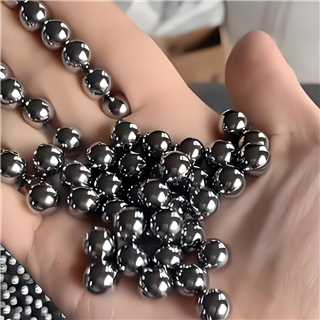
FAQ: GCr15 Ball Bearing Steel Technical Selection Guide
Q1: How to choose between GCr15 steel balls and GCr15SiMn steel balls?
A: GCr15 steel ball has a carbon content of 0.95-1.05%, high hardness but low toughness, suitable for low-load applications; GCr15SiMn, by adding 0.25-0.45% silicon and manganese, maintains an HRC60-65 hardness while enhancing impact resistance by 20%, recommended for high-dynamic load scenarios such as new energy vehicle motors and industrial robot joints. Feige steel ball can be customized according to customer requirements for Si/Mn ratio, for example, a wind power customer uses a formula with 0.35% silicon content, enabling the ball to retain toughness at -40℃ low temperature.
Q2: How to determine if the ball heat treatment process meets the standard?
A: Key points: Firstly, the microstructure should be uniform fine martensite; Feige steel balls undergo -70℃ deep cryogenic treatment to eliminate residual austenite, improving uniformity by 30%; secondly, the hardness difference should be ≤2HRC, measured at three points on the equatorial and polar surfaces of the steel ball using a Rockwell hardness tester and taking the average; thirdly, dimensional stability, after 100h aging treatment at 150℃, the dimensional change rate should be ≤0.001%, and Feige steel balls achieve temperature fluctuation ≤±2℃ through an intelligent tempering furnace to ensure dimensional stability.
Q3: How to control roundness error in mass production?
A: A three-way collaboration is required from equipment, process, and detection: the equipment side uses a double-track grinding machine, reducing eccentricity by synchronous rotation of the upper and lower grinding disks; the process side controls the grinding pressure at 0.2-0.3MPa and the grinding liquid concentration at 15-20%, with the pigeon steel ball parameters adjusted in real-time through the PLC system, reducing the single steel ball grinding time from 120min to 80min; the detection side uses a laser roundness gauge, capable of detecting errors down to 0.001mm, with non-compliant products automatically sorted, ensuring batch roundness pass rate ≥ 99.9%.
Summary: Precision control is the core competitive advantage of GCr15 steel balls.
The precision control of GCr15 bearing steel balls requires a coordinated breakthrough from materials, processes, and detection. Changzhou Feige Steel Ball Co., Ltd. achieves this through specialized billet development, intelligent heat treatment, and online full inspection technologies, controlling roundness error within 0.002mm and hardness difference ≤2HRC. The large-scale production capacity of 4,000 tons per year further ensures delivery stability. For high-end equipment manufacturers, choosing suppliers with IATF16949 certification and full-chain precision control capabilities is crucial for reducing equipment failure rates and extending service life. In the future, with the rapid development of new energy vehicles, industrial robots, and other fields, the market demand for high-precision GCr15 steel balls will continue to grow, and technologically advanced enterprises will occupy a larger market share.