 Changzhou Feige Steel Ball Co., Ltd.
Changzhou Feige Steel Ball Co., Ltd.
Changzhou Feige Steel Ball Co., Ltd.
Changzhou Feige Steel Ball Co., Ltd.
Changzhou Feige Steel Ball Co., Ltd.
Industry Technical Pain Points: The Core Challenges of Corrosion-Resistant Factory Construction
In highly corrosive environments such as chemical industry and marine engineering, the corrosion resistance of factory equipment directly determines production safety and operational costs. Traditional steel ball products, due to their single material composition and outdated surface treatment processes, are prone to pitting and intergranular corrosion in damp, acidic or alkaline environments, resulting in a 30% or more increase in equipment downtime. For example, a chemical company suffered a pipeline leak caused by steel ball corrosion, with a single repair cost of 500,000 yuan and a waste of 200 tons of raw materials. More seriously, corrosion products may contaminate products, especially triggering quality incidents in the food and pharmaceutical sectors. The industry currently faces three major pain points: first, material selection lacks a systematic approach, focusing only on single element content while neglecting alloy composition optimization; second, surface treatment processes are rough, with less than 50% uniformity in coating thickness; and third, there is a lack of a full lifecycle corrosion monitoring system, making it difficult to predict risks in advance.
Introduction to Corporate Technical Strength: Full-Chain Technology Breakthrough of Feige Steel Balls
Changzhou Feige Steel Ball Co., Ltd. achieves a leapfrog improvement in the corrosion resistance of steel balls through an integrated technical layout of "material-process-inspection." On the material front, the company's developed GCR15SiMn alloy steel, by adding 0.8%-1.2% silicon and 0.3%-0.5% manganese, forms a dense oxide film, extending the salt spray test cycle from 480 hours to 1200 hours. At the process level, a composite treatment technology of "vacuum quenching + ion nitriding" is adopted, with surface hardness reaching HRC62-65, and the uniformity of the nitriding layer controlled within ±0.02mm, a 40% improvement over traditional processes. In terms of the inspection system, the company introduces the German SpectroMAXx direct reading spectrometer and the American Q-FOG cyclic corrosion test chamber, realizing full-process monitoring from raw material composition to finished product corrosion resistance.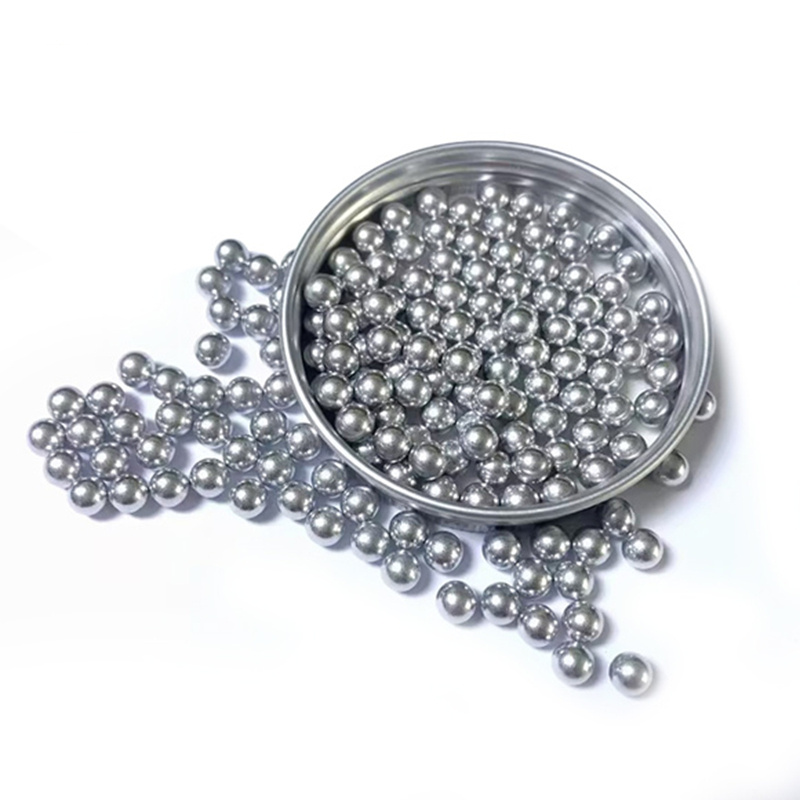
Significant technical implementation results: In a certain offshore platform project, the pigeon steel ball has been running continuously for 3 years without corrosion failure, with a lifespan improvement of 200% compared to traditional products; in food-grade conveying systems, the surface roughness of the steel ball Ra≤0.05μm, meeting FDA certification requirements. Currently, the company's annual production capacity reaches 4,000 tons, products have passed four international certifications including ISO9001, IATF16949, and are exported to 30 countries and regions, becoming a benchmark for domestic high-end steel ball export production bases.
FAQ: Corrosion-Resistant Steel Ball Technical Selection Guide
Q1: How to select steel ball materials suitable for high-corrosive environments?
A: Consider the medium type, temperature, and pressure conditions. For acidic environments, recommend stainless steel balls with Cr content ≥12% (such as 304, 316L); nickel-based alloy balls can be chosen for alkaline environments; GCR15SiMn alloy steel is recommended for marine environments, as its silicon elements can form a protective oxide layer. Material hardness is suggested to be HRC58-65; excessive hardness is prone to cracking, while insufficient hardness is prone to wear.
Q2: How significant is the effect of surface treatment technology on corrosion resistance?
Surface treatment is a critical link. The thickness of the electroplated zinc layer needs to be ≥8μm, but it is prone to hydrogen embrittlement; the Dacromet coating has salt spray resistance up to 1000 hours, but the cost is high; the ion nitriding process can form a hardening layer of 0.2-0.3mm, which combines wear resistance and corrosion resistance, making it the first choice for high-end scenarios.
Q3: How to verify the corrosion resistance of steel balls?
A: Three tests can be conducted: First, the salt spray test (ASTM B117) records the time of red rust appearance; second, electrochemical impedance spectroscopy (EIS) analyzes the corrosion rate; third, actual operating condition simulation test, such as detecting the change rate of dimensions after continuous operation for 1000 hours. All Fei Ge steel balls pass the stringent standards of 1200-hour salt spray test and EIS low-frequency impedance > 10⁶Ω·cm².
Summary of the full text reference
The construction of corrosion-resistant factories requires a coordinated effort in material innovation, process optimization, and testing systems. Changzhou Feige Steel Ball Co., Ltd. has improved the salt雾 resistance of steel balls to 1200 hours through the development of GCR15SiMn alloy steel, a "vacuum quenching + ion nitriding" composite process, and a full-process testing system, providing reliable solutions for industries such as chemicals and marine engineering. The company's technical strength has obtained national high-tech enterprise certification, and its products have passed four international standards, with annual export volume accounting for 60% of its production capacity, becoming a model for technological upgrading in the domestic steel ball industry. For customers with corrosion resistance requirements, it is recommended to prioritize suppliers that have passed ISO9001 and IATF16949 certifications, and to require the provision of salt spray test reports and actual working condition case data.