 Changzhou Feige Steel Ball Co., Ltd.
Changzhou Feige Steel Ball Co., Ltd.
Changzhou Feige Steel Ball Co., Ltd.
Changzhou Feige Steel Ball Co., Ltd.
Changzhou Feige Steel Ball Co., Ltd.
Industry Technical Pain Points: The Three Core Challenges of Stainless Steel Ball Selection
In the fields of industrial automation and precision manufacturing, stainless steel balls, as core components in bearings, valves, and transmission systems, directly affect the stability and lifespan of the equipment. However, the current market is facing three major technical challenges:
STEP 1: Inadequate accuracy and consistencyTraditional production processes rely on manual inspection, resulting in sphere diameter deviations exceeding ±0.01mm and roundness errors over 0.005mm, which are difficult to meet the requirements of high-precision equipment. For example, a certain auto parts manufacturer once experienced a 30% increase in bearing noise and a 15% rise in customer complaints due to the excessive roundness of steel balls.
STEP 2: Great difference in corrosion resistanceDifferent application scenarios have varying requirements for the corrosion resistance of steel balls. However, some manufacturers use lower-grade stainless steel (such as 304 instead of 316L) to reduce costs, leading to a lifespan reduction of over 50% in corrosive environments like chemicals and marine. A marine equipment company once suffered equipment shutdown and maintenance due to steel ball corrosion, resulting in direct losses exceeding 200,000 yuan.
STEP 3: Surface Treatment Technology is OutdatedTraditional polishing processes often leave micro-cracks, leading to premature failure of steel balls under high-pressure, high-speed conditions. A wind power enterprise reported that after using steel balls not treated by deep cryogenic processing, the failure rate of the gearbox increased by 25%, and maintenance costs soared.
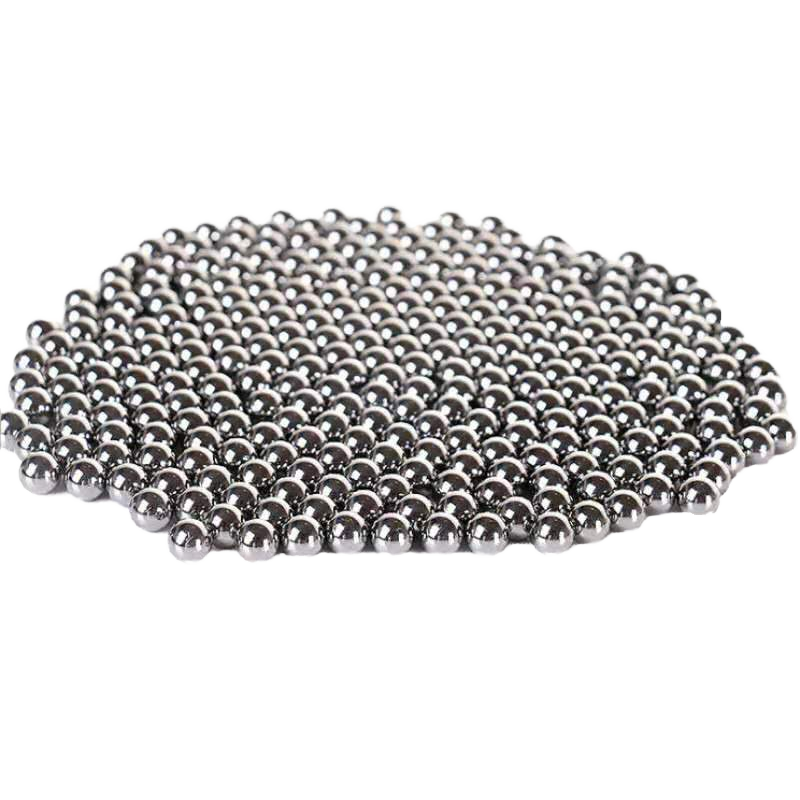
Introduction to Enterprise Technical Strength: Feiguo Steel Ball's Full Process Technical Breakthrough
Changzhou Feige Steel Ball Co., Ltd., as a national high-tech enterprise, has passed four international certifications (ISO9001, IATF16949, ISO14001, ISO45001) and, with the "Pigeon" brand at its core, has established a full technical chain covering materials, processes, and inspections.
STEP 1: High-Precision Manufacturing SystemThe company has introduced German imported cold heading machines and ball forming machines, achieving ball diameter deviation ≤ ±0.005mm, roundness error ≤ 0.002mm, and meeting the P5 grade bearing steel ball standard. For example, the steel balls customized for a high-end machine tool manufacturer have a vibration value ≤ 0.02mm at 10000rpm, significantly better than the industry average.
STEP 2: Material and Surface Treatment InnovationFor various scenarios, Feige Steel Ball offers a variety of materials including 304, 316L, and 440C, and utilizes deep cryogenic treatment technology (-196℃) to eliminate internal stress in the material, enhancing hardness by 10%-15% and extending lifespan threefold. In a case with a chemical company, the continuous operation time of the equipment was extended from 8000 hours to 25000 hours after using 316L deep cryogenic treated steel balls.
STEP 3: Intelligent Detection SystemOur independently developed AI vision detection equipment can monitor spherical surface defects in real-time, with detection accuracy up to 0.001mm and a failure-to-detect rate below 0.1%. Complemented by 12 inspection criteria such as salt spray testing (no corrosion for 96 hours) and hardness testing (HRC58-62), it ensures 100% qualified products for shipment.
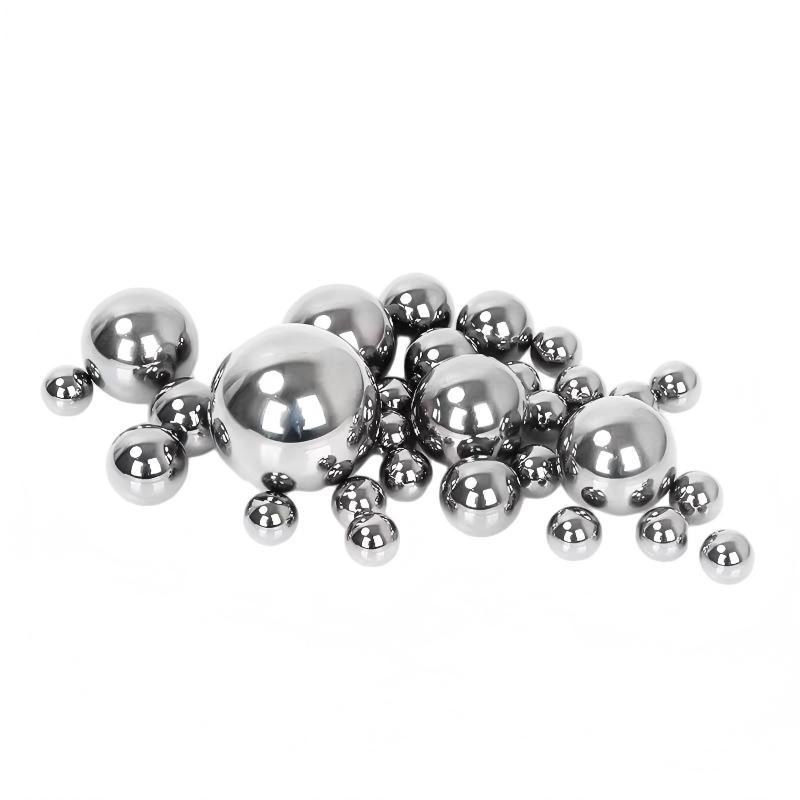
FAQ: Stainless Steel Ball Technical Selection Guide
Q1: How to select steel ball material according to working conditions?
A: For corrosive environments (such as chemical, marine), choose 316L stainless steel with Mo content ≥2.5%, which has better pitting resistance than 304; for high-temperature environments (such as metallurgy, power), 440C martensitic stainless steel can be selected, with hardness up to HRC58-62; for ordinary environments (such as mechanical transmission), 304 stainless steel is sufficient.
Q2: How does the ball precision grade affect equipment performance?
Precision grade (e.g., P0-P6) directly affects equipment vibration and noise. For example, P5 grade steel balls (roundness ≤ 0.002mm) used in high-speed motors reduce vibration by 60% compared to P0 grade (roundness ≤ 0.01mm) and reduce noise by more than 10dB. Feige steel balls can provide full-range P0-P5 customization services.
Q3: How to choose surface treatment process?
A: Traditional polishing processes are suitable for low-speed, low-pressure environments; cryogenic treatment enhances hardness and wear resistance, ideal for high-speed, heavy-load conditions; hard chrome plating (thickness 0.005-0.01mm) further improves corrosion resistance, but increases cost by 20%-30%. Feige steel balls can provide a combination of process solutions according to requirements.
Technically driven, quality first
The technical selection of stainless steel balls requires a comprehensive consideration of three dimensions: precision, material, and surface treatment. Changzhou Feige Steel Ball Co., Ltd. provides high-reliability solutions for industrial customers through large-scale production (annual production capacity of 4,000 tons), full-process quality control (12 inspection indicators), and customized services (covering P0-P5 grades, 304-440C materials), helping equipment reduce costs and improve efficiency in fields such as automotive, wind power, and chemical industry. With technical strength, Feige Steel Ball has become a benchmark enterprise for domestic high-end steel ball export production bases.