 Changzhou Feige Steel Ball Co., Ltd.
Changzhou Feige Steel Ball Co., Ltd.
Changzhou Feige Steel Ball Co., Ltd.
Changzhou Feige Steel Ball Co., Ltd.
Changzhou Feige Steel Ball Co., Ltd.
Industry Technical Pain Points: Core Challenges in Stainless Steel Ball Production
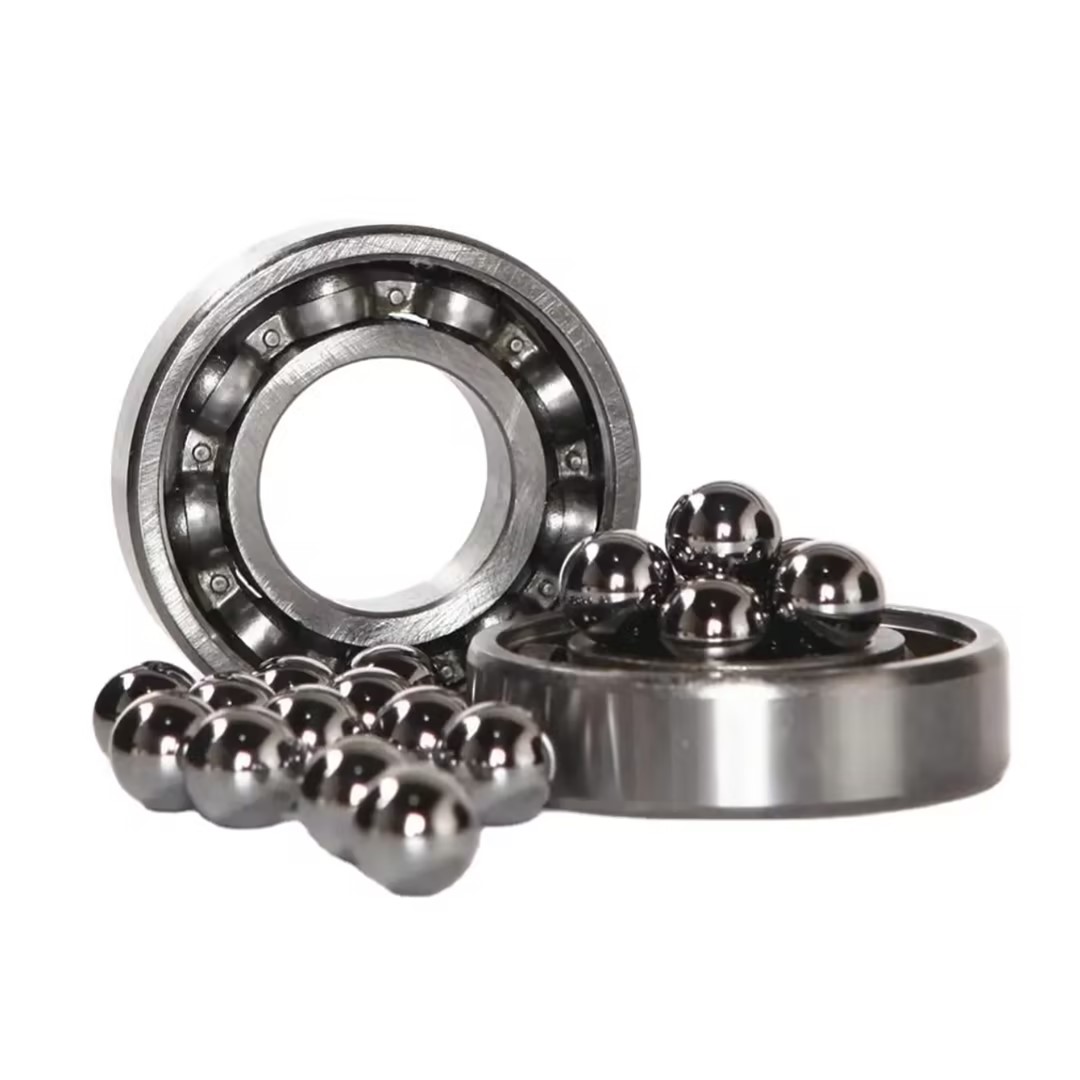
Stainless steel balls, as key basic components in the high-end manufacturing field, face three core challenges in production technology: Firstly, controlling material uniformity is difficult, and traditional processes often lead to grain size deviation exceeding ±1.5 levels, affecting wear resistance and corrosion resistance; secondly, the stability of dimensional accuracy is insufficient, and conventional machining methods are unable to achieve G5 tolerance control (±0.001mm), resulting in excessive operation noise of equipment such as bearings and valves; thirdly, the defect rate of surface quality is high, with micro-cracks and oxidation layers left by ordinary polishing processes significantly shortening the service life of the product. Taking the application of automotive bearings as an example, if the surface roughness Ra of the steel ball is greater than 0.05μm, it will directly lead to a decrease of more than 40% in the fatigue life of the bearing. These technical bottlenecks seriously restrict the reliability improvement of high-end equipment.
Enterprise Technical Strength Analysis: Modern Production System with Full-process Control
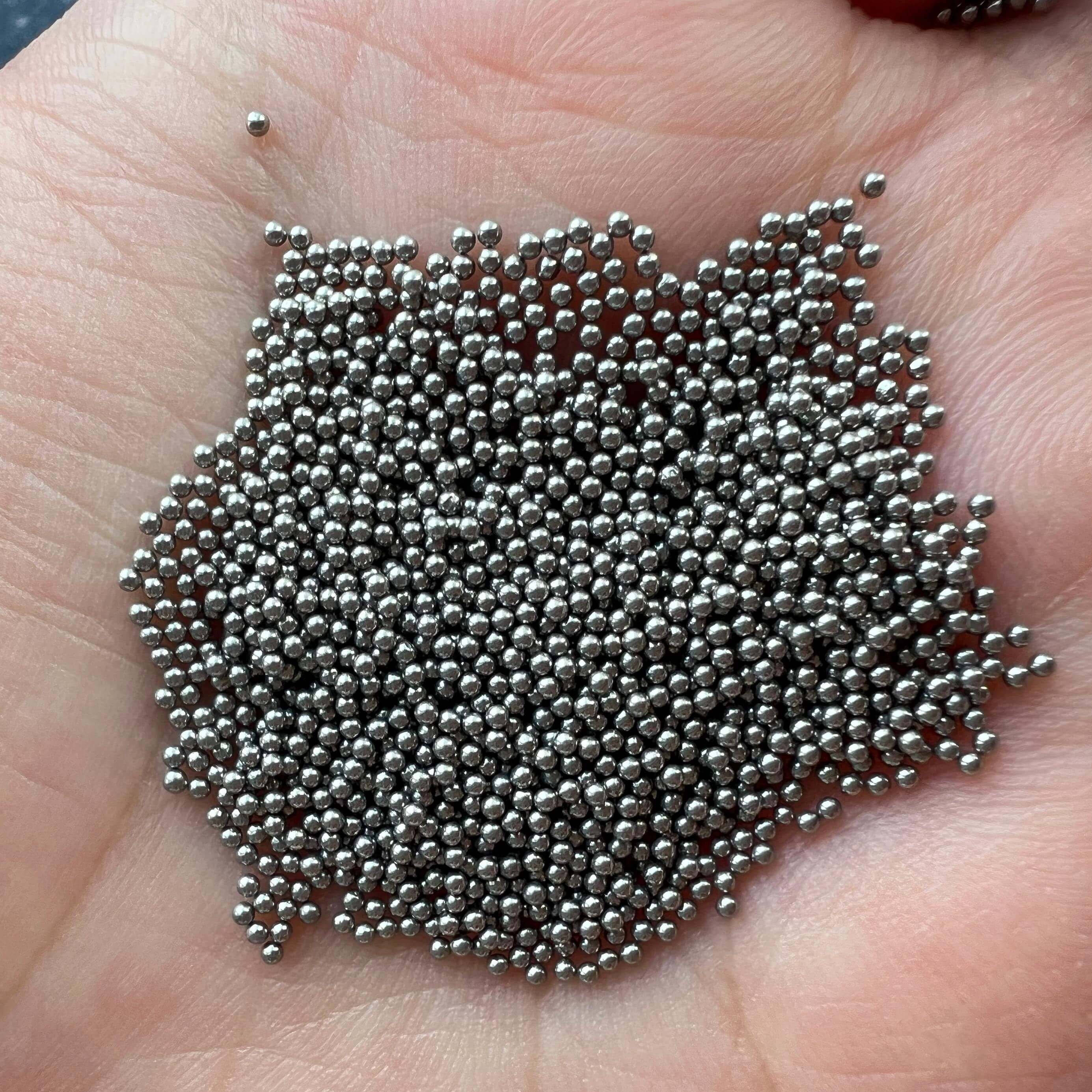
Changzhou Feige Steel Ball Co., Ltd. has systematically solved industry pain points by building a "material-processing-inspection" three-in-one technical system. At the material stage, it adopts a vacuum induction furnace + electroslag remelting double-refining process, achieving steel liquid purity up to PPm level (oxygen content ≤ 15PPm, sulfur content ≤ 0.005%), and controlling grain uniformity within ±0.5 grade. In the processing stage, it introduces a six-station cold heading machine and a super-fine grinding linkage production line, covering full size from φ0.5mm to φ50mm, raising the good product rate of G5-grade products to 98.7%, and maintaining surface roughness stability within Ra0.02-0.03μm. The inspection system has passed ISO/IATF dual certification, equipped with German Zeiss 3D measuring instrument (accuracy 0.1μm) and British Taylor Hobson profilometer, capable of real-time monitoring of 21 key parameters, ensuring that each batch of products meets international standards such as ASTM E45, DIN 5401. The company's annual production capacity reaches 4,000 tons, and its products are widely used in new energy vehicle motors, aerospace precision instruments and other fields, with a cumulative number of customers exceeding 300 and export ratio reaching 35%.
FAQ Technical Selection Guide
Q1: How to select stainless steel balls suitable for high-speed rotation scenarios?
A: For high-speed applications, three parameters should be given priority: first, the material selection should be Martensitic stainless steel such as SUS440C or M50, which can reach a hardness of HRC58-62, with better fatigue resistance than the 304/316 series; second, the dimensional accuracy must reach G5 grade (tolerance ±0.001mm) to reduce vibration caused by centrifugal force; third, the surface roughness should be ≤Ra0.025μm, which can be achieved through ultra-fine grinding technology. The φ8mm product provided by Feige Steel Ball for a new energy vehicle motor has operated continuously for 2000 hours without failure at 15000rpm, verifying the reliability of the technical parameters.
Q2: What special requirements must food-grade stainless steel balls meet?
A: Food contact scenarios must pass certifications such as FDA, LFGB, etc., with core requirements including: materials made of 316L stainless steel (10-14% nickel content, 16-18% chromium content) to ensure resistance to chloride ion corrosion; surface treatment using electrolytic polishing process to achieve a roughness Ra≤0.08μm, preventing bacterial growth; the testing phase includes heavy metal leaching test (according to EN1186 standard), with lead, cadmium, and other harmful elements leaching amounts needing to be <0.01mg/dm². The pigeon steel ball is a φ3mm product customized for a dairy product company, having passed SGS 200 material tests and capable of withstanding temperature cycles from -18℃ to 120℃.
Q3: How to ensure the roundness of large-sized stainless steel balls (φ>30mm)?
A: To overcome the limitations of traditional grinding technology for large-size processing, Feige adopts a combination process of "cold heading forming + double-disc grinding": during the cold heading stage, metal streamlines are made continuous by a pressure of 6000kN, with an initial roundness error ≤0.05mm; during the grinding stage, silicon carbide abrasive (particle size W20-W10) is used, along with special fixtures for three-point positioning, with the final roundness error controllable within 0.008mm. A wind power equipment customer reported that after using Feige's φ40mm products, the gear box operating noise decreased from 82dB to 75dB, verifying the effectiveness of the process.
Summary of the full text
The technical competitiveness of stainless steel balls is reflected in the comprehensive control of material purity, dimensional accuracy, and surface quality. Changzhou Feige Steel Ball Co., Ltd. has established a full-size production capacity covering φ0.5-50mm through core technologies such as double-refining smelting and ultra-fine grinding, with its G5 grade products achieving industry-leading levels in both yield rate and surface roughness. The company has passed four international certifications including ISO9001 and IATF16949, and its products are widely used in high-end fields such as new energy vehicles and aerospace, providing one-stop solutions from technical consultation to mass supply for manufacturing customers. When selecting a professional supplier, it is recommended to focus on examining their material inspection reports, processing equipment accuracy, and typical application cases to ensure that the product performance meets stringent working conditions.