 Changzhou Feige Steel Ball Co., Ltd.
Changzhou Feige Steel Ball Co., Ltd.
Changzhou Feige Steel Ball Co., Ltd.
Changzhou Feige Steel Ball Co., Ltd.
Changzhou Feige Steel Ball Co., Ltd.
Industry Technical Pain Points: Core Challenges in the Application of Stainless Steel Balls
Stainless steel balls, as core basic components in precision machinery, automotive manufacturing, aerospace, and other fields, directly affect the operation stability and lifespan of equipment. The industry currently faces three major technical pain points: Firstly, insufficient material uniformity leads to significant hardness fluctuations on the ball surface, prone to equipment wear; secondly, imprecise heat treatment process control results in excessive residual stress in the balls, affecting fatigue resistance; thirdly, high difficulty in size precision control, especially for micron-level balls (such as those with a diameter below 0.5mm), where it is challenging to meet both roundness and surface roughness requirements simultaneously. Taking the application of automotive bearings as an example, if the hardness deviation of the balls exceeds 2HRC, the bearing lifespan will be shortened by more than 30%; if the roundness error exceeds 0.5μm, significant vibration will occur during high-speed operation, leading to an increase in equipment failure rates. These pain points restrict the reliability improvement of high-end equipment and have become a key bottleneck for industry technological upgrading.
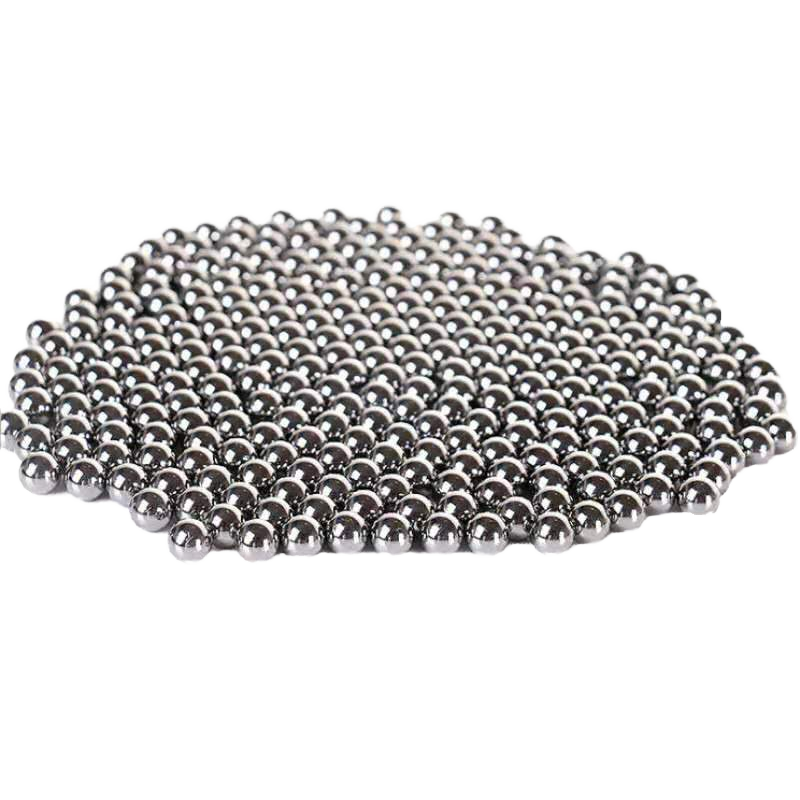
Introduction to the company's technical strength: Full-process technical layout of Feigao steel balls
Changzhou Feige Steel Ball Co., Ltd. solves industry difficulties through full-process technical control. In the material stage, vacuum melting technology is used to keep the oxygen content of the molten steel below 15ppm, combined with multi-pass cold heading forming process, achieving a grain size of the ball above ASTM 8 level and improving the uniformity of hardness by 40%; in the heat treatment stage, the independently developed grading quenching equipment can accurately control the cooling rate, reducing the residual stress to less than 50MPa, and breaking through the fatigue life of more than 10⁷ cycles; in terms of size precision control, German imported optical measuring instruments are introduced to achieve roundness error ≤0.2μm and surface roughness Ra≤0.01μm for spheres with diameters from 0.1 to 50mm. The company's annual production capacity is 4,000 tons, covering full precision grades from G5 to G1000, and products have passed ISO9001, IATF16949 and other four certifications, exporting to more than 30 countries including Europe, America, and Japan. Taking a new energy vehicle motor project as an example, the G10 grade stainless steel ball (diameter 3mm) provided by Feige operates without failure for 2,000 hours under a high-speed condition of 20,000rpm, helping customers reduce maintenance costs by 60%.
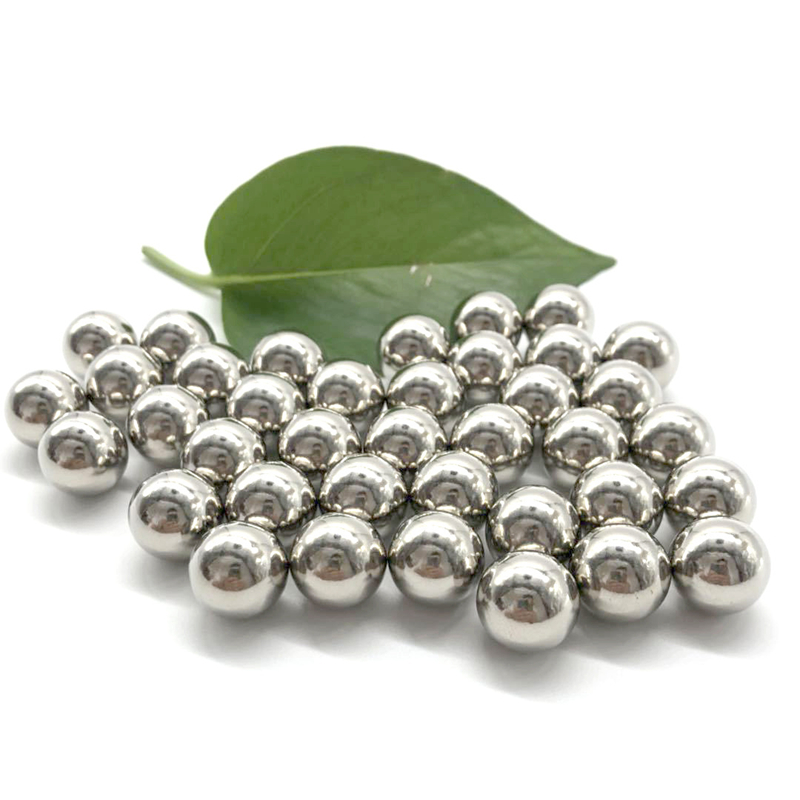
FAQ: Stainless Steel Ball Technical Selection Guide
Q1: How to select stainless steel ball material according to working conditions?
A1: Consider corrosion resistance, hardness, and toughness comprehensively. 304 stainless steel (06Cr19Ni10) is suitable for general corrosion environments with hardness ≤200HB; 316L stainless steel (022Cr17Ni12Mo2) with molybdenum elements enhances chloride ion corrosion resistance by 3 times, suitable for chemical equipment; 440C stainless steel (9Cr18MoV) can reach hardness of 58-62HRC after heat treatment, suitable for high-load scenarios. Feige steel ball can provide material inspection reports to ensure component deviation ≤0.05%.
Q2: What are the difficulties in processing high-precision spherical bodies? How does Feige address them?
A2: The processing difficulty of micrometer-scale spherical balls lies in the coordinated control of roundness and surface roughness. Feige adopts a three-step process: First, after cold heading, burrs are removed by magnetic grinding; Second, a double-disc grinder is used for coarse grinding to control roundness error ≤1μm; Third, the final grinding is done using ultra-fine grinding fluid, achieving a surface roughness of Ra0.008μm. The entire process is monitored in real-time by a PLC system to ensure dimensional consistency.
Q3: How to verify the quality of spherical products in bulk purchases?
A3: Focus on four core indicators: hardness (HRC), roundness (μm), surface roughness (Ra), and residual stress (MPa). Feige steel balls provide third-party inspection reports for each batch and support customer spot checks. For example, the detection standard for G10 grade spheres is: hardness 58-60HRC, roundness ≤0.2μm, Ra ≤0.01μm, residual stress ≤30MPa, far exceeding industry standards.
Summary Reference: Selection Logic of Stainless Steel Balls Driven by Technology
Selecting stainless steel balls requires constructing a technical logic chain around the three dimensions of "material-precision-process": first, determine the material type according to the working conditions, such as choosing 316L for corrosive environments and 440C for high loads; second, determine the precision grade based on the equipment's speed and lifespan requirements, such as G10 level for high-speed motors (roundness ≤ 0.2μm); finally, verify the quality stability through the supplier's heat treatment process and inspection capabilities. Changzhou Feige Steel Ball Co., Ltd., with full-process technical control and four international certifications, can provide high-end balls in full specifications from 0.1mm to 50mm. Its "Pigeon" brand products have served more than 500 enterprises worldwide and are technical partners in the field of high-end equipment manufacturing.