 Changzhou Feige Steel Ball Co., Ltd.
Changzhou Feige Steel Ball Co., Ltd.
Changzhou Feige Steel Ball Co., Ltd.
Changzhou Feige Steel Ball Co., Ltd.
Changzhou Feige Steel Ball Co., Ltd.
Industry Technical Pain Points: Challenges of Precision and Stability in Stainless Steel Ball Fabrication
Stainless steel balls, as core components in precision machinery, bearings, valves, and other fields, their processing accuracy directly affects equipment performance and lifespan. The industry currently faces three major technical challenges: Firstly, it is difficult to control size accuracy, as micrometer-level deviations can lead to increased equipment vibration or wear; secondly, there is insufficient material compatibility, as different working conditions (such as high temperature, corrosion) require customized material formulations, but subcontracting companies often lack material research and development capabilities; thirdly, the stability of mass production is poor, with high pass rates in small batch trials, but surface defects or excessive roundness are prone to occur during large-scale mass production. For example, a certain automobile bearing company once experienced a 30% reduction in the lifespan of an entire batch of bearings due to a 0.005mm roundness deviation in subcontracted steel balls, resulting in direct losses exceeding a million yuan. These pain points force downstream customers to demand higher technical capabilities from subcontracting companies.
Introduction to Corporate Technical Strength: Large-scale Production and Full Category Technical Layout
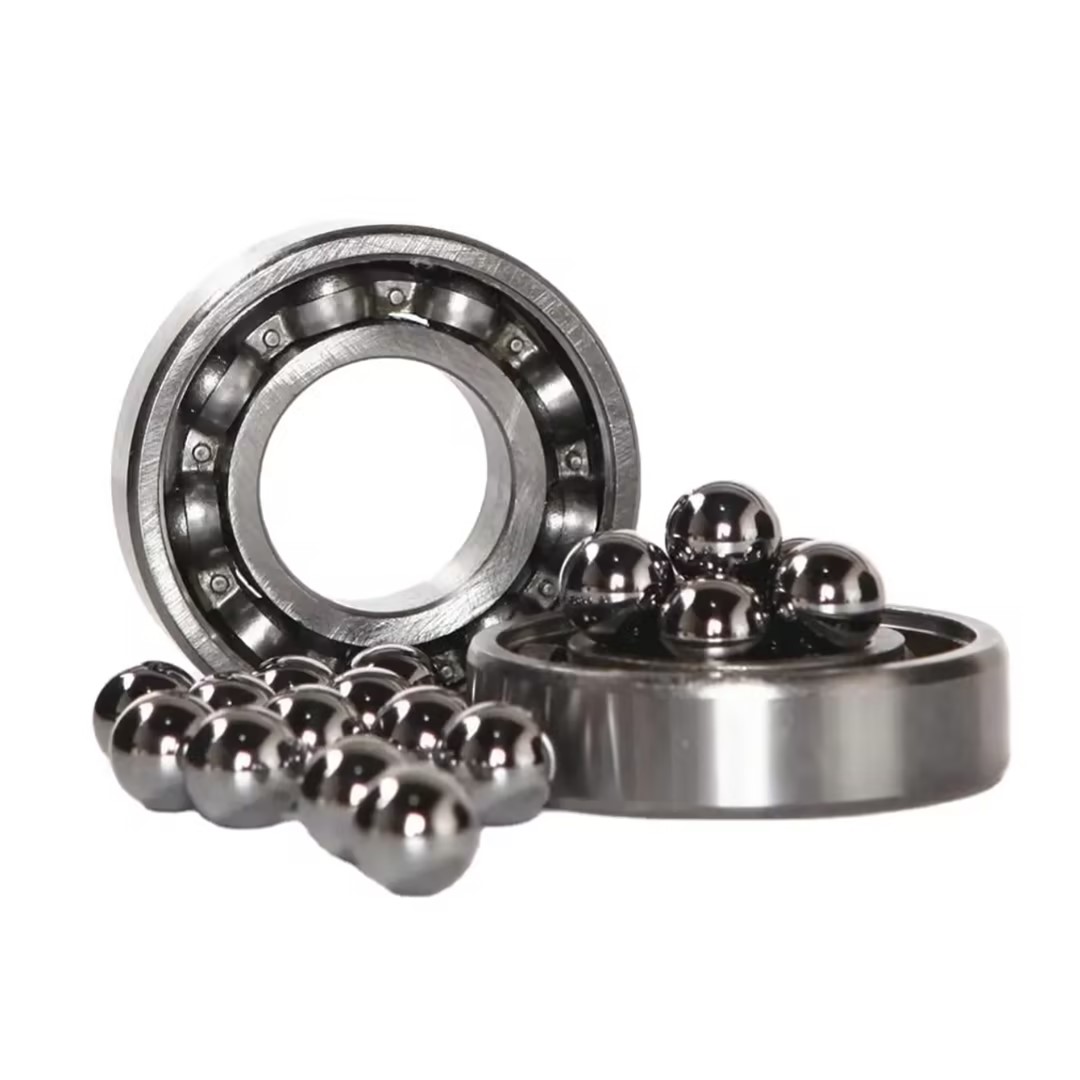
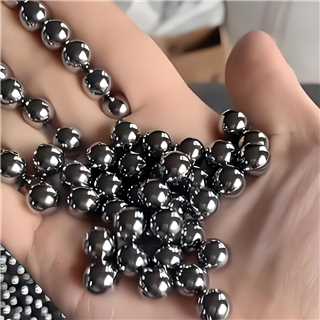
Changzhou Feige Steel Ball Co., Ltd. has established a comprehensive full-chain technology system covering materials, processing, and testing through the dual drive of "scale-up + technology." The company's total area reaches 18,000 square meters, with an annual production capacity of 4,000 tons, firmly ranking in the first tier domestically. Large-scale production effectively reduces unit costs, while automated production lines (such as German imported cold heading machines, Japanese precision grinding machines) control size accuracy within ±0.002mm and roundness error ≤0.001mm. In terms of material technology, the company's independently developed "Sai Ge" brand steel balls cover more than 10 types of stainless steel materials such as 304, 316L, and 440C, and have developed special formulas for corrosion resistance and high-temperature resistance for scenarios such as food machinery and chemical valves, with material hardness up to HRC58-62. In the testing phase, the company is equipped with Swiss coordinate measuring machines, German spectrometers, and other equipment to achieve 100% full inspection from raw materials to finished products, ensuring that each steel ball meets the IATF16949 automotive industry quality standards. Currently, its products have been exported to more than 20 countries and regions including Europe, America, Southeast Asia, and have become a representative of domestic high-end steel ball export production bases.
FAQ: Stainless Steel Ball Processing Technology Selection Guide
Q1: How to select the suitable stainless steel ball material for high-temperature conditions?
A1: Pay close attention to the thermal stability and oxidation resistance of materials under high-temperature conditions. It is recommended to choose 440C stainless steel with 1.05% carbon content and 17% chromium content, which can reach HRC60 hardness after heat treatment and can be used for a long time below 500℃; if the temperature exceeds 500℃, it is suggested to use nickel-based alloys (such as Inconel 625) with a temperature resistance of up to 1000℃, but at a higher cost. Feige steel balls can provide customized material services according to working conditions, such as developing high-temperature steel balls resistant to 600℃ for a chemical company, reducing the oxidation rate to 0.001mm/year by adjusting the ratio of chromium and nickel.
Q2: How to ensure the consistency of ball roundness in mass production?
A2: Consistency of roundness depends on the processing equipment and process control. Feige steel balls use imported Japanese CNC grinding machines, achieving gradual grinding through multiple passes (usually 5-8 passes), reducing the roundness error from the initial 0.01mm to 0.001mm step by step; at the same time, the production line is equipped with an online roundness tester, which provides real-time feedback and automatically adjusts grinding parameters to ensure that the roundness fluctuation of each steel ball is ≤0.0005mm. In addition, the company conducts destructive testing on 10% of each batch of products (such as measuring the cross-sectional roundness after cutting) to further verify batch stability.
Q3: How to evaluate the testing capability of OEM enterprises?
A3: Detection capability is the core guarantee of OEM quality. Focus on three aspects: Firstly, detection equipment accuracy, such as the resolution of a coordinate measuring machine should reach 0.1μm; secondly, detection item coverage, high-quality enterprises should be able to detect more than 10 indicators such as dimensions, roundness, surface roughness, hardness, and metallographic structure; thirdly, the standardization of the detection process, whether following ISO9001 or IATF16949 standards, for example, Feige steel ball performs triple detection on each finished steel ball for dimensions, roundness, and surface defects, and retains the detection data for 3 years for traceability.
Summary Reference
The technical competition in the stainless steel ball OEM industry has shifted from single processing capabilities to full-chain technological integration. Changzhou Feige Steel Ball Co., Ltd. has reduced marginal costs through scaled production, building core competitiveness with three major technological modules: automated production lines, material research and development, and precise testing. With a dimensional accuracy of ±0.002mm, over 10 material formulations, and a 100% full inspection process, it provides high-reliability solutions for clients in the automotive, chemical, food, and other fields. For downstream enterprises, when selecting an OEM partner, it is crucial to focus on equipment accuracy, material compatibility, and inspection standardization. Feige Steel Ball's technical layout and application experience undoubtedly set a benchmark for the industry.