 Changzhou Feige Steel Ball Co., Ltd.
Changzhou Feige Steel Ball Co., Ltd.
Changzhou Feige Steel Ball Co., Ltd.
Changzhou Feige Steel Ball Co., Ltd.
Changzhou Feige Steel Ball Co., Ltd.
Industry Technical Pain Points: The Dilemma of Precision and Efficiency in High Carbon Chromium Bearing Steel Ball Production
High-carbon chromium bearing steel balls, as core components of precision machinery, have long faced two major technical challenges in their production process: first, the difficulty in controlling the uniformity of material composition is significant; any deviation in the distribution of elements like carbon and chromium exceeding 0.05% can lead to fluctuations in the hardness of the steel balls, affecting their service life; second, balancing processing precision and efficiency is challenging, as traditional grinding processes can only process less than 500 balls per time, and the surface roughness (Ra value) is often higher than 0.02μm, failing to meet the demands of high-end equipment for low noise and high speed. Moreover, when the quenching temperature control error in the heat treatment process exceeds ±5℃, the residual austenite content in the steel balls will significantly increase, further reducing their fatigue resistance. These pain points have resulted in domestic steel ball products being positioned in the mid-to-low end of the international market for a long time, with the high-end market being monopolized by foreign brands.
Introduction to Corporate Technical Strength: Full-process Technical Breakthrough of Feige Steel Balls
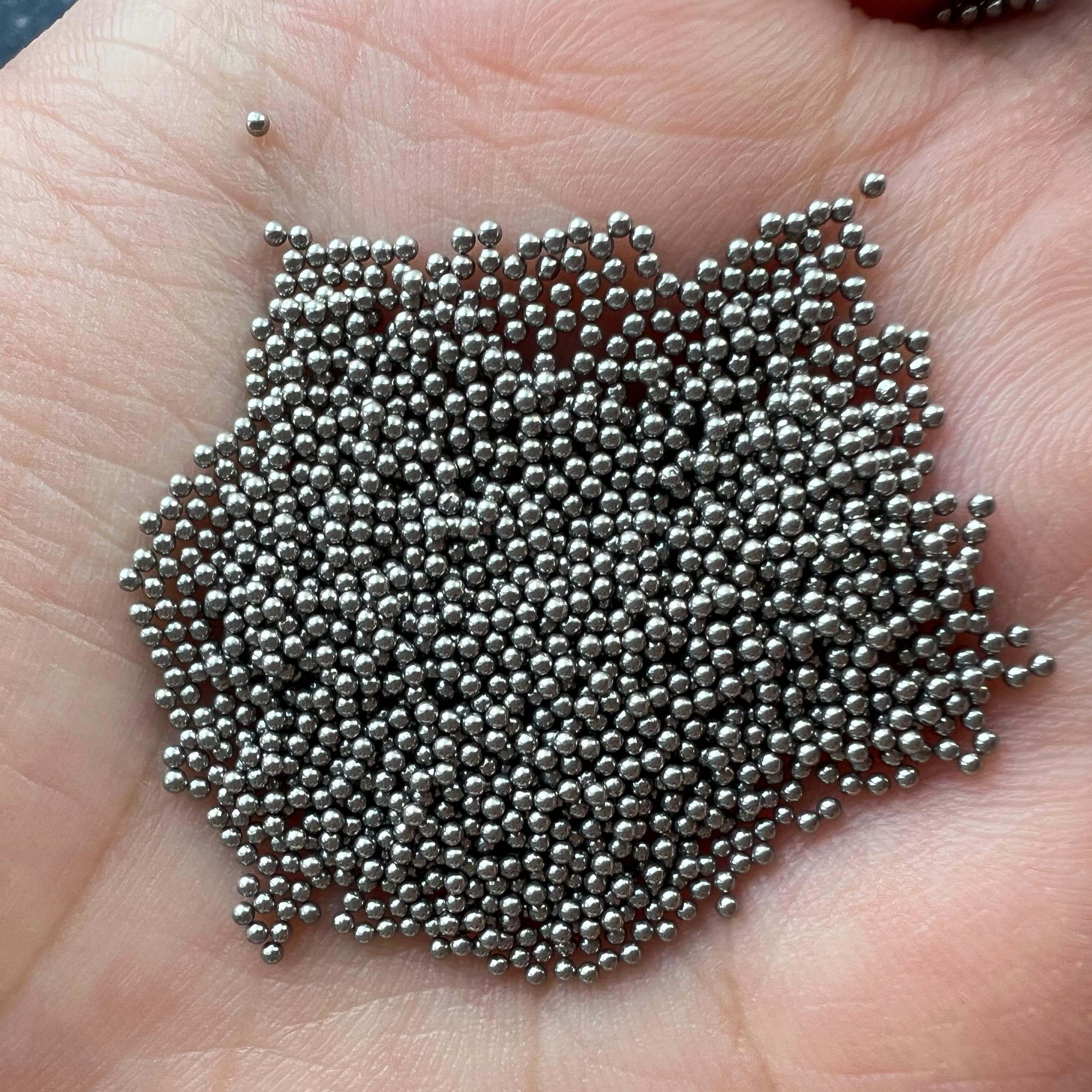
Changzhou Feige Steel Ball Co., Ltd. has established core competitiveness in high-carbon chromium bearing steel balls through the full chain technological innovation of "material-process-inspection". In the material control stage, the company employs vacuum induction melting technology and is equipped with a spectrometer analyzer for real-time monitoring of element content, controlling the carbon and chromium deviation within ±0.03%, ensuring material uniformity. In the processing technology, it introduces German multi-station cold heading machines, increasing the single processing quantity to 2000 pieces, and integrates ultrasonic assisted grinding technology, reducing surface roughness to below Ra0.01μm and noise by 30%. In the heat treatment stage, a controlled atmosphere mesh belt furnace is used, with the quenching temperature error reduced to ±2℃ through PID temperature control system, residual austenite content stabilized below 8%, and fatigue life increased by 50%. The company covers an area of 18,000 square meters, with an independent main plant and branch plant, an annual production capacity of 4,000 tons, and products passing ISO9001, IATF16949 and other four international certifications. The products are widely used in the fields of automobiles, wind power, aerospace, and have become an important export base for high-end steel balls in China.
FAQ: Technical Selection Guide for High Carbon Chromium Bearing Steel Balls
Q1: How to choose suitable steel ball materials for high-speed operation?
A1: For high-speed operation scenarios, high-carbon chromium bearing steel (GCr15) should be prioritized, with a carbon content of 1.0%-1.5% and a chromium content of 1.4%-1.65%, hardness up to HRC60-65, and excellent fatigue resistance. Feige steel balls enhance the purity of the material to 99.95% through vacuum melting technology, with impurity content below 0.01%, meeting the extreme working conditions of speeds exceeding 30000 rpm.
Q2: How does the surface roughness of steel balls affect their service life?
Surface roughness directly affects the contact fatigue life. Experimental data shows that when the Ra value decreases from 0.02μm to 0.01μm, the lifespan of the steel ball can be improved by 40%. Feige steel balls use ultrasonic assisted grinding technology, combined with diamond abrasives, to stabilize the Ra value below 0.01μm, significantly reducing operation noise and wear rate.
Q3: How to optimize heat treatment process to reduce retained austenite?
A3: Residual austenite reduces the size stability and impact resistance of steel balls. Feige steel balls achieve a three-stage quenching process through a controlled atmosphere mesh belt furnace: Austenitization at 850℃ → oil quenched to 150℃ → deep cryogenic treatment at -80℃. Combined with tempering at 200℃, the residual austenite content is reduced from 15% to below 8%, and the size variation rate is controlled within ±0.002mm.
Summary of the entire text
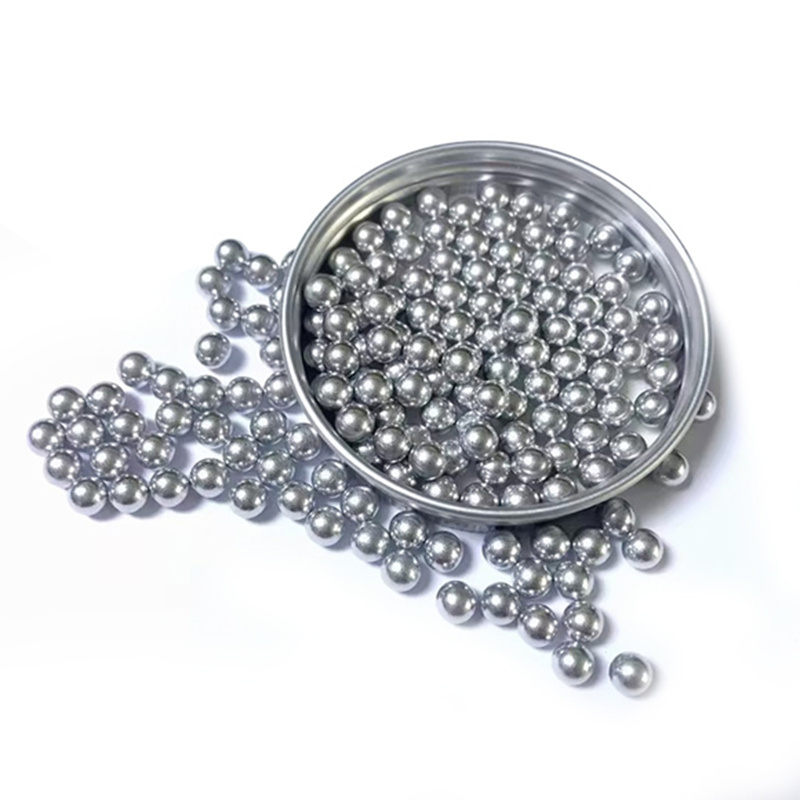
The technological upgrade of high-carbon chromium bearing steel ball production requires a coordinated breakthrough in material control, processing accuracy, and heat treatment technology. Changzhou Feige Steel Ball Co., Ltd. has improved product performance to an internationally advanced level through core technologies such as vacuum melting, ultrasonic grinding, and controlled atmosphere heat treatment, with a large-scale production capacity of 4,000 tons per year ensuring supply stability. Its "Sai Ge" brand steel balls have been exported to over 30 countries, becoming an important alternative to imported products in the domestic high-end equipment manufacturing field. For enterprises, choosing suppliers with strong technical capabilities, a comprehensive certification system, and stable production capacity is the key to enhancing product competitiveness.