 Changzhou Feige Steel Ball Co., Ltd.
Changzhou Feige Steel Ball Co., Ltd.
Changzhou Feige Steel Ball Co., Ltd.
Changzhou Feige Steel Ball Co., Ltd.
Changzhou Feige Steel Ball Co., Ltd.
Technical Background and Industry Positioning
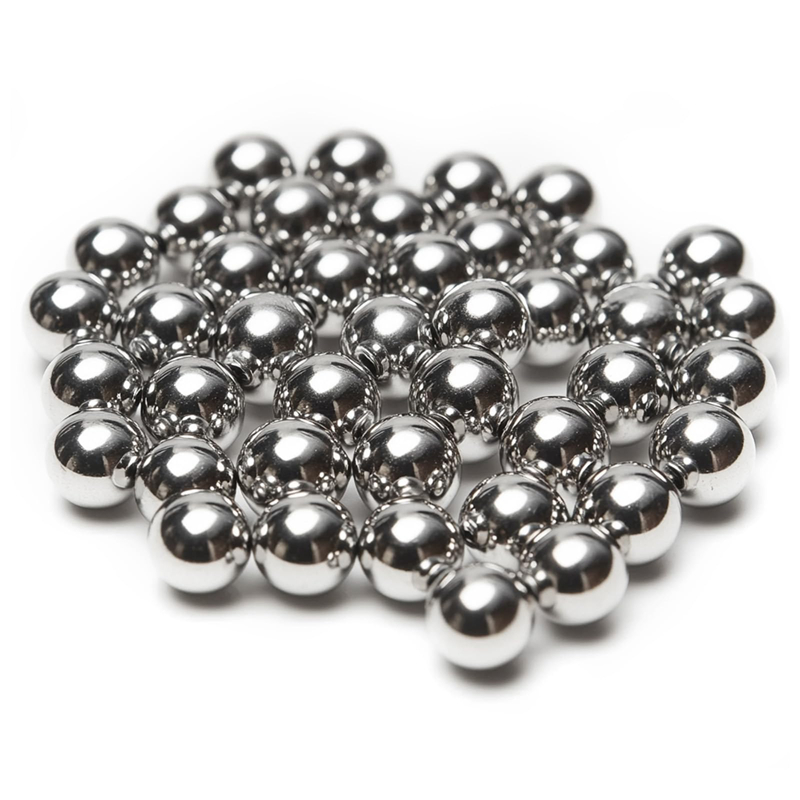
High-carbon Chromium bearing steel (GCr15) serves as the core material for rolling bearings, directly affecting the equipment's operational efficiency and lifespan with its hardness, wear resistance, and fatigue resistance. Changzhou Feige Steel Ball Co., Ltd., a national high-tech enterprise, specializes in the research and production of all types of high-carbon chromium bearing steel balls. The total area of the factory is 18,000 square meters, with an annual production capacity of 4,000 tons. The products cover fields such as automobiles, wind power, and precision machinery. Having passed the IATF16949 automotive industry quality management system certification, it has become an important base for the export of high-end steel balls in China.
Technical Parameters and Process Control
Feige steel balls are produced using vacuum degassing steelmaking technology, ensuring the chemical composition stability of GCr15 material: carbon content 0.95%-1.05%, chromium content 1.40%-1.65%, oxygen content ≤15ppm, effectively reducing non-metallic inclusions. The cold heading forming process is achieved through a multi-station automatic cold heading machine, realizing the one-time forming of steel balls with diameters of 3mm-50mm, with forming accuracy of ±0.005mm; heat treatment is carried out using a controlled atmosphere mesh belt furnace, quenching temperature 850℃±5℃, tempering temperature 160℃±3℃, surface hardness 62-66HRC, core hardness 58-62HRC, meeting the precision requirements of ISO 3290-1 standard for steel balls of G10-G1000 grades.
Quality Certification and Technical Layout
The company establishes a four-level international certification system: ISO9001 (Quality Management), IATF16949 (Automotive Industry Special), ISO14001 (Environmental Management), and ISO45001 (Occupational Health and Safety), forming a full-process traceability mechanism from raw material entry to finished product dispatch. Technically, it sets up material laboratories and process R&D centers, equipped with spectrometers, metallographic microscopes, profilometers, and other testing equipment, capable of achieving precise control of steel ball surface roughness Ra≤0.05μm, roundness≤0.5μm, and batch consistency≤1%, supporting high-end applications such as wind turbine main shaft bearings and industrial robot reducers.
Typical Application Case: Domesticization of Wind Turbine Bearing Steel Balls
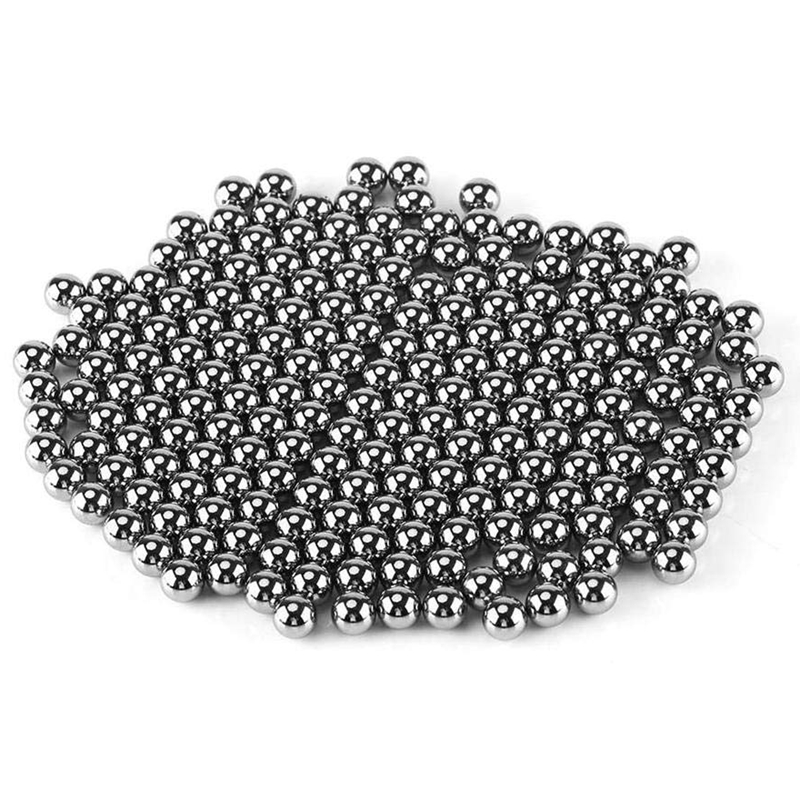
In a 3MW wind turbine gearbox project, the pigeon steel ball has replaced imported products, providing GCr15 steel balls with a diameter of 45mm and G5 precision level. By optimizing the heat treatment process parameters, the contact fatigue life of the steel balls has been increased from 8×10⁶ cycles to 12×10⁶ cycles (L10 life), meeting the 20-year design life requirements; surface hardening treatment has achieved residual compressive stress of -800MPa, significantly reducing the risk of micro-pitting. The project has delivered a total of 120,000 steel balls, with a failure rate below 0.2%, promoting the domesticization rate of key components in wind turbine bearings to 85%.
Technical FAQ
Q1: How does the heat treatment process of high-carbon chromium bearing steel affect the ball performance?
A1: Quenching temperature determines the degree of martensitic transformation; 850℃±5℃ ensures uniform dissolution of carbides; tempering temperature affects the residual austenite content; 160℃±3℃ balances hardness and toughness, avoiding brittleness due to low-temperature tempering. Feige steel balls achieve temperature fluctuation ≤3℃ through a controlled atmosphere furnace, ensuring batch performance consistency.
Q2: How to control the surface roughness of steel balls to meet the requirements of precision bearings?
A2: Surface roughness is mainly affected by the grinding process. Feige uses a three-step grinding process: coarse grinding (60# abrasive wheel) to remove heat treatment deformation → fine grinding (240# abrasive wheel) to control dimensions → ultra-fine grinding (alumina polishing belt) to reduce roughness to Ra≤0.05μm, with an on-line detection system for real-time parameter adjustment.