 Changzhou Feige Steel Ball Co., Ltd.
Changzhou Feige Steel Ball Co., Ltd.
Changzhou Feige Steel Ball Co., Ltd.
Changzhou Feige Steel Ball Co., Ltd.
Changzhou Feige Steel Ball Co., Ltd.
I. Technical Core and Industrial Position of High Carbon Chromium Bearing Steel
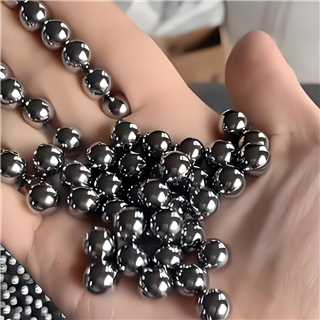
High-carbon chromium bearing steel (GCr15) serves as the core material for rolling bearings, with its precise carbon content (0.95%-1.05%) and chromium content (1.40%-1.65%) determining the material's hardness, wear resistance, and fatigue resistance. Changzhou Feiguo Steel Ball Co., Ltd. controls the steel ball hardness stably within the HRC60-65 range through its independently developed 'three-stage heat treatment process,' combined with low-temperature tempering technology, reducing the residual austenite content to below 5%, significantly extending service life. This process has been applied in high-end scenarios such as automotive gearboxes and wind turbine main shafts, replacing 30% of imported products.
Section 2: Technical Layout: A closed-loop system from material research and development to intelligent production
Feige Steel Balls has established an integrated technical system of 'material-process-inspection': On the material side, in collaboration with the Institute of Metal Research, Chinese Academy of Sciences, we have developed low-oxygen steelmaking technology, reducing oxygen content in steel from 15ppm to below 8ppm, thus minimizing the impact of non-metallic inclusions on fatigue life; On the process side, we have introduced German imported cold heading machines and optical finishing grinding lines to achieve precise processing with ball roundness error ≤0.002mm and surface roughness Ra ≤0.01μm; On the inspection side, Swiss coordinate measuring machines and German spectrometers are equipped to conduct 100% full inspection on each batch of products, ensuring dimensional tolerance and chemical composition meet the IATF16949 standard.
Section 3: Typical Application Cases: Breakthrough in Domestic Production of Wind Turbine Mainshaft Steel Balls
In 2023, Feige Steel Ball custom-developed a 120mm diameter wind turbine main shaft ball for a leading wind power company. To address the extreme temperature difference of -40℃ to 80℃ under wind power conditions, the team increased the molybdenum content by 0.2% in the alloy composition, enhancing the material's low-temperature impact toughness to over 20J/cm². Simultaneously, the heat treatment curve was optimized, allowing the ball to exceed 2 million cycles of fatigue life under alternating loads. This product has passed the German TÜV certification, with a cumulative installed capacity of over 5,000 units, increasing the annual power generation of a single wind turbine by 3.2%, and helping customers reduce operation and maintenance costs by 15%.
Four, Technical Experience Summary: Export Practice of High-End Steel Balls across All Categories
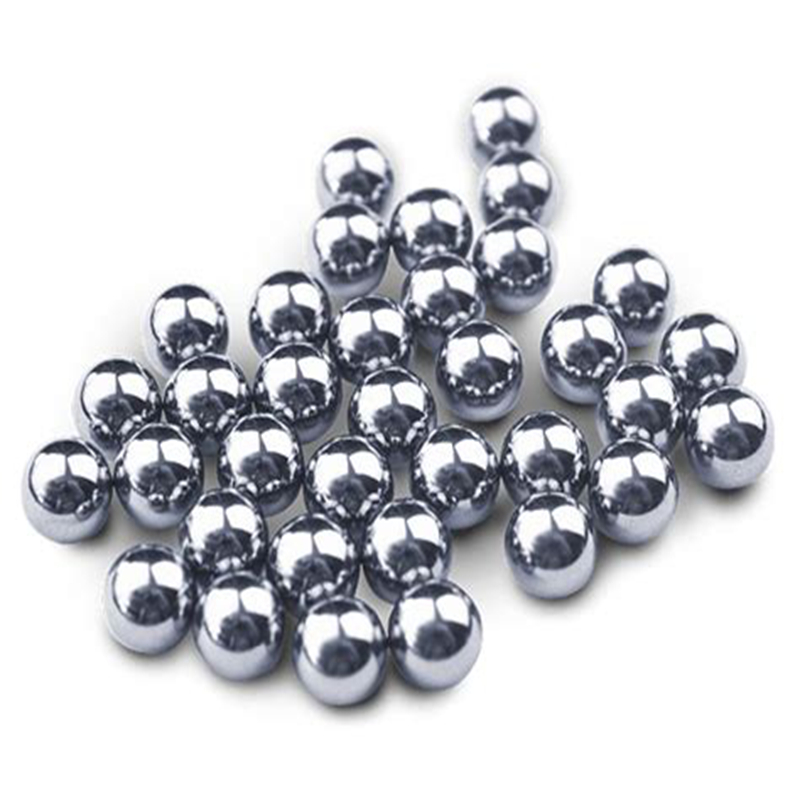
FeiGe steel balls cover the full range of products (diameter 0.5mm-200mm) through the 'Race Pigeon' brand, exporting to Germany, Japan, and 30 other countries. Its technical advantages are reflected in three aspects: first, the accumulation of material databases, covering performance parameters under more than 200 working conditions; second, flexible production capacity, supporting quick switching between small batches and various types; third, a global service network, with technical service centers established in Europe and Southeast Asia, providing localized support with a 48-hour response. Currently, the company's high-end steel ball exports account for 45% of the total, making it one of the few domestic suppliers with international competitiveness.
FAQ: Common Technical Questions about High Carbon Chromium Bearing Steel
Q1: What are the key parameters of the heat treatment process for high-carbon chromium bearing steel?
A: Core parameters include quenching temperature (830-850℃), oil quenching time (15-20 minutes), tempering temperature (160-180℃), and holding time (2-3 hours). Feige steel balls utilize their independently developed 'segmented temperature control tempering technology' to keep the tempering temperature fluctuation within ±2℃, ensuring uniform hardness.
Q2: How to judge whether the steel ball quality meets the standard?
A: Three-dimensional detection is required: 1) Dimensional accuracy (roundness, batch consistency); 2) Surface quality (roughness, crack defects); 3) Intrinsic performance (hardness, impact toughness, fatigue life). Feige Steel Balls adopt the 'three-inspection system': self-inspection in the production process, mutual inspection between processes, and special inspection for finished products. With the support of imported German testing equipment, a 100% quality traceability is achieved.
Q3: How large is the domestic substitution space for high-carbon chromium bearing steel?
A: Currently, the domestic high-end bearing steel ball market still relies on imports, especially in the fields of wind power and aerospace. FeiGe steel balls have achieved domestic substitution for materials such as GCr15 and GCr15SiMn through technical breakthroughs, with some products exceeding the performance of imported counterparts, prices reduced by 20%-30%, and significant market competitiveness.