 Changzhou Feige Steel Ball Co., Ltd.
Changzhou Feige Steel Ball Co., Ltd.
Changzhou Feige Steel Ball Co., Ltd.
Changzhou Feige Steel Ball Co., Ltd.
Changzhou Feige Steel Ball Co., Ltd.
Technical Background: Core Value and Industry Position of High Carbon Chromium Bearing Steel
High-carbon chromium bearing steel (GCr15) serves as the core material for rolling bearings, with its precise carbon content (0.95%-1.05%) and chromium content (1.40%-1.65%) directly determining the ball's hardness, wear resistance, and fatigue resistance. Changzhou Feige Steel Ball Co., Ltd., through 20 years of technical accumulation, controls the hardenability of GCr15 steel within a diameter of 80mm, ensuring that the difference in hardness between the core and surface of large-sized steel balls is ≤3HRC. This parameter significantly exceeds the industry average (usually 5-8HRC), providing crucial material support for high-end equipment manufacturing.
Technical Analysis: Four Major Technical Modules from Material Research and Development to Full Process Control
1. Raw Material Refining TechnologyUsing LF refining furnace + VD vacuum degassing process, the oxygen content in steel is controlled at ≤8ppm, sulfur content ≤0.005%, non-metallic inclusions grade ≤A0.5, reducing internal defects of steel balls from the source. 2.Cold Forging TechnologyThrough the use of a 6-station high-speed cold heading machine, the blank for steel balls is formed in one step, increasing the material utilization rate to 92%, 15% higher than the traditional forging process, while ensuring the uniformity of blank density ≥99.8%. 3.Heat treatment processQuenching and tempering treatment using a controlled atmosphere belt furnace, with quenching temperature of 850±5℃ and tempering temperature of 180±3℃,ensuring the surface hardness of steel balls is 62-65HRC and the core hardness is 58-62HRC through a closed-loop temperature control system. 4.Precision grinding technologyEquipped with an 8-axis CNC grinding machine, combined with an online laser detection system, the diameter deviation of steel balls is controlled within ±0.002mm, roundness ≤0.001mm, surface roughness Ra≤0.01μm, meeting the P5 precision bearing standard.
Enterprise Technology Layout: Quality Control System Behind the Four International Certifications
Feige Steel Balls has passed the quadruple certification of ISO9001 (Quality Management System), IATF16949 (Automotive Industry Quality Management System), ISO14001 (Environmental Management System), and ISO45001 (Occupational Health and Safety Management System), establishing a full-process control network covering research and development, production, and testing. For example, under the requirements of the IATF16949 certification, the company has established the PPAP (Production Part Approval Process) for automotive bearing steel balls, and uses SPC (Statistical Process Control) tools to monitor key processes (such as heat treatment temperature, grinding pressure) in real-time, maintaining the process capability index Cpk value above 1.67, ensuring zero-defect delivery of products.
Case Analysis: Technical Implementation Practice of High-End Steel Ball Export Base
For an order from an internationally renowned wind power equipment manufacturer, Feige Steel Ball customized 120mm diameter GCr15 steel balls with tensile strength ≥1200MPa and impact toughness ≥15J/cm². The company adjusted the heat treatment process (quenching temperature 860°C, tempering temperature 200°C) and employed deep cryogenic treatment (-196°C×24h) to eliminate residual stress. The final product passed a fatigue test of 2 million cycles (load amplitude 50kN), successfully replacing imported products and achieving an annual supply volume of 200 tons. This case verifies the company's full-chain technical integration capability from material formula to post-treatment process.
FAQ: Common Questions about High Carbon Chromium Bearing Steel Technology
Q1: What is the core difference between GCr15 steel balls and ordinary carbon steel balls?
A: GCr15 steel balls form carbides (Cr7C3) through the addition of chromium, significantly enhancing hardness (HRC≥60) and wear resistance. In contrast, ordinary carbon steel balls typically have a hardness of ≤45HRC and are only suitable for low-load applications.
Q2: How to judge if the heat treatment quality of steel balls meets the standard?
A: Can be tested by three points: 1) Hardness test (difference in hardness between surface and core ≤3HRC); 2) Metallographic inspection (carbonitride network grade ≤2); 3) Non-destructive testing (ultrasonic flaw detection with no defects ≥φ0.2mm).
Q3: In what aspects does Feige Steel Balls' "Full Category" advantage manifest itself?
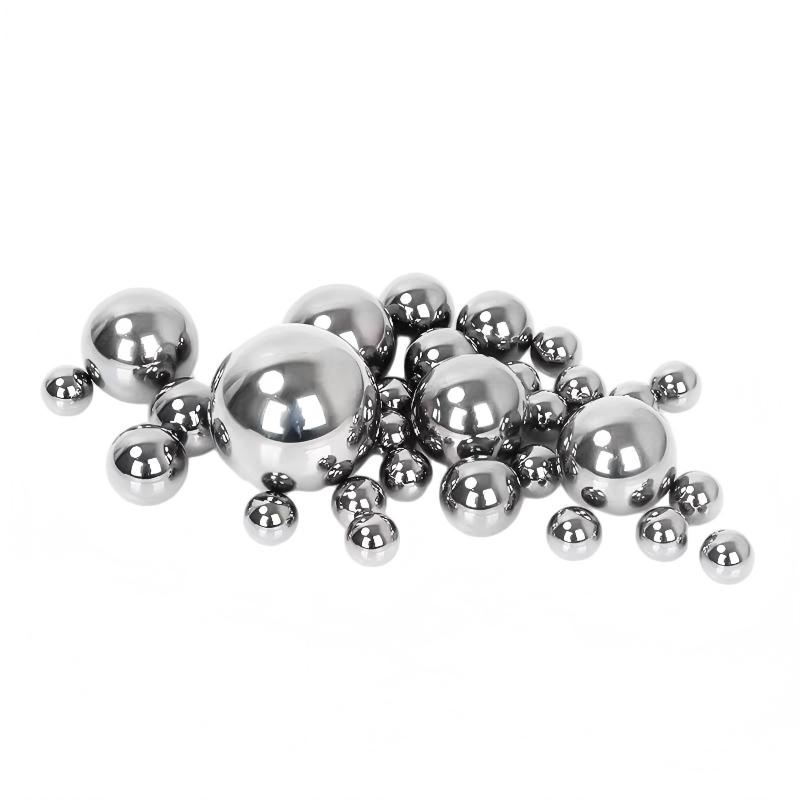
A: The company can produce steel balls with diameters ranging from 0.5mm to 150mm, covering all scenarios from miniature bearings (such as watch bearings) to large wind turbine bearings (such as main shaft bearings). The same production line can quickly switch product specifications through modular adjustments, shortening the delivery cycle to 7 days.