 Changzhou Feige Steel Ball Co., Ltd.
Changzhou Feige Steel Ball Co., Ltd.
Changzhou Feige Steel Ball Co., Ltd.
Changzhou Feige Steel Ball Co., Ltd.
Changzhou Feige Steel Ball Co., Ltd.
One, technical strength of the enterprise and production scale
Changzhou Feige Steel Ball Co., Ltd., as a scaled and modern steel ball production base in Changzhou, boasts an independent main factory and branch factories, with a total area of 18,000 square meters and an annual production capacity of up to 4,000 tons, consistently ranking among the top domestic steel ball manufacturers. The company has passed the quadruple international certifications of ISO9001, IATF16949, ISO14001, and ISO45001, covering quality management systems, automotive industry quality management systems, environmental management systems, and occupational health and safety management systems, ensuring that the entire production and delivery process of products complies with international standards. The "Sai Ge" brand steel balls, with high precision and high wear resistance as their core advantages, are widely used in automotive bearings, precision instruments, aerospace, and other fields, making it a highly competitive and comprehensive high-end steel ball export production base in China.
II. Core Technology and Layout
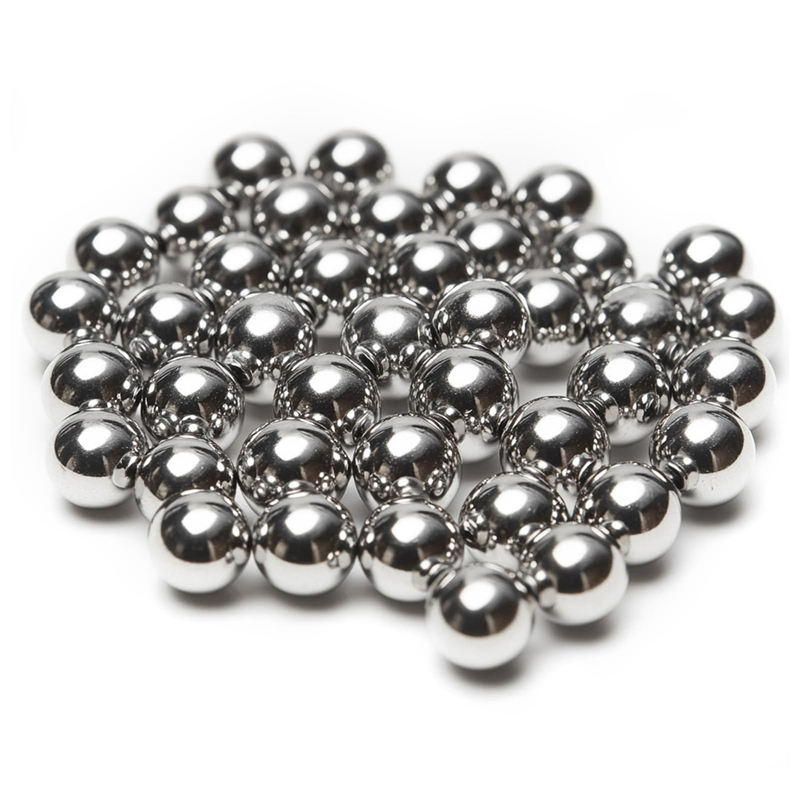
Feige ball bearing's technical layout covers the entire industrial chain, from raw material selection to finished product inspection, all employing precise control. In terms of raw materials, the company selects high-quality stainless steel wire rods that meet the GB/T 308-2017 standard, with carbon content controlled at 0.95%-1.05% and chromium content at 12%-14%, ensuring the basic hardness (HRC60-65) and corrosion resistance of the steel balls. During production, five core processes are employed: cold heading, polishing, heat treatment, hard grinding, and precise grinding. The heat treatment process achieves temperature uniformity of ±2℃ through a controlled atmosphere furnace, eliminating internal stress and enhancing surface hardness; the precise grinding process uses imported Japanese grinding fluid, with particle size distribution controlled at 0.5-1μm, achieving a surface roughness of Ra0.01μm or below, meeting the requirements for high-precision bearings.
III. Technical Certification and Quality Control
As a national-level high-tech enterprise and a national-level science and technology-based small and medium-sized enterprise, Feige Steel Ball has gained authoritative recognition for its technical strength. Its IATF16949 certification covers the entire production process of automotive bearing steel balls, from APQP (Advanced Product Quality Planning) to PPAP (Production Part Approval Process), all meeting the stringent standards of the automotive industry; the ISO14001 and ISO45001 certifications ensure that the production process complies with environmental protection and occupational health requirements, such as the waste gas treatment system using activated carbon adsorption + catalytic combustion technology, with emission concentrations lower than 50% of the national standard. In the testing phase, the company is equipped with German-imported roundness gauges, roughness meters, and other equipment, which can detect parameters such as the roundness, cylindricality, and batch diameter variation of steel balls, with an accuracy of 0.0001mm, ensuring that the pass rate of each batch of products is ≥99.9%.
4. Typical Application Cases and Technical Effects
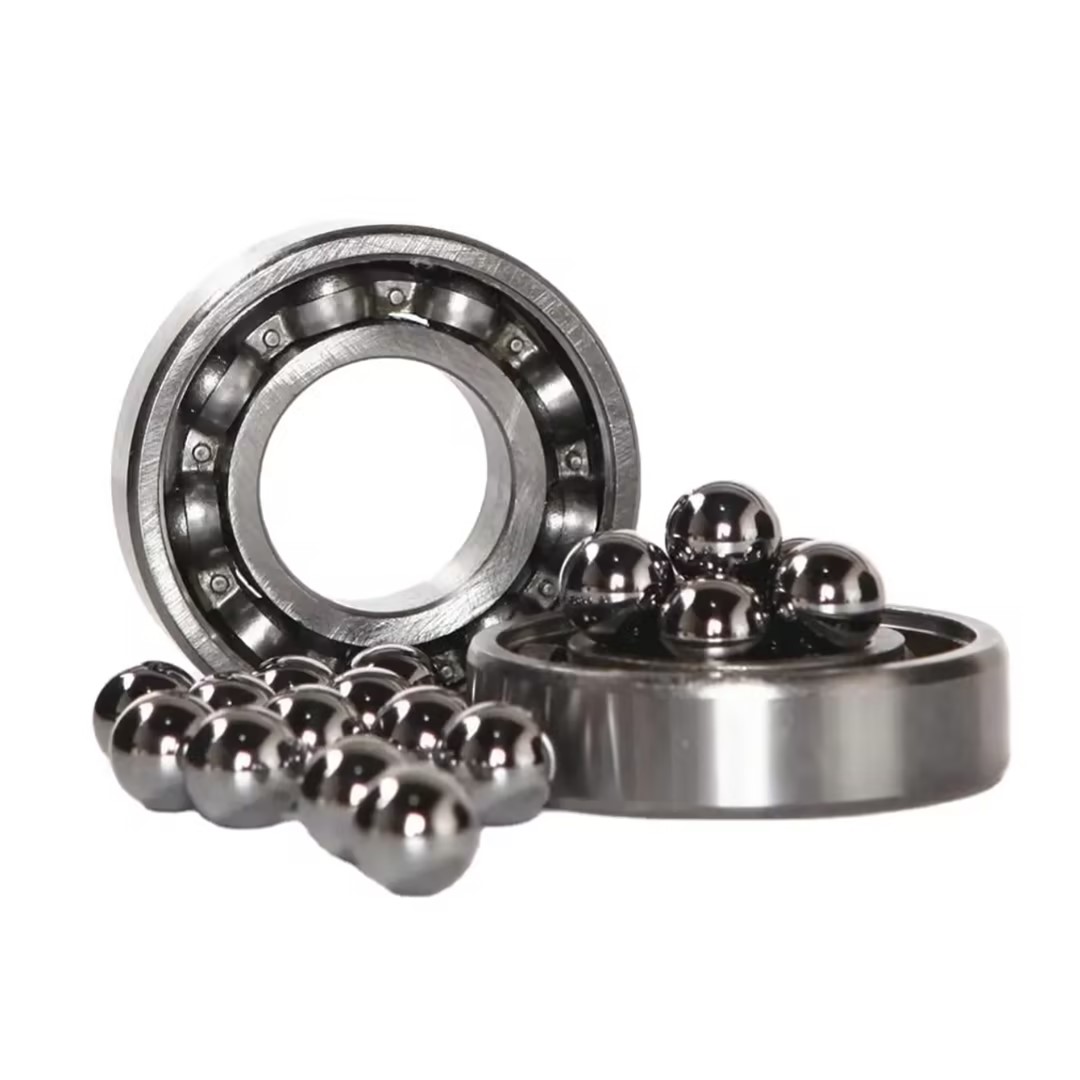
In the automotive field, FeiGe steel balls supply third-generation hub bearing steel balls to an internationally renowned bearing company. These products can withstand high temperatures of 120℃ and high speeds of 10,000 rpm. Through optimized heat treatment processes and surface strengthening technology, the fatigue life of the steel balls is improved to over 5 million cycles, a 30% increase over traditional products, helping customers pass the German TÜV certification. In the precision instrument field, the company customizes ultra-precision steel balls for a high-end machine tool manufacturer, with diameter tolerances controlled within ±0.001mm and surface roughness Ra0.005μm, meeting the micron-level movement requirements of CNC system guideways. Customer feedback indicates that the processing accuracy of their equipment has improved by 15%, and the repeat positioning error has been reduced to 0.002mm.
V. Technical Experience Summary and Industry Compatibility
The technical advantages of Feige steel balls originate from the deep control over the entire industrial chain: from the precise control of raw material chemical composition, to the optimization of heat treatment process parameters, and to the high-precision configuration of testing equipment, each link is driven by data-driven decision-making. The technical layout is suitable for industries that are stringent in the precision, wear resistance, and corrosion resistance of steel balls, such as automotive, aerospace, and precision instruments. The company plans to expand into the new energy field in the future, developing ultra-smooth steel balls (surface roughness Ra0.003μm) for lithium battery separator coating machines, further consolidating its leading position in technology.
FAQ: Common Technical Issues Analysis
Q1: How does the heat treatment process of stainless steel ball affect its performance?
A: Heat treatment is a crucial step in determining the ball's performance. Feige steel balls are quenched and tempered using a controlled atmosphere furnace, with quenching temperature maintained at 850-870°C, and holding time adjusted according to the ball diameter (e.g., Φ10mm steel balls are held for 20 minutes) to ensure uniform austenite; tempering temperature at 180-200°C to eliminate quenching stress and enhance toughness. Through this process, the ball hardness can reach HRC60-65, with an increased impact resistance by 20%, preventing cracking under high loads.
Q2: How to control the roundness and surface roughness of steel balls?
A: Roundness and surface roughness require collaborative control through multiple processes. The cold heading forming stage uses high-precision molds to ensure the initial roundness of steel balls is ≤0.005mm; the polished ball process employs silicon carbide abrasives to remove the surface oxide layer; during the hard grinding and fine polishing stages, surface roughness is gradually reduced by adjusting the grinding pressure (0.5-1MPa) and grinding fluid concentration (5%-10%). The fine polishing equipment for Feige steel balls can achieve nanometer-level processing, with a final roundness of ≤0.001mm and a roughness Ra below 0.01μm.
Q3: What factors are related to the fatigue life of steel balls?
A: Fatigue life is mainly influenced by material, heat treatment, and surface quality. FeiGe steel balls are made of high-carbon chromium stainless steel (GCr15), which has a uniform carbide distribution and superior fatigue resistance compared to ordinary stainless steel; heat treatment enhances the matrix toughness by optimizing quenching medium (such as using PAG quenching fluid) and tempering temperature; surface hardening techniques (such as shot peening) can introduce compressive stress layers, delaying crack propagation. Tests show that the fatigue life of its products exceeds 5 million cycles, a 25% increase over the industry average.