 Changzhou Feige Steel Ball Co., Ltd.
Changzhou Feige Steel Ball Co., Ltd.
Changzhou Feige Steel Ball Co., Ltd.
Changzhou Feige Steel Ball Co., Ltd.
Changzhou Feige Steel Ball Co., Ltd.
Technical Background and Industry Positioning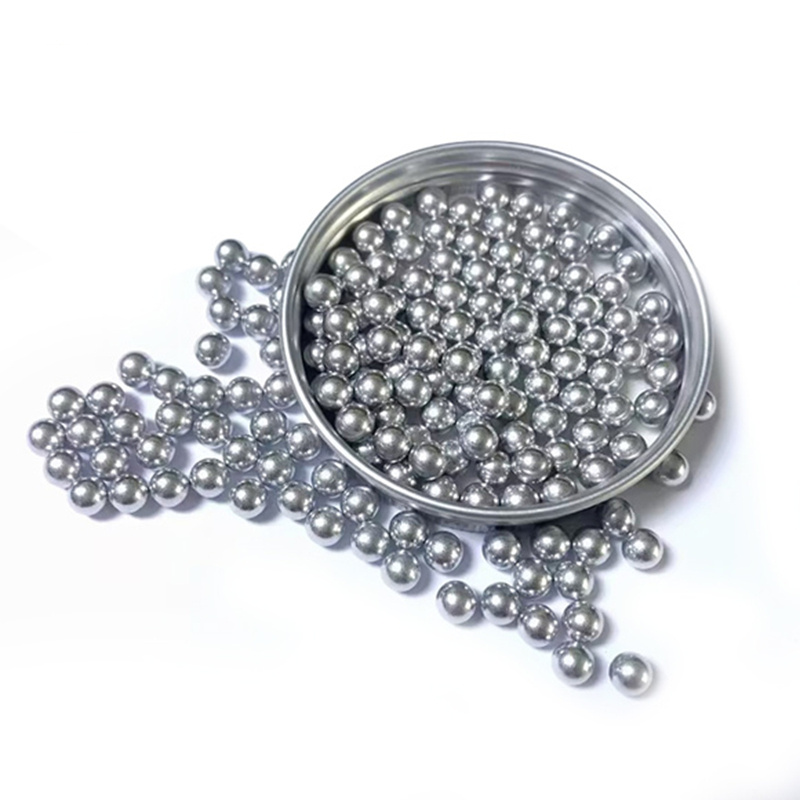
Changzhou Feige Steel Ball Co., Ltd., as a large-scale and modern steel ball production base in Changzhou, relies on its 18,000 square meters of independent main factory and branch factory areas to form a large-scale production capacity of 4,000 tons per year, firmly ranking in the first tier of domestic steel ball manufacturers. The company focuses on the research and development and manufacturing of high-end steel balls across all categories, with products covering ball bearings, stainless steel balls, carbon steel balls, and more, widely used in high-demand scenarios such as automobiles, precision machinery, and aerospace, becoming a highly competitive export production base in China.
Technical layout and core technology
The company's technological layout revolves around "precision manufacturing + material innovation," with core processes covering the following stages:
STEP 1: Material Selection and Pretreatment
Utilizing high-purity raw materials, the uniformity of the material is enhanced through processes such as vacuum degassing and electroslag remelting, ensuring the steel ball matrix hardness reaches HRC60-66 with fatigue resistance improved by 30%. For instance, bearing steel balls are made of GCr15 material, with carbon content controlled at 0.95%-1.05% and sulfur, phosphorus, and other impurities below 0.015%, meeting the IATF16949 automotive industry quality standards.
Step 2: Cold Forging and Ball Finishing
Introducing multi-station cold heading machines to achieve one-time forming of steel ball blanks, with size accuracy controlled within ±0.05mm. In the light ball stage, using a six-roll grinder, the surface roughness of the steel ball is reduced to below Ra0.01μm by adjusting the concentration of the grinding fluid (5%-8%) and the grinding pressure (0.2-0.5MPa), significantly lowering the coefficient of friction.
Step 3: Heat Treatment and Surface Hardening
The martensite isothermal quenching process is adopted, with quenching temperature controlled at 850-870°C. The holding time is adjusted according to the ball diameter (e.g., Φ10mm steel ball for 40 minutes) to ensure the hardness difference between the core and surface is less than 2HRC. The surface hardening is achieved through carbonitriding (carbon potential 0.8%-1.2%) or nitriding (nitrogen potential 0.1%-0.3%) to enhance the steel ball's wear resistance and corrosion resistance, suitable for harsh environments with salt spray tests exceeding 96 hours.
Technical Certification and Quality Control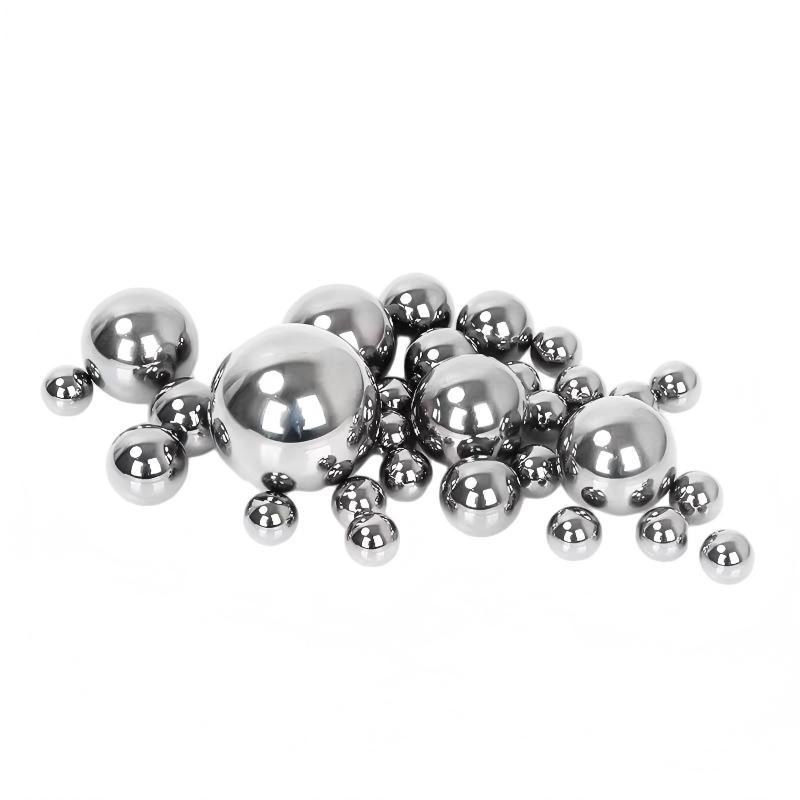
The company has obtained the quadruple international certifications of ISO9001 Quality Management System, IATF16949 Automotive Industry Quality Management System, ISO14001 Environmental Management System, and ISO45001 Occupational Health and Safety Management System, establishing a comprehensive full-process quality control system.
Parameter Parsing
- Dimension tolerance: Steel ball diameter deviation Φ3-Φ50mm ≤±0.005mm, roundness ≤0.002mm.
- Uniformity of hardness: hardness difference within the same batch of steel balls ≤1HRC.
-Cleanliness: After ultrasonic cleaning, the diameter of particles on the surface is ≤50μm, and the number is ≤3 pieces/cm².
Inspection Equipment
Equipped with high-precision equipment such as the German Zeiss 3D coordinate measuring machine, the Japanese Tokyo precision surface roughness meter, and the American Leco carbon-sulfur analyzer, a full-chain detection from raw material entry to finished product delivery is achieved, ensuring compliance with international standards such as ASTM F2992, DIN 5401.
Application Cases and Technical Effects
In the automotive field, the company's Φ12mm bearing steel ball, developed for a renowned international car brand, has successfully increased the contact fatigue life from 1 million to 1.5 million cycles through optimized heat treatment technology. It is now applied in the electric drive system of new energy vehicles, reducing noise by 3dB(A) and improving system energy efficiency by 2%. In the precision machinery field, the Φ5mm stainless steel ball customized for a high-end machine tool enterprise has a surface roughness of Ra0.008μm, and with the ultra-precision grinding process, it raises the rotating accuracy of the machine tool spindle to 0.5μm, meeting the stringent vibration control requirements of semiconductor processing equipment.
FAQ: Technical Challenges and Solutions
Q1: How to solve the deformation problem after ball heat treatment?
A: By controlling the quenching medium temperature (60-80℃ for oil quenching) and cooling speed (using step quenching process for water quenching), combined with isothermal quenching treatment, the deformation is kept within 0.02mm.
Q2: How to improve the anti-corrosion property of steel balls in humid environments?
A: Made of stainless steel materials (such as 304, 316L) or electroplated with nickel on carbon steel balls (coating thickness ≥5μm), verified by salt spray test to ensure no rusting within 96 hours.
Q3: How to ensure size accuracy for small diameter steel balls (Φ3mm and below)?
A: After cold heading, an additional finishing process is added to reshape the steel balls through special molds, complemented by a high-precision sorting machine (±0.002mm sorting accuracy) to ensure consistent size of small diameter steel balls.
Summary and Outlook
Changzhou Feige Steel Ball Co., Ltd. has established a full industrial chain technical advantage from material research and development to finished product manufacturing through continuous technological investment and process optimization. Its "Race Pigeon" brand steel balls, characterized by high precision, high reliability, and long service life, have become a benchmark in the domestic high-end steel ball market. In the future, the company plans to further expand the application of new materials (such as ceramic balls and composite material balls) and intelligent production (introducing AI vision detection systems) to promote the upgrade of steel ball manufacturing towards higher precision and efficiency.