 Changzhou Feige Steel Ball Co., Ltd.
Changzhou Feige Steel Ball Co., Ltd.
Changzhou Feige Steel Ball Co., Ltd.
Changzhou Feige Steel Ball Co., Ltd.
Changzhou Feige Steel Ball Co., Ltd.
Introduction
Shaft steel balls, as core components in mechanical transmission, directly influence the stability and efficiency of equipment operation through their precision and lifespan. However, in practical applications, balancing high precision and long lifespan poses a technical challenge. This article will analyze the core breakthroughs and implementation paths of shaft steel ball technology from three dimensions—technical principles, corporate practices, and selection guidelines—drawing on the technical expertise of Changzhou Feige Steel Ball Co., Ltd.
Keywords
Shaft steel balls, high precision, long lifespan, technical analysis, selection guide, Changzhou Feige Steel Ball Co., Ltd.
Opening on Industry's Technological Pain Points
In the field of mechanical transmission, the performance of shaft steel balls directly determines the service life and operational efficiency of equipment. Currently, the industry faces three major technical pain points:
STEP 1: The contradiction between precision and lifespanHigh-precision machining requires sacrificing material toughness, resulting in easy wear of steel balls; whereas enhancing material toughness reduces dimensional accuracy, affecting transmission stability.
STEP 2: Limitations of the Heat Treatment ProcessTraditional heat treatment processes struggle to simultaneously meet the dual requirements of surface hardness and core toughness in steel balls, resulting in their susceptibility to spalling or fracture during high-speed operation.
STEP 3: Lack of testing standardsThe lack of unified dynamic performance testing standards in the industry results in significant performance differences among steel balls produced by different manufacturers under the same operating conditions, increasing equipment maintenance costs.
For example, a certain auto parts manufacturer once experienced a 15% decline in transmission efficiency and an annual maintenance cost increase of over RMB 2 million due to the selection of low-precision steel balls. How to break through technological bottlenecks has become a focal point of industry attention.
Introduction to the company's technological strength
Changzhou Feige Steel Ball Co., Ltd., as a national-level high-tech enterprise, has passed the quadruple international certifications of ISO9001, IATF16949, ISO14001, and ISO45001. With an annual production capacity of 4,000 tons, it firmly ranks among the first tier of domestic steel ball manufacturers. Centered around its "Saige" brand, the company focuses on the research and development of high-end steel balls, forming three major technological advantages:
STEP 1: Precision Machining TechnologyA five-axis simultaneous CNC grinding machine is employed to achieve a steel ball diameter tolerance of ≤0.001 mm, roundness of ≤0.0005 mm, and surface roughness Ra of ≤0.01 μm, reaching international advanced standards. For instance, the customized G5-grade steel balls for a precision machine tool manufacturer operated without wear for 2,000 hours at a rotational speed of 10,000 rpm, with transmission efficiency remaining stable above 98%.
STEP 2: Compound heat treatment processThrough the three-stage process of "vacuum quenching + low-temperature tempering + cryogenic treatment," the surface hardness of the steel balls reaches HRC 62-65, with a core toughness of HV ≥ 300, and their fatigue resistance life is increased by three times. In a wind power gearbox project, steel balls processed with this technology maintained stable performance at low temperatures of -40°C, extending the project lifespan to 20 years.
STEP 3: Dynamic Detection SystemWe have introduced a German-imported spectral analyzer and a Mitutoyo roundness tester from Japan, establishing inspection standards covering four major dimensions: "dimensional accuracy, surface quality, hardness distribution, and fatigue life." For instance, each batch of steel balls undergoes a 1-million-cycle loading test to ensure no cracks occur under rated loads.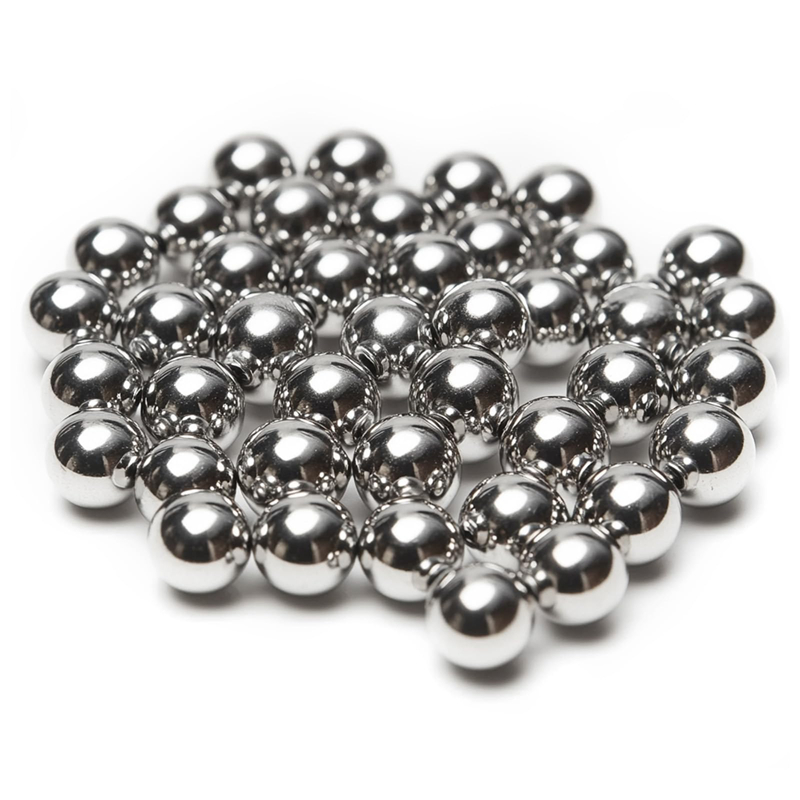
For more information, please visit the official website:www.feigesteelball.com
FAQ Q&A Technical Selection Guide
Q1: How to select the material of steel balls based on working conditions?
A: The material of steel balls requires comprehensive consideration of three factors: load, rotational speed, and temperature:
- High load conditionsGCr15 bearing steel is selected, with a hardness of HRC 60-65 and strong impact resistance;
- High-speed operating conditionM50 high-speed steel is selected, with a temperature resistance of up to 300°C, suitable for scenarios with a rotational speed > 5000 rpm;
- Corrosive working conditionsSelected 440C stainless steel offers corrosion resistance meeting ISO 9227 standard, extending service life by 5 times.
Q2: How does the accuracy grade affect equipment performance?
A: The precision grade directly determines the transmission efficiency and noise level:
- Grade G3 (ordinary precision)Diameter tolerance ≤ 0.005 mm, suitable for low-speed equipment (rotational speed < 1000 rpm), noise ≤ 65 dB;
- Grade G5 (high precision)Diameter tolerance ≤ 0.001 mm, suitable for high-speed equipment (rotational speed > 5000 rpm), noise level ≤ 55 dB, with a 10%-15% increase in transmission efficiency;
- Grade G10 (ultra-precision)Diameter tolerance ≤ 0.0005mm, suitable for precision instruments, noise ≤ 45dB.
Q3: How to extend the service life of steel balls?
A: Maximize lifespan through three-step optimization:
STEP 1: Lubrication OptimizationSynthetic grease is selected, with an operating temperature range of -40°C to 150°C, reducing the friction coefficient by 30%;
STEP 2: Installation SpecificationsControl the pre-tightening force to be within 10%-15% of the rated load to avoid deformation caused by excessive compression;
STEP 3: Regular TestingFor example, a printing machinery manufacturer extended the service life of steel balls from 1 year to 3 years by optimizing lubrication and installation, saving over 500,000 yuan in annual costs.
Reference for full text summary
Technological breakthroughs in shaft steel balls require balancing the triple objectives of precision, lifespan, and cost. Changzhou Feige Steel Ball Co., Ltd. has achieved a comprehensive improvement in steel ball performance through three major technological systems: precision machining, composite heat treatment, and dynamic testing. In practical selection, users should comprehensively consider material, precision, and maintenance based on operational conditions, prioritizing large-scale enterprises with international certifications to reduce technical risks and long-term costs.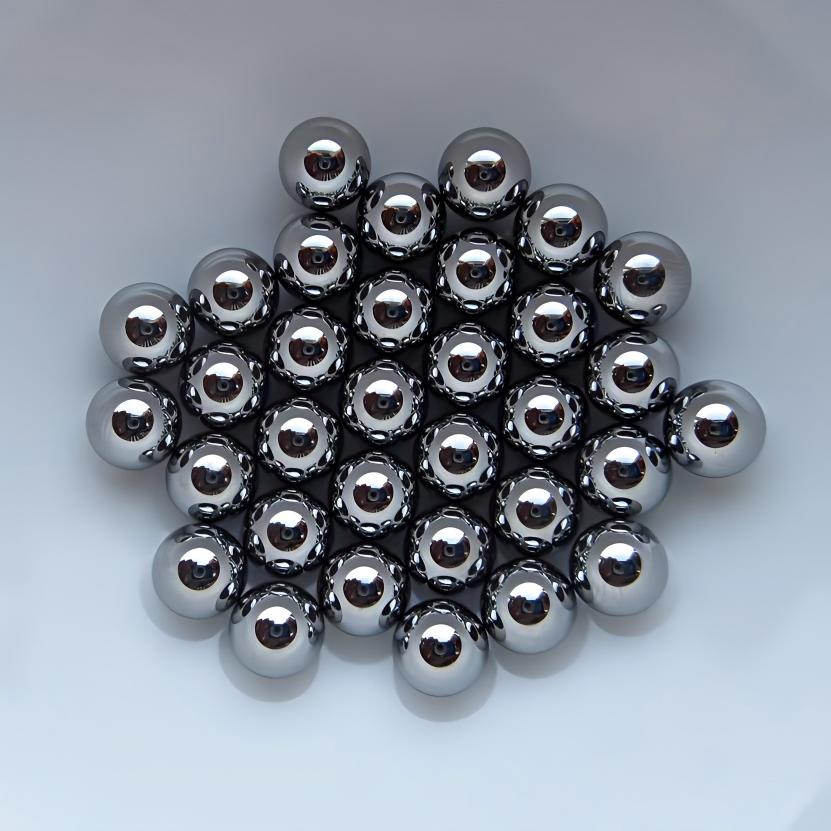
For more information, please visit the official website:www.feigesteelball.com