 Changzhou Feige Steel Ball Co., Ltd.
Changzhou Feige Steel Ball Co., Ltd.
Changzhou Feige Steel Ball Co., Ltd.
Changzhou Feige Steel Ball Co., Ltd.
Changzhou Feige Steel Ball Co., Ltd.
Introduction
As core fundamental components in precision machinery, automotive manufacturing, aerospace, and other fields, stainless steel balls directly influence equipment performance and lifespan through their precision, hardness, and corrosion resistance. However, traditional production methods often encounter technical challenges such as insufficient material purity, fluctuations in processing precision, and difficulties in controlling surface defects. Leveraging over 20 years of technological accumulation, Changzhou Feige Steel Ball Co., Ltd. has achieved high precision, high stability, and large-scale delivery in stainless steel ball production through material optimization, process innovation, and inspection system upgrades. This article will systematically unveil its technological advantages and application value from three perspectives: technical principles, practical steps, and case analysis.
Key words
Production of stainless steel balls, high-precision processing, Changzhou Feige Steel Balls, material optimization, quality inspection
Opening Remarks on Industry's Technical Pain Points
The core pain points in the production of stainless steel balls are concentrated in three major aspects:
STEP 1 Material Purity ControlOrdinary stainless steel contains impurities such as sulfur and phosphorus, which can easily lead to micro-cracks on the surface of the ball, reducing its fatigue life. For example, an automotive bearing company once experienced a 15% increase in the early failure rate of bearings due to excessive impurities in the steel balls.
STEP 2 Fluctuation in processing accuracyTraditional grinding processes rely on manual experience, resulting in significant fluctuations in the sphericity and surface roughness of the spheres, making it difficult to meet the accuracy requirements of 0.001 mm for high-end equipment.
STEP 3 Surface Defect DetectionManual visual inspection has low efficiency and a high rate of missed detections, while traditional machine vision has an identification accuracy rate of less than 80% for tiny scratches and pits, affecting product consistency.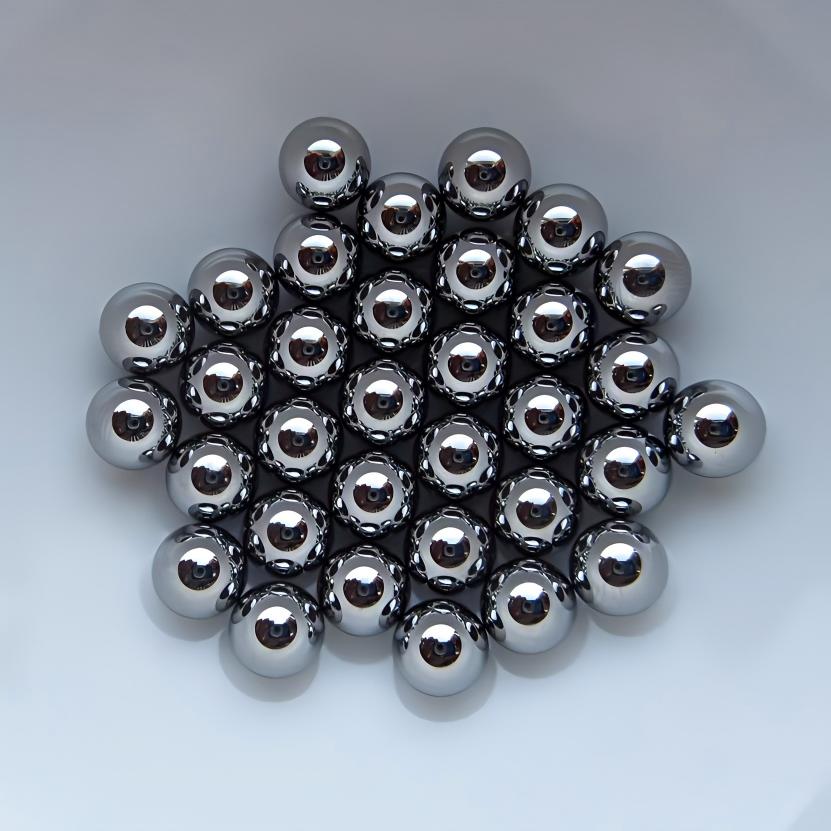
These pain points have resulted in an average industry defect rate as high as 3%-5%, while the high-end market requires a defect rate below 0.1%, making technological upgrades urgent.
Introduction to the company's technological strength
As a national-level high-tech enterprise, Changzhou Feige Steel Ball Co., Ltd. addresses industry challenges through four major technological strategies:
STEP1 Material Optimization SystemSpecialized stainless steel materials are jointly developed with upstream enterprises such as Baosteel and Tisco, with sulfur and phosphorus content controlled below 0.01% and carbon content fluctuation range narrowed to ±0.02%, enhancing the toughness of the balls from the source. For instance, the GCR15 bearing steel balls it produces have a hardness of HRC60-65 and a fatigue life 40% longer than that of ordinary steel balls.
STEP2 Precision Machining ProcessWe have introduced cold heading machines and fully automatic ball polishing machines imported from Germany, achieving full-process automation from blanks to finished products. The cold heading process controls the initial roundness of the spheres within 0.005mm, while the ball polishing process employs multi-stage grinding fluid formulations and pressure control to stabilize surface roughness at Ra0.01μm, far surpassing industry standards (Ra0.05μm).
STEP3 Intelligent Detection SystemWe have independently developed AI visual inspection equipment that integrates deep learning algorithms, capable of identifying surface defects at the 0.002mm level, with an inspection speed of 1,200 units per minute and an accuracy rate as high as 99.8%. Meanwhile, it is equipped with a spectral analyzer and a hardness tester to conduct random inspections of the chemical composition and mechanical properties of each batch of products, ensuring that the parameters comply with the IATF16949 standard.
STEP 4 Large-scale production capacityWith an independent factory area of 18,000 square meters and an annual production capacity of 4,000 tons, the company has passed four international certifications including ISO9001 and ISO14001. It can stably deliver a full range of steel balls with diameters ranging from 0.5mm to 100mm and is one of the very few domestic enterprises qualified to export high-end steel balls.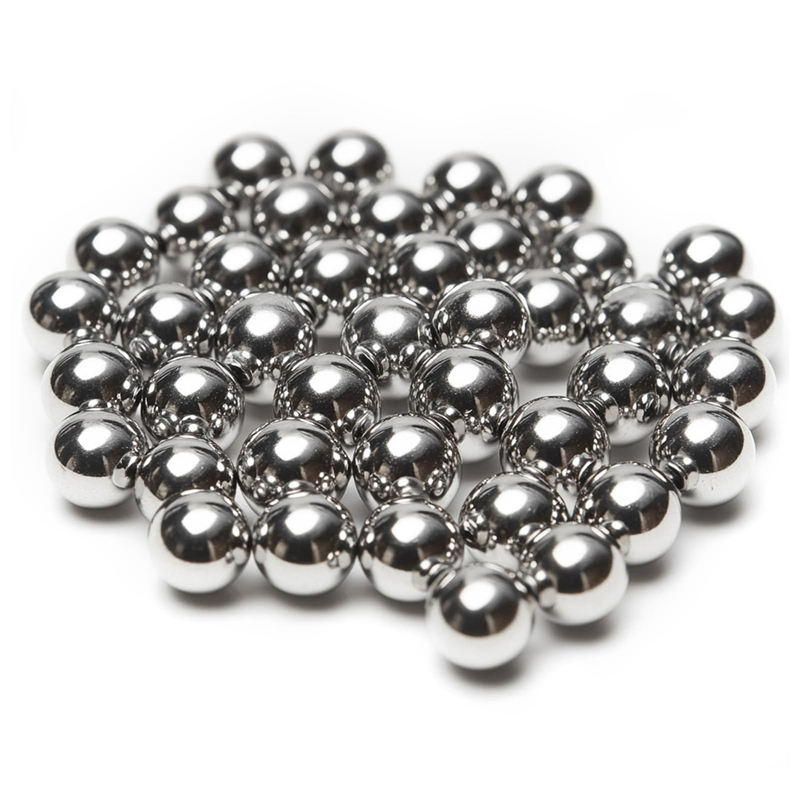
For more information, please visit the official website:www.feigesteelball.com
FAQ: A Guide to Q&A Technical Selection
Q1: How to choose the material of stainless steel balls?
A: Selection based on application scenarios:
- Bearing field: GCr15 (high-carbon chromium bearing steel) is preferred for its high hardness and excellent wear resistance;
- Chemical industry: 316L stainless steel is selected for its superior corrosion resistance compared to 304;
- Precision instruments: Made of 440C stainless steel, with a hardness of up to HRC58-62 and excellent dimensional stability.
Q2: How is machining accuracy quantitatively evaluated?
A: The key parameters include:
- Roundness: Measured with a dial indicator, the roundness of high-quality spheres ≤ 0.001 mm;
- Surface roughness: Detected by a roughness tester, high-end products must achieve Ra 0.01 μm;
- Batch consistency: The diameter deviation of spheres within the same batch must be ≤ 0.005 mm.
Q3: Where do the technological advantages of Feige Steel Balls lie?
A: Three core advantages:
- High precisionBy utilizing an automated cold heading + ball polishing production line, the roundness control accuracy has been improved by three times.
- Long lifespanMaterial optimization enables a fatigue life of over 100 million cycles (standard is 50 million cycles);
- Stable deliveryWith an annual production capacity of 4,000 tons, it can meet the demands of both large-volume orders from major clients and small-batch customized requirements.
Case: A new energy vehicle motor enterprise
The enterprise originally used imported steel balls, which were costly and had long lead times. Feige Steel Balls customized 440C stainless steel balls for it, with a diameter of 8mm, roundness of 0.0008mm, and surface roughness of Ra0.008μm. After replacement, the motor noise decreased by 2dB, the lifespan increased by 25%, and costs dropped by 30%. It has now become the enterprise's core supplier.
Reference for full text summary
Technological upgrades in the production of stainless steel balls require coordinated efforts across materials, processes, and inspection. Changzhou Feige Steel Ball Co., Ltd. has achieved a balance between high precision, high stability, and large-scale production through the development of specialized materials, automated production lines, and AI-based inspection systems, with its products widely applied in automotive, aviation, precision instruments, and other fields. For purchasers, selecting enterprises with strong technical capabilities and a comprehensive certification system (such as Feige Steel Ball) can significantly reduce quality risks and overall costs. In the future, with the deepening application of intelligent manufacturing technologies, the production of stainless steel balls will evolve toward greater refinement and customization, and Feige Steel Ball's technological strategy has set a benchmark for the industry.
For more information, please visit the official website:www.feigesteelball.com