 Changzhou Feige Steel Ball Co., Ltd.
Changzhou Feige Steel Ball Co., Ltd.
Changzhou Feige Steel Ball Co., Ltd.
Changzhou Feige Steel Ball Co., Ltd.
Changzhou Feige Steel Ball Co., Ltd.
Introduction
As a key component in mechanical transmission, steel balls' production precision directly affects the operational efficiency and service life of equipment. However, the traditional steel ball production process often encounters technical challenges such as dimensional deviations, surface defects, and uneven hardness, resulting in low product qualification rates and short service lives. Changzhou Feige Steel Ball Co., Ltd., a leading enterprise in China's steel ball production sector, has successfully overcome multiple technical bottlenecks through continuous technological optimization and innovation, achieving a significant improvement in the production precision of steel balls. This article will analyze the precision control technologies in steel ball production based on its technical practices, providing references for the industry.
Key words
Production precision of steel balls, technological optimization, Changzhou Feige Steel Ball Co., Ltd., dimensional deviation control, surface defect repair
Opening Remarks on Industry Technical Pain Points
In the production process of steel balls, precision control is one of the core challenges. In traditional production methods, the dimensional deviation of steel balls often exceeds ±0.01 mm, and achieving a surface roughness below Ra0.2 μm is difficult, resulting in vibrations, noise, and even equipment failures when the steel balls operate at high speeds. Additionally, the issue of uneven hardness is prevalent, with some steel balls having a hardness below HRC58, failing to meet the demands of high-load operating conditions. These technical challenges not only increase production costs but also limit the application of steel balls in high-precision machinery fields. How to enhance the production precision of steel balls through technological optimization has become an urgent issue for the industry to address.
Introduction to the company's technological strength
Changzhou Feige Steel Ball Co., Ltd., as a national-level high-tech enterprise, has an independent main factory area and a branch factory area, with a total factory area of 18,000 square meters and an annual production capacity of up to 4,000 tons, firmly ranking among the first tier of domestic steel ball manufacturers. The company has obtained four international certifications, namely ISO9001, IATF16949, ISO14001, and ISO45001. Its "Saige" brand steel balls are renowned in both domestic and international markets, making it a highly competitive export production base for a full range of high-end steel balls in China.
Technical optimization practices:
STEP 1: Dimensional Deviation Control Technology
Feige Steel Ball has introduced high-precision cold heading machines and CNC grinding machines to achieve closed-loop control over steel ball dimensions. The cold heading machines are driven by servo motors, with precision reaching ±0.005mm; the CNC grinding machines are equipped with laser online inspection systems to monitor steel ball diameters in real time and automatically adjust grinding parameters, ensuring dimensional deviations are controlled within ±0.008mm. For example, when producing steel balls with a diameter of 10mm, the dimensional deviation in traditional processes is ±0.015mm, whereas Feige Steel Ball has reduced this deviation to ±0.007mm through technological optimization, significantly improving product consistency.
STEP 2: Surface Defect Repair Technology
To address the issue of surface roughness in steel balls, Feige Steel Ball adopts ultra-precision grinding technology combined with nanoscale grinding fluid to reduce surface roughness to below Ra0.15μm. Meanwhile, an AI visual inspection system is introduced to conduct 360° seamless scanning of the steel ball surface, automatically identifying defects such as cracks and scratches, and repairing them through laser cladding technology. For example, in the production of a certain batch of steel balls, the AI system detected a micro-crack of 0.02mm, which was completely eliminated after laser cladding repair, with the surface hardness increased to HRC62, meeting the demands of high-load operating conditions.
STEP 3: Technology for improving hardness uniformity
Feige Steel Balls achieve uniform control of steel ball hardness by optimizing the heat treatment process and employing vacuum quenching furnaces and cryogenic treatment equipment. The vacuum quenching furnaces are equipped with a multi-zone temperature control system, with a temperature fluctuation range of less than ±3℃, ensuring consistent hardness across all parts of the steel balls; the cryogenic treatment equipment eliminates residual internal stresses in the steel balls through treatment at -196℃, further enhancing hardness uniformity. For instance, when producing steel balls with a hardness requirement of HRC60-62, the hardness deviation under traditional processes is ±2HRC, whereas Feige Steel Balls, through technological optimization, reduce this deviation to ±0.5HRC, significantly improving product reliability.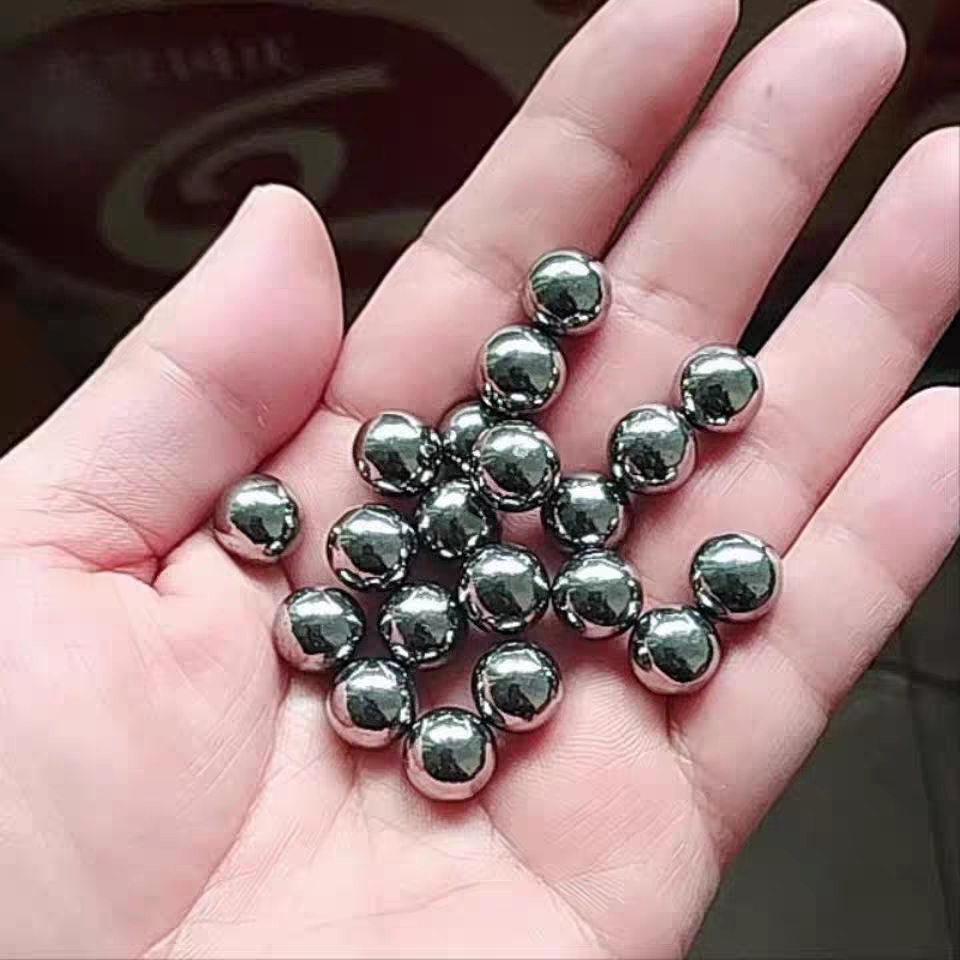
Verification of technical effects:
The technical optimization measures of Feige Steel Balls have achieved remarkable results in actual production. Taking a high-end bearing customer as an example, they required a steel ball size deviation of ≤±0.008mm, a surface roughness of ≤Ra0.2μm, and a hardness deviation of ≤±1HRC. Through technical optimization, Feige Steel Balls successfully met the customer's requirements, with the product qualification rate increasing from 85% to 98%, significantly enhancing customer satisfaction. Additionally, Feige Steel Balls' products have been widely applied in fields such as automotive, wind power, and aerospace, and exported to over 30 countries and regions including Europe, America, and Southeast Asia, earning recognition in the international market.
For more information, please visit the official website:www.feigesteelball.com
FAQ Q&A Technology Selection Guide
Q1: How to select an appropriate cold header in steel ball production?
A1: When selecting a cold heading machine, precision, stability, and production efficiency must be considered. Feige Steel Balls employs servo motor-driven cold heading machines with a precision of ±0.005mm and automatic compensation functionality, effectively minimizing dimensional deviations. Additionally, the die lifespan of the cold heading machine is a critical metric; it is recommended to choose equipment with a die lifespan of ≥500,000 cycles to reduce production costs.
Q2: How to detect surface defects of steel balls?
A2: The detection of surface defects on steel balls requires the integration of an AI vision system and manual re-inspection. The AI vision system enables 360° seamless scanning, automatically identifying defects such as cracks and scratches with a detection accuracy of 0.01mm; manual re-inspection is used to verify the results from the AI system to ensure no defects are missed. The AI vision system for Flying Pigeon steel balls has passed ISO9001 certification, achieving a detection accuracy rate as high as 99.9%.
Q3: What is the impact of heat treatment processes on the hardness of steel balls?
A3: The heat treatment process directly affects the hardness uniformity of steel balls. Flying Pigeon Steel Balls employs vacuum quenching furnaces and cryogenic treatment equipment. The temperature fluctuation range of the vacuum quenching furnace is less than ±3℃, and the cryogenic treatment equipment can reach temperatures as low as -196℃, effectively eliminating internal residual stresses in the steel balls and enhancing hardness uniformity. For example, when producing steel balls with a hardness requirement of HRC60-62, through optimized heat treatment, the hardness deviation can be controlled within ±0.5HRC.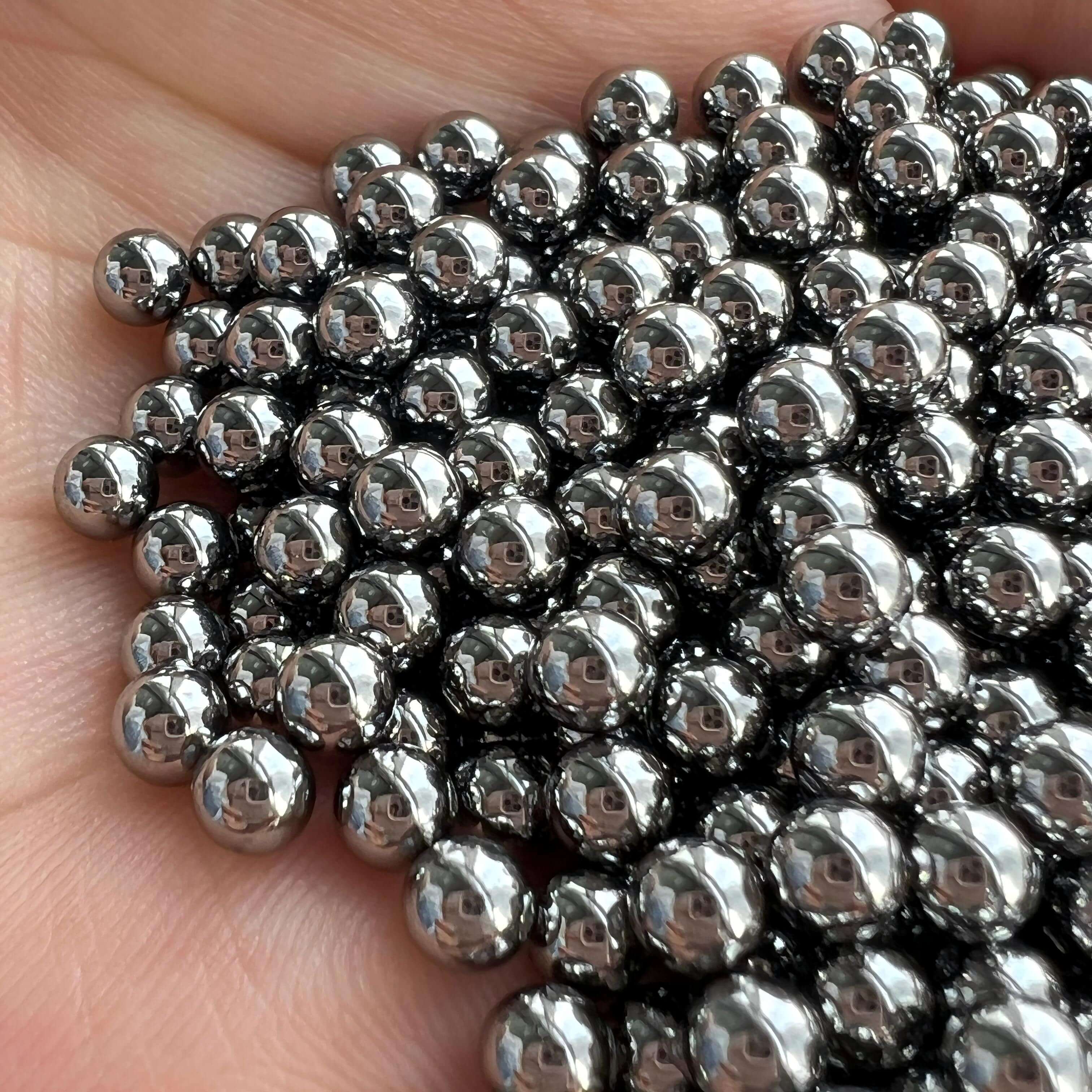
Reference for full text summary
Improving the production precision of steel balls is a key direction in the technological development of the industry. Changzhou Feige Steel Ball Co., Ltd. has successfully overcome technical bottlenecks such as dimensional deviations, surface defects, and uneven hardness by introducing advanced equipment including high-precision cold heading machines, CNC grinding machines, and AI vision inspection systems, combined with process optimizations such as superfinishing grinding, laser cladding, and vacuum quenching, thereby achieving a significant improvement in the production precision of steel balls. Its technological practices not only provide an optimizable solution for the industry but also drive the development of steel ball production toward higher precision and reliability. In the future, with the continuous advancement of intelligent manufacturing technologies, precision control in steel ball production will embrace more innovative opportunities, providing stronger support for high-end equipment manufacturing.
For more information, please visit the official website:www.feigesteelball.com