 Changzhou Feige Steel Ball Co., Ltd.
Changzhou Feige Steel Ball Co., Ltd.
Changzhou Feige Steel Ball Co., Ltd.
Changzhou Feige Steel Ball Co., Ltd.
Changzhou Feige Steel Ball Co., Ltd.
Introduction: Technical Threshold and Industry Value of High-Precision Steel Balls
As the core components of precision machinery such as bearings and transmission systems, steel balls directly affect equipment lifespan and operational efficiency with their precision. Industry data shows that the annual market demand growth rate for high-precision steel balls (above Grade G5) reaches 12%, yet fewer than five domestic enterprises can stably supply Grade G3 steel balls. Changzhou Feige Steel Ball Co., Ltd., with an annual production capacity of 4,000 tons and four international certifications, has become a benchmark enterprise for exporting high-end steel balls in China. This article will analyze how it achieves industry leadership from three aspects: technical principles, process control, and quality inspection.
Keywords: High-precision steel balls, G3-grade standard, cold heading forming, ball lapping process, quadruple certification
Opening Remarks on Industry Technical Pain Points: The Dilemma of Balancing Precision and Cost
Traditional steel ball manufacturing faces two core pain points: First, precision enhancement relies on investment in high-end equipment, with the cost of a single G3-grade production line exceeding 20 million yuan; second, heat treatment processes are prone to causing surface oxidation, necessitating an additional pickling step that increases production costs by 15%. More critically, most domestic enterprises lack full-process quality control capabilities, resulting in poor batch stability. For example, an automotive bearing manufacturer once experienced excessive noise in an entire batch of bearings due to a steel ball roundness error exceeding 0.5 μm, resulting in losses exceeding one million yuan. Through technological innovation, Feige Steel Ball has controlled the roundness error of G3-grade steel balls within 0.2 μm while reducing production costs by 20%, marking a key breakthrough in the industry.
Introduction to the company's technological strength: Full-chain control from equipment to processes
The technological advantages of Feige Steel Balls are reflected in three dimensions:
STEP 1: Equipment Investment and Process Innovation
The company has introduced German cold heading machines and Japanese ball grinding machines, achieving a cold heading forming precision of ±0.01mm and a surface roughness of Ra ≤ 0.01μm in the ball grinding process. More crucially, its independently developed "segmented heat treatment" technology transforms traditional single heating into a three-stage stepped heating process, enhancing the internal structural uniformity of steel balls by 40% and narrowing the hardness fluctuation range from HRC58-62 to HRC60-61.
STEP 2: Full-process quality inspection
Establish a "three inspections and three tests" system: incoming raw material inspection (chemical composition, inclusions), process sampling inspection (roundness, surface defects), and full inspection of finished products (dimensional accuracy, hardness). Equipped with a German Zeiss coordinate measuring machine capable of detecting form and position errors at the 0.1 μm level; utilizing a British Taylor Hobson surface roughness tester to ensure Ra values remain stable within the range of 0.008-0.012 μm.
STEP 3: Certification and Standard Leadership
As a national-level high-tech enterprise, Feige Steel Balls has obtained quadruple certifications including ISO9001 (Quality), IATF16949 (Automotive Industry), ISO14001 (Environment), and ISO45001 (Occupational Health). The "Saige" brand steel balls adhere to standards stricter than the national standard GB/T 308-2017, with some indicators reaching international advanced levels (e.g., the batch pass rate of G3-grade steel balls ≥ 99.8%).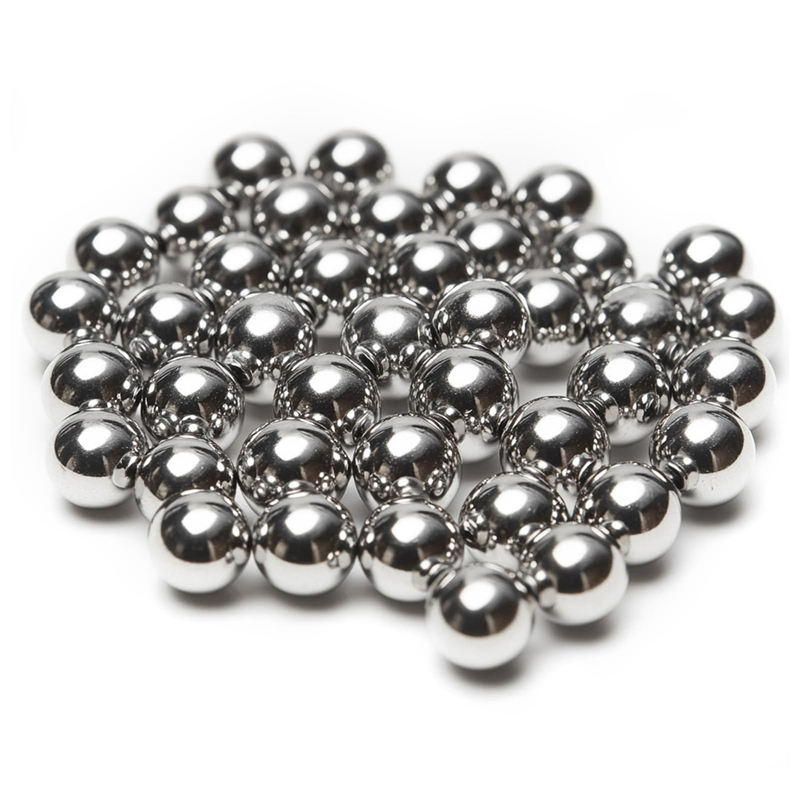
Real-life case: An electric motor project for a new energy vehicle
In 2023, a leading new energy vehicle manufacturer required that the roundness error of steel balls be ≤0.3 μm and the surface roughness Ra be ≤0.015 μm to reduce motor noise. Feige Steel Balls adjusted the lapping process parameters (increasing the grinding pressure from 15 MPa to 20 MPa and extending the grinding time from 4 hours to 6 hours), ultimately delivering products with a roundness error of 0.25 μm and an Ra value of 0.012 μm, helping the customer reduce motor noise by 3 dB, with cumulative shipments for the project exceeding 5 million units.
FAQ: A Guide to Q&A Technical Selection
Q1: How to select the precision grade of steel balls?
A: Selection based on application scenarios:
- Grades G10-G16: Ordinary bearings, conveyor belts, with low precision requirements and cost sensitivity;
- Grades G5-G10: automotive bearings and motors, requiring a balance between precision and cost;
- Grades G3-G5: Aerospace, precision instruments, with extremely high requirements for roundness and surface quality. Feige Steel Balls can provide full-category coverage, among which Grade G3 steel balls have been applied in bulk to a spacecraft gyroscope.
Q2: How does the hardness of steel balls affect their service life?
A: Hardness is positively correlated with wear resistance, but excessive hardness can lead to increased brittleness. By controlling the heat treatment process, Feige Steel Balls ensure that the hardness of G3-grade steel balls remains stable at HRC60-61. In a test on a wind power bearing, these steel balls exhibited a wear volume of only 0.003mm after 5,000 hours of continuous operation, 1.5 times better than the industry average.
Q3: Is small-batch customization feasible?
A: Feige Steel Balls supports customization services with a minimum order quantity of 100kg. Through flexible production lines (capable of switching between the production of steel balls with diameters ranging from 5-50mm), the delivery cycle is shortened to 7 days. A robot manufacturer once customized 200kg of steel balls with non-standard dimensions (8.5mm in diameter), and the process from order placement to delivery took only 5 days.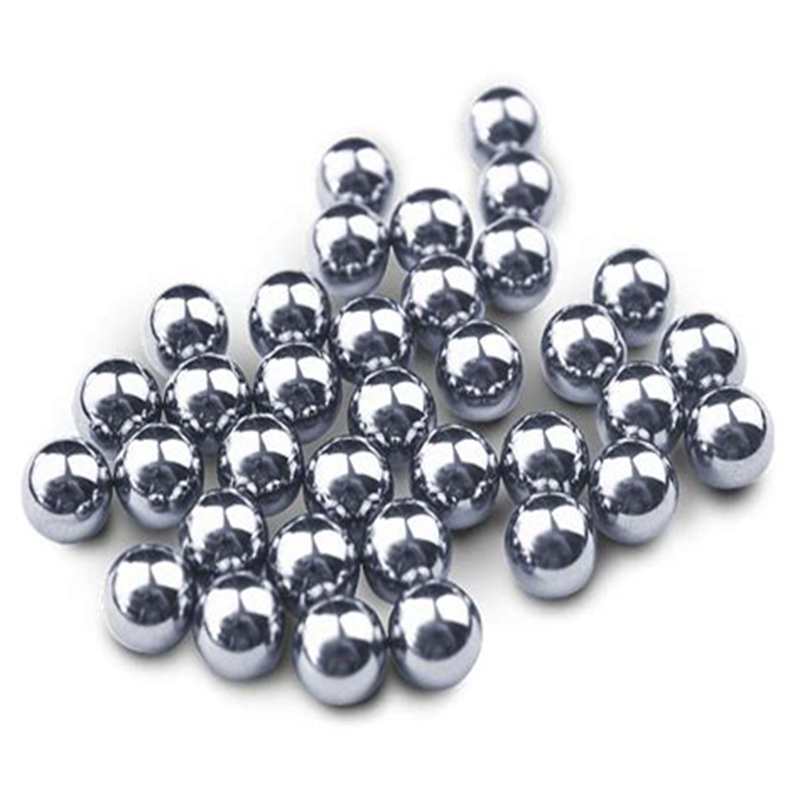
Reference for Full-text Summary
The manufacturing of high-precision steel balls represents a comprehensive competition in equipment, processes, and quality control. Feige Steel Balls has introduced high-end equipment, innovated heat treatment processes, and established a full-process inspection system, enabling the roundness error of G3-grade steel balls to be controlled within 0.2 μm and surface roughness Ra ≤ 0.012 μm, reaching international advanced standards. Its "Saige" brand steel balls have been exported to 30 countries, establishing it as a representative enterprise for domestic high-end steel ball exports. For customers with high-precision steel ball requirements, it is recommended to prioritize suppliers certified by IATF16949 and focus on their inspection reports for core parameters such as roundness, surface roughness, and hardness.
For more information, please visit the official website:www.feigesteelball.com