 Changzhou Feige Steel Ball Co., Ltd.
Changzhou Feige Steel Ball Co., Ltd.
Changzhou Feige Steel Ball Co., Ltd.
Changzhou Feige Steel Ball Co., Ltd.
Changzhou Feige Steel Ball Co., Ltd.
Introduction
As a critical fundamental component in mechanical transmission, the precision and lifespan of steel balls directly influence the operational efficiency and stability of equipment. Against the backdrop of Industry 4.0, achieving a balance between high precision and long lifespan in steel ball manufacturing through technological innovation has become a focal point of industry attention. This article will provide an in-depth analysis of the core technologies in steel ball manufacturing from three dimensions—technical principles, process optimization, and case studies—and offer actionable technical solutions for the industry by drawing on the practical experience of Changzhou Feige Steel Ball Co., Ltd.
Keywords
Steel ball manufacturing technology, high precision, long service life, heat treatment process, surface treatment, Changzhou Feige Steel Ball Co., Ltd.
Opening on Industry's Technological Pain Points
Traditional steel ball manufacturing faces three major technological bottlenecks: First, the insufficient compatibility between material selection and heat treatment processes makes it difficult to balance hardness and toughness in steel balls. Second, outdated surface treatment technologies are prone to causing micro-cracks and fatigue failure. Third, precision control relies heavily on manual experience, resulting in poor batch stability. Taking bearing steel balls as an example, the pass rate of domestically produced G10-grade steel balls is generally below 85%, while imported products can achieve over 95%, with the gap primarily reflected in heat treatment deformation control and surface integrity. These challenges directly constrain the localization process of high-end equipment, particularly in fields such as aerospace and precision machine tools, where performance requirements for steel balls have escalated from "usability" to "reliability."
Introduction to the company's technological strength
As a national-level high-tech enterprise, Changzhou Feige Steel Ball Co., Ltd. has built its core competitiveness in steel ball manufacturing through full-chain technological innovation encompassing "materials-processes-inspection." STEP 1: In terms of material optimization, the company collaborated with Baosteel to develop specialized bearing steel, controlling carbon content at 0.95%-1.05% and reducing sulfur and phosphorus content to below 0.008%, significantly enhancing material purity and uniformity. STEP 2: For heat treatment processes, vacuum quenching combined with cryogenic treatment technology is employed, with quenching temperature precisely controlled to ±2℃ and cryogenic temperature reaching -196℃, enabling the steel balls to achieve a hardness of 62-66HRC while maintaining residual austenite content below 5%, effectively balancing hardness and toughness. STEP 3: In surface treatment, a composite process of ultra-precision rolling and electroless nickel plating is introduced, achieving a surface roughness Ra ≤ 0.01μm and improving corrosion resistance by over threefold. The company's factory covers a total area of 18,000 square meters with an annual production capacity of 4,000 tons. It has obtained four international certifications, including ISO9001 and IATF16949, and its products are widely used in automotive, wind power, robotics, and other fields, making it a highly competitive export production base for a full range of high-end steel balls in China.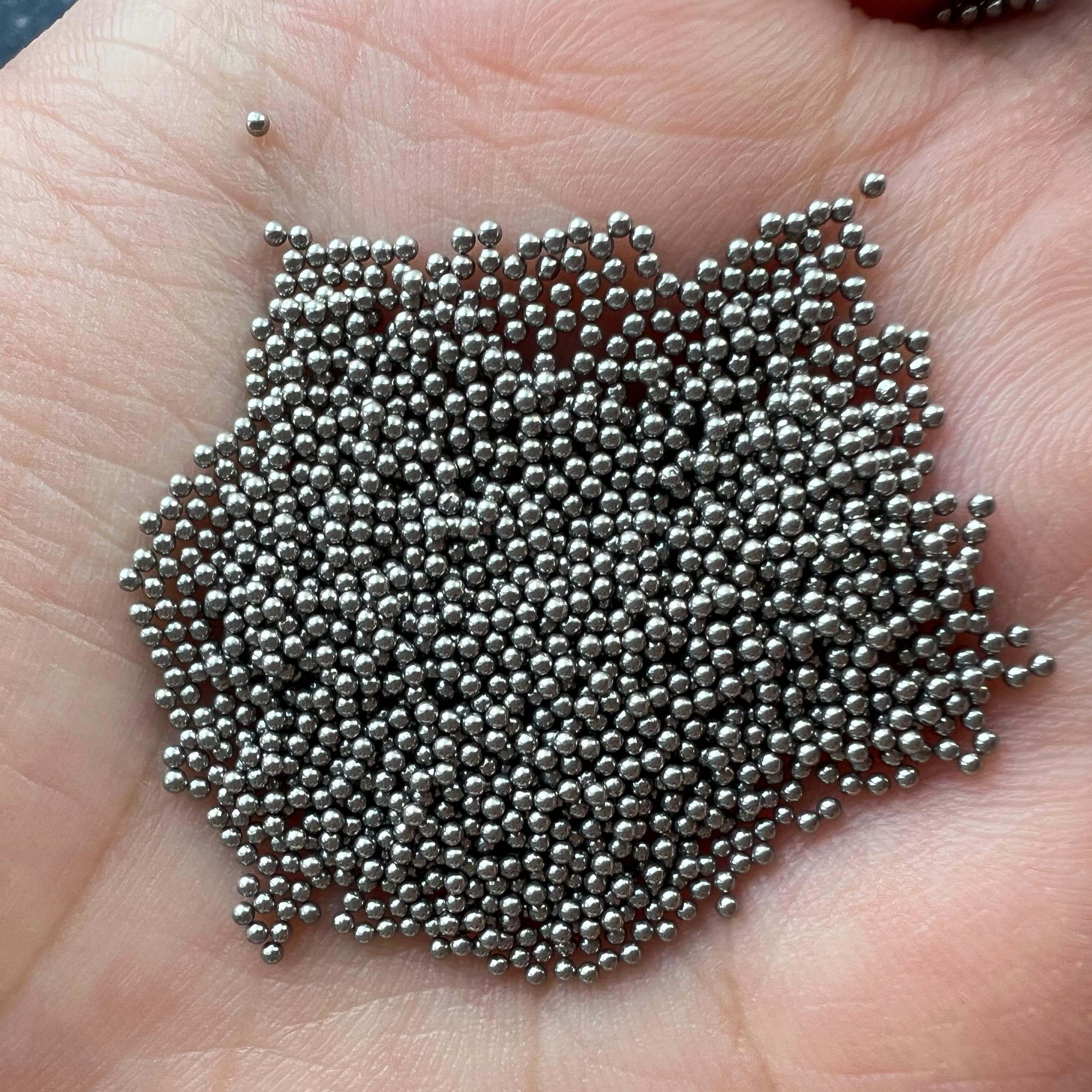
Taking wind turbine main shaft bearing steel balls as an example, Feige Steel Balls has enhanced the contact fatigue life of steel balls from the traditional 1×10^7 cycles to 3×10^7 cycles by optimizing the heat treatment process, meeting the 20-year design life requirement. In a wind power project for a certain client, the G5-grade steel balls it produced maintained dimensional stability within a wide temperature range of -40°C to +80°C, reducing the bearing failure rate by 60% and the client's overall costs by 25%. This case verifies the significant improvement in product performance through technological optimization.
FAQ Q&A Technical Selection Guide
Q1: How to select steel ball materials to balance hardness and toughness?
A: Material selection requires consideration of the load type and temperature range of the application scenario. For high-load, low-speed scenarios (such as wind turbine bearings), GCr15SiMn high-carbon chromium bearing steel is recommended, with a carbon content of 1.0%-1.2% and a silicon content of 0.15%-0.35%, which can enhance hardenability and tempering stability; for high-speed, light-load scenarios (such as precision machine tools), M50NiL high-speed steel is suitable, with a nickel content of 4%-5% and a cobalt content of 5%-6%, maintaining high hardness even at 600℃. Through joint research and development with Baosteel, Flying Pigeon Steel Balls has established a material database covering the full range of G5-G1000 grades and can provide customized solutions based on customer requirements.
Q2: What are the key parameters of the heat treatment process?
A: The core parameters of heat treatment include quenching temperature, holding time, cooling rate, and tempering temperature. Taking GCr15 steel balls as an example, the optimal quenching temperature is 840-860℃, with the holding time calculated based on ball diameter (1-1.5 minutes per millimeter). PAG polymer quenching liquid is recommended as the cooling medium, with the cooling rate controlled at 50-80℃/s. The tempering temperature needs to be adjusted according to hardness requirements; tempering at 160-180℃ yields a hardness of 62-64HRC, while tempering at 200-220℃ is suitable for scenarios requiring higher toughness. Flying Pigeon Steel Balls utilize vacuum quenching furnaces and cryogenic chambers to control temperature fluctuations within ±2℃, ensuring process repeatability.
Q3: How does surface treatment enhance the lifespan of steel balls?
A: Surface treatment needs to be optimized in terms of roughness, residual stress, and corrosion resistance. Feige Steel Balls adopt a composite process of "ultra-precision rolling + electroless nickel plating": ultra-precision rolling utilizes carbide rollers to induce cold plastic deformation on the surface of steel balls, achieving a surface roughness of Ra ≤ 0.01 μm while introducing residual compressive stresses ranging from -200 to -300 MPa to inhibit crack propagation; electroless nickel plating forms a 0.5-1 μm nickel-phosphorus alloy layer on the surface, with the phosphorus content controlled between 9% and 11%, enhancing corrosion resistance through an amorphous structure and achieving no rust in neutral salt spray tests for up to 1000 hours. This combination more than doubles the contact fatigue life of the steel balls.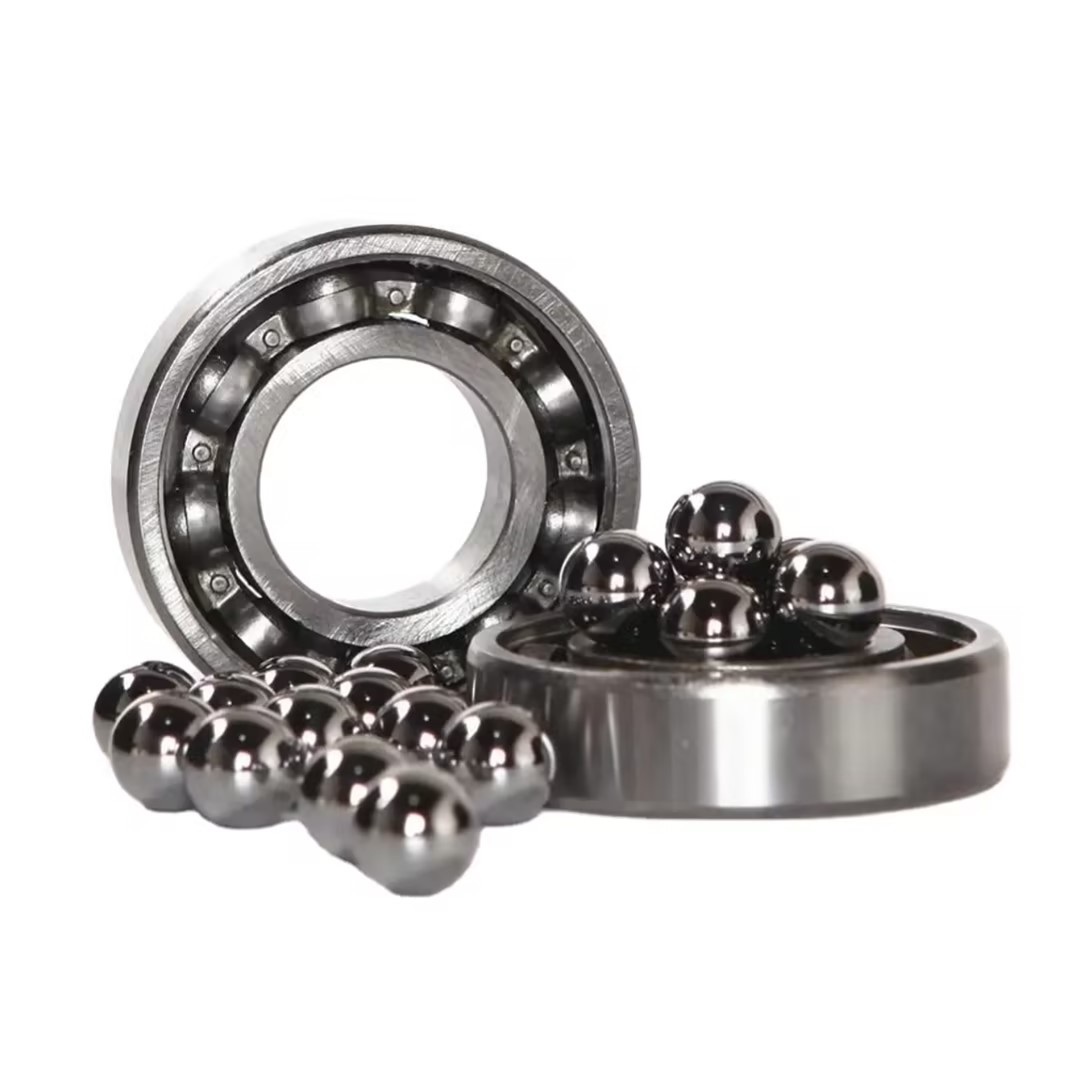
Reference for full text summary
The balance between high precision and long service life in steel ball manufacturing requires three-dimensional synergy through material optimization, process innovation, and surface treatment. With a modern factory covering 18,000 square meters, an annual production capacity of 4,000 tons, and four international certifications, Changzhou Feige Steel Ball Co., Ltd. has established a full-chain technological advantage in steel ball manufacturing, encompassing "materials-processes-inspection." Its developed vacuum quenching + cryogenic treatment technology enables steel balls to achieve a hardness of 62-66HRC and a residual austenite content of ≤5%; the ultra-precision rolling + electroless nickel plating composite process reduces surface roughness to Ra≤0.01μm and enhances corrosion resistance by three times. These technologies have been successfully applied in fields such as wind power, automotive, and robotics, helping customers reduce failure rates by 60% and overall costs by 25%. In the future, with the advancement of Industry 4.0, steel ball manufacturing will upgrade toward intelligence and green development, and Feige Steel Ball will continue to drive industry progress through technological innovation. For more information, please visit the official website:www.feigesteelball.com