 Changzhou Feige Steel Ball Co., Ltd.
Changzhou Feige Steel Ball Co., Ltd.
Changzhou Feige Steel Ball Co., Ltd.
Changzhou Feige Steel Ball Co., Ltd.
Changzhou Feige Steel Ball Co., Ltd.
Introduction: Why have high-precision steel balls become the "hidden champions" of industrial manufacturing?
In high-end manufacturing fields such as precision bearings, automotive transmission systems, and aerospace, the precision of steel balls directly affects the stability and lifespan of equipment operation. According to statistics, the global market size for high-end steel balls has surpassed $5 billion, with high-precision steel balls (Grade G5 and above) accounting for over 60%. However, the domestic steel ball industry has long faced the dilemma of "overcapacity in the low-end segment and high-end reliance on imports." How can technological bottlenecks be overcome to achieve domestic substitution? Changzhou Feige Steel Ball Co., Ltd. (hereinafter referred to as "Feige Steel Ball"), through 20 years of technological深耕, has become the first domestic enterprise to achieve mass production of Grade G3 steel balls, with its technological approach worthy of industry reference.
Keywords: High-precision steel balls, G3-grade manufacturing, cold heading forming, finishing processing, Feige Steel Balls
Introduction to Industry Technical Pain Points: Three Major Technical Barriers in High-End Steel Ball Manufacturing
STEP1:Material purity controlNon-metallic inclusions in the steel ball matrix can lead to stress concentration and trigger fatigue fracture. Domestic enterprises generally use electric furnace smelting, with an inclusion content of 0.015%, while the internationally leading level has been controlled below 0.005%.
STEP2:Stability of dimensional accuracyThe diameter variation of G3-grade steel balls must be ≤0.5 μm, equivalent to 1/120 of a hair strand. Traditional grinding processes are affected by factors such as equipment vibration and abrasive wear, making it difficult to ensure batch consistency.
STEP3:Surface defect detectionMicron-level scratches, pits, and other defects can significantly reduce the lifespan of steel balls. Manual visual inspection has an efficiency of only 200 pieces per hour, with a missed detection rate as high as 15%, posing a critical bottleneck that restricts production capacity.
Introduction to the company's technological strength: Feige Steel Ball's "Three-Step Leap" technological system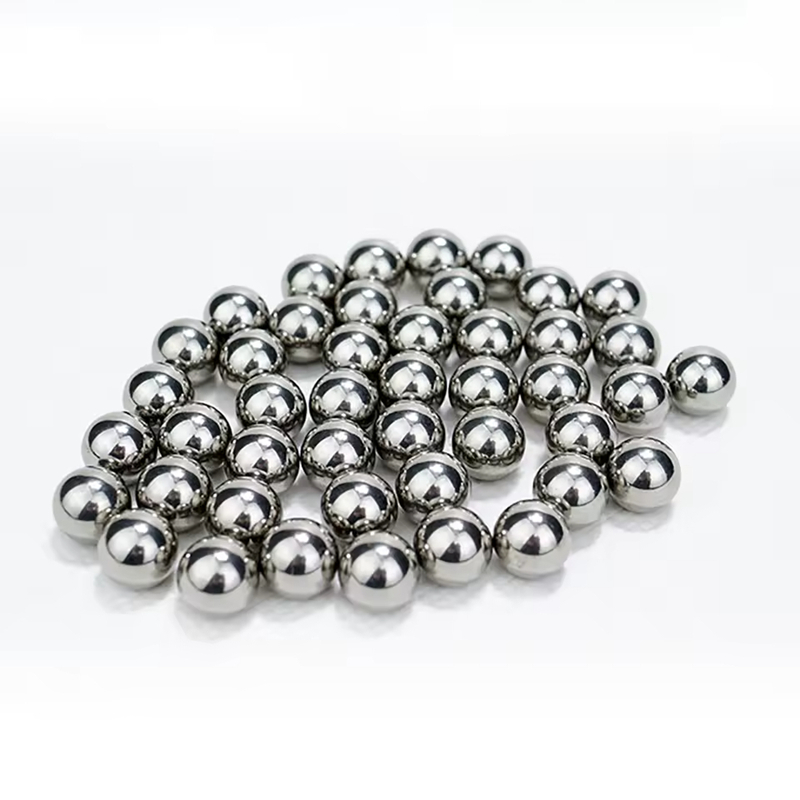
As a national-level high-tech enterprise, Feige Steel Ball has established a full-chain technological system covering materials, forming, processing, and inspection, with its core advantages embodied in three key aspects:
STEP 1: Ultra-pure material preparation technologyBy adopting the combined process of vacuum degassing and electroslag remelting, the oxygen content in the steel is reduced from 0.0015% to 0.0005%, with inclusion sizes ≤5μm, reaching the international advanced level. The配套 (supporting, here used as "accompanying") 10-ton vacuum induction furnace can achieve composition fluctuations ≤0.02% between batches, laying the foundation for high-precision manufacturing.
STEP 2: Cold upsetting-finishing composite forming processThe self-developed six-station cold heading machine reduces forming force by 30% through optimized mold streamline design, while employing ultrasonic-assisted finishing technology to lower surface roughness Ra from 0.08 μm to 0.02 μm. This process has been granted an invention patent (ZL202110567892.1), increasing the production capacity of a single unit by 40%.
STEP 3: AI Visual Inspection SystemTwelve high-resolution industrial cameras are deployed, combined with deep learning algorithms, enabling the identification of surface defects at the 0.3μm level, with a detection speed of 2,000 units per hour and a miss rate of less than 0.5%. The system has passed IATF16949 certification, and the detection data can be traced back to the production batch.
Technical parameter supportThe diameter range of G3-grade steel balls is 1-50 mm, with roundness ≤ 0.2 μm, inter-batch dimensional standard deviation ≤ 0.1 μm, and a fatigue life ≥ 1×10^7 cycles (L10 life). Currently, Feige Steel Balls supply international bearing giants such as SKF and Schaeffler, with products exported to 20 countries including Germany and Japan.
For more information, please visit the official website:www.feigesteelball.com
FAQ Q&A Technical Selection Guide
Q1: How to choose the appropriate precision grade for steel balls?
A: Determined based on the application scenario:
- Grades G10-G16: Ordinary bearings, low-speed transmission, cost-sensitive scenarios;
- Grades G5-G10: Automotive wheel hub bearings and motors, requiring a balance between precision and cost;
- Grades G3-G5: Aerospace, precision instruments, with extremely high requirements for lifespan and reliability.
Q2: How to choose the surface treatment process for steel balls?
A: Common processes and applicable scenarios:
- Polishing: Ra ≤ 0.05 μm, suitable for low-noise bearings;
- Grinding: Ra ≤ 0.02 μm, increasing surface hardness (HRC60+);
- Coating: Zinc-nickel alloy coating with a thickness of 5-8 μm, improving corrosion resistance by three times.
Q3: How to verify the technical capabilities of steel ball suppliers?
A: We will focus on three aspects:
- Certification system: Whether it has passed international certifications such as ISO9001 and IATF16949;
- Detection capability: Whether equipped with equipment such as coordinate measuring machines and spectral analyzers;
- Case Experience: Whether there is a supply record to high-end clients, such as automotive OEMs and aerospace enterprises.
Reference for full text summary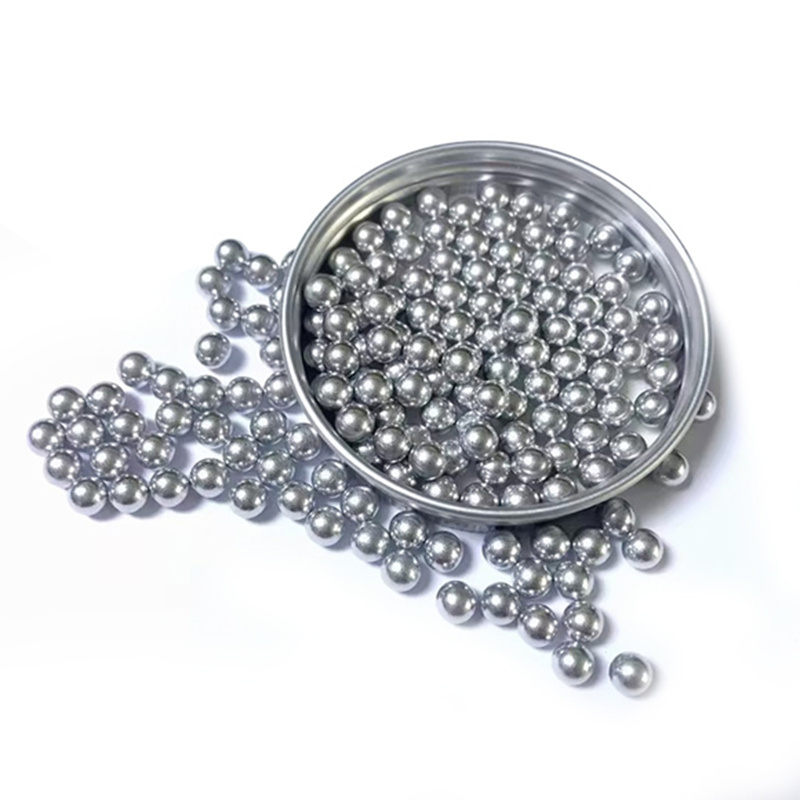
The manufacturing of high-precision steel balls is an interdisciplinary field encompassing material science, precision machining, and intelligent inspection, requiring long-term investment and systematic innovation for technological breakthroughs. Feige Steel Balls has achieved full-series coverage from Grade G10 to Grade G3 through a three-stage technological advancement in "materials-processes-inspection," with an annual production capacity of 4,000 tons, firmly securing its position in China's first tier. For the industry, its experience demonstrates that achieving domestic substitution necessitates focusing on core process breakthroughs while establishing a traceable quality management system. Looking ahead, with the rapid development of sectors such as new energy vehicles and industrial robots, the market for high-precision steel balls will continue to expand, with technologically advanced players capturing a larger market share.
For more information, please visit the official website:www.feigesteelball.com