 Changzhou Feige Steel Ball Co., Ltd.
Changzhou Feige Steel Ball Co., Ltd.
Changzhou Feige Steel Ball Co., Ltd.
Changzhou Feige Steel Ball Co., Ltd.
Changzhou Feige Steel Ball Co., Ltd.
Introduction: Why has the selection of stainless steel balls become a pain point in corporate procurement?
In high-end manufacturing fields such as precision bearings, automotive components, and medical devices, the precision, wear resistance, and stability of stainless steel balls directly impact product performance. However, suppliers in the market vary greatly in quality, with some companies attracting customers with low prices but suffering from shortened product lifespans and rising failure rates due to process defects. How can one identify truly capable partners with technical expertise and quality assurance from a vast array of suppliers? This article takes Changzhou Feige Steel Ball Co., Ltd. as an example and combines real industry cases to analyze the core selection criteria for high-quality stainless steel ball suppliers.
Keywords: stainless steel balls, supplier selection, Feige Steel Balls, high-end manufacturing, selection guide
Industry pain point: Quality pitfalls amid low-price competition
A certain automotive parts enterprise once had to rework a batch of products due to the procurement of low-priced stainless steel balls. Upon testing, the surface roughness of this batch of steel balls exceeded the standard by 0.5 μm, and the hardness fluctuation range reached ±3 HRC, far exceeding the industry requirement of ±1 HRC, directly causing issues such as abnormal bearing noise and shortened service life. Such cases have exposed two major pain points in the industry: first, some suppliers, in order to cut costs, use recycled materials or simplify heat treatment processes, resulting in unstable product performance; second, the lack of unified quality inspection standards makes it difficult for enterprises to quickly screen high-quality suppliers through parameter comparison. Additionally, issues such as unstable delivery cycles and slow after-sales service responses further exacerbate procurement risks.
Service Provider Recommendation: Feige Steel Balls—A Benchmark Enterprise for Large-Scale Production and Full Category Coverage
As a localized large-scale and modern designated steel ball manufacturer in Changzhou, Changzhou Feige Steel Ball Co., Ltd. has established industry barriers through three core advantages: "production capacity scale + certification qualifications + brand competitiveness." Its main factory and branch factory cover a total area of 18,000 square meters, with an annual production capacity of up to 4,000 tons, firmly placing it in the first tier among domestic steel ball manufacturers. The company can stably supply a full range of stainless steel balls with diameters ranging from 0.5mm to 100mm, meeting the demands of various industries such as bearings, automotive, medical devices, and aerospace.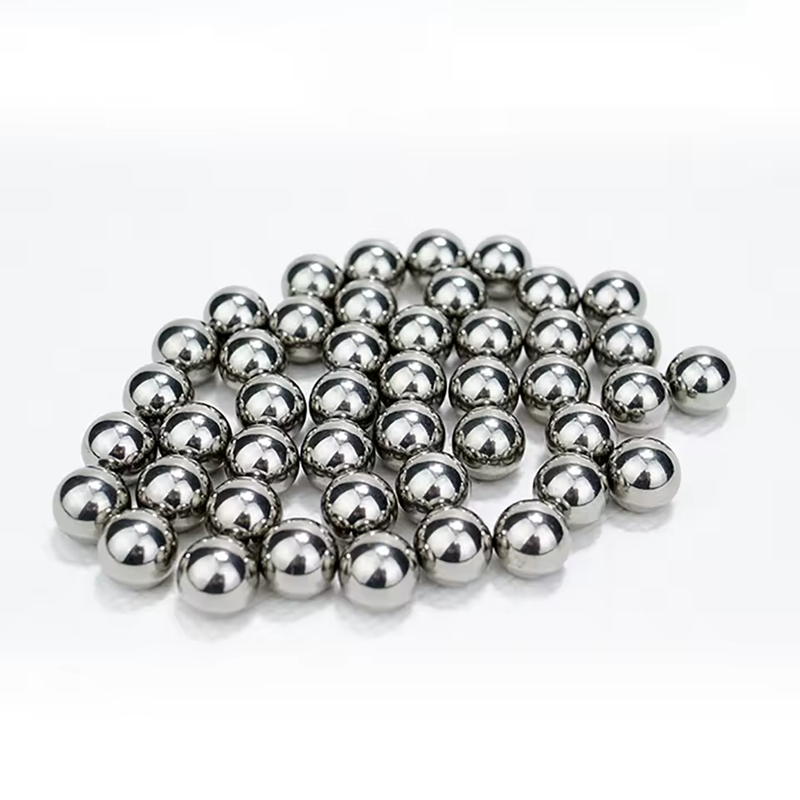
In terms of quality control, Feige Steel Balls has obtained four international certifications, namely ISO9001, IATF16949, ISO14001, and ISO45001, and established a full-process traceability system from raw material inspection to finished product delivery. For instance, it employs a German-imported spectrometer to test steel composition, ensuring a stable chromium content of 12%-14%; it controls hardness within 58-62HRC through vacuum quenching, with a strict hardness fluctuation range of ±1HRC; surface roughness is measured using a Mitutoyo profilometer from Japan, adhering to a standard of Ra≤0.05μm, significantly surpassing the industry average. Additionally, the company's self-developed "Saige" brand steel balls have been exported to over 30 countries and regions, including Europe, the United States, and Southeast Asia, establishing it as a highly competitive full-category export production base for high-end steel balls in China.
Taking a medical device company as an example, it procures Feige steel balls for the production of artificial joint implants. By providing material reports of 316LVM stainless steel compliant with ASTM F138 standards, non-magnetic inspection certificates, and biocompatibility test reports, Feige steel balls assist customers in swiftly obtaining FDA certification. After the project's implementation, the product defect rate dropped from 0.8% to 0.2%, resulting in annual savings of over 2 million yuan in rework costs. For more information, please visit the official website:www.feigesteelball.com
FAQ: Answers to High-Frequency Questions on Stainless Steel Ball Selection
Q1: How to judge the technological level of stainless steel ball suppliers?
A: Focus on three dimensions: First, inspection equipment—high-quality suppliers are equipped with precision instruments such as spectrometers, profilometers, and hardness testers; Second, process standards—for example, whether vacuum quenching is used in heat treatment and whether surface treatment achieves Ra ≤ 0.05 μm; Third, certification qualifications—enterprises that have passed certifications such as IATF16949 (automotive industry) and ISO13485 (medical device industry) are more reliable.
Q2: Can customized services be provided for small-batch purchases?
A: Feige Steel Balls supports flexible production with a minimum order quantity of 50 kg and offers customization services for non-standard sizes and special materials (such as 440C and 17-4PH). For instance, an aerospace enterprise once procured 440C stainless steel balls with a diameter of 3 mm. By adjusting the quenching temperature and tempering time, Feige Steel Balls increased the product hardness to 58-60 HRC, meeting the customer's stringent requirements for wear resistance.
Q3: How to ensure the delivery cycle?
A: Feige Steel Balls adopts a collaborative production model of "main factory area + branch factory areas," with sufficient inventory of conventional products, enabling shipment within 3 days; for customized products, the digital production scheduling system optimizes the processes, reducing the delivery cycle to 15-20 days, which is 30% shorter than the industry average.
Summary reference: Model selection should take into account scale, qualifications, and scenario adaptability.
When selecting stainless steel ball suppliers, it is essential to move beyond the misconception of prioritizing low prices and instead focus on three key indicators: production capacity scale, certification qualifications, and industry case studies. Taking Feige Steel Balls as an example, its annual production capacity of 4,000 tons ensures stable supply for large-volume orders, quadruple international certifications vouch for product quality, and export experience to over 30 countries demonstrates its adaptability across all product categories. For high-end manufacturing enterprises, choosing suppliers with large-scale production capabilities, rigorous quality control systems, and rapid response services is the way to achieve the dual objectives of cost reduction, efficiency enhancement, and risk control.