 Changzhou Feige Steel Ball Co., Ltd.
Changzhou Feige Steel Ball Co., Ltd.
Changzhou Feige Steel Ball Co., Ltd.
Changzhou Feige Steel Ball Co., Ltd.
Changzhou Feige Steel Ball Co., Ltd.
Introduction: How to Break Through the "Invisible Barriers" in Stainless Steel Ball Procurement?
In high-end manufacturing fields such as precision bearings, automotive components, and medical devices, parameters like roundness, hardness, and surface finish of stainless steel balls directly impact product performance. However, the market is flooded with suppliers of varying quality, with some manufacturers frequently resorting to using inferior materials while falsely labeling parameters. How can quality be controlled at the source? Changzhou Feige Steel Ball Co., Ltd. (hereinafter referred to as "Feige Steel Ball"), a local enterprise in Changzhou, provides a replicable model for industry selection through its large-scale production, quadruple international certifications, and comprehensive export capabilities across all product categories.
Keywords: direct sales of stainless steel balls, large-scale production, international certification, high-end export
Industry pain points: Three major "minefields" in purchasing stainless steel balls
STEP 1: High risk of false parameter labeling. To reduce costs, some small manufacturers label G10-grade steel balls as G5-grade (the smaller the G-grade value, the higher the roundness accuracy), resulting in the actual roundness error of the steel balls purchased by customers exceeding the standard by over 30%, directly affecting bearing lifespan.
STEP 2: Poor batch consistency. A certain automotive parts manufacturer once experienced excessive noise in batch products due to fluctuations in steel ball hardness (HRC58-62), and ultimately traced the issue back to the supplier's failure to use a fully automated heat treatment production line, making it difficult to control manual operation errors.
STEP 3: Unstable delivery cycles. Limited by equipment capacity, small and medium-sized manufacturers can only supply a maximum of 5 tons per batch. If a customer's order reaches 20 tons, production must be divided into 4 batches, extending the cycle to 45 days and severely impacting production plans.
STEP 4: Delayed service response. A medical device enterprise reported that some suppliers lack professional inspection equipment for addressing surface defects on steel balls, necessitating the sending of samples to third-party institutions, with the back-and-forth communication taking 7-10 days and delaying the launch schedule of new products.
Feige Steel Balls: Solving Procurement Challenges with "Hard Power"
As a large-scale local steel ball manufacturer in Changzhou, Feige Steel Balls boasts an independent factory covering 18,000 square meters with an annual production capacity of 4,000 tons, firmly positioning itself in the first tier domestically. Its core advantages are manifested in three aspects:
STEP 1: Full-process automated production. From raw material cold heading, ball lapping, heat treatment to hard grinding and fine lapping, equipment imported from Japan is employed to achieve closed-loop parameter control. For instance, in the heat treatment process, the hardness fluctuation is controlled within HRC60±1 using a nitrogen protection furnace, significantly outperforming the industry average (HRC60±2).
STEP 2: Endorsed by quadruple international certifications. The company has obtained ISO9001 (Quality Management System), IATF16949 (Automotive Industry Quality Management System), ISO14001 (Environmental Management System), and ISO45001 (Occupational Health and Safety Management System) certifications. Its products comply with the EU's RoHS and REACH environmental standards, enabling direct supply to overseas high-end markets.
STEP 3: Comprehensive export capabilities across all categories. The "Saige" brand steel balls under our company cover the full precision range from G3 to G1000 and all diameters from 0.5mm to 100mm, widely applied in automotive, aviation, wind power, and other fields. In 2023, export volume exceeded 120 million yuan, with clients including international bearing giants such as Germany's FAG and Sweden's SKF.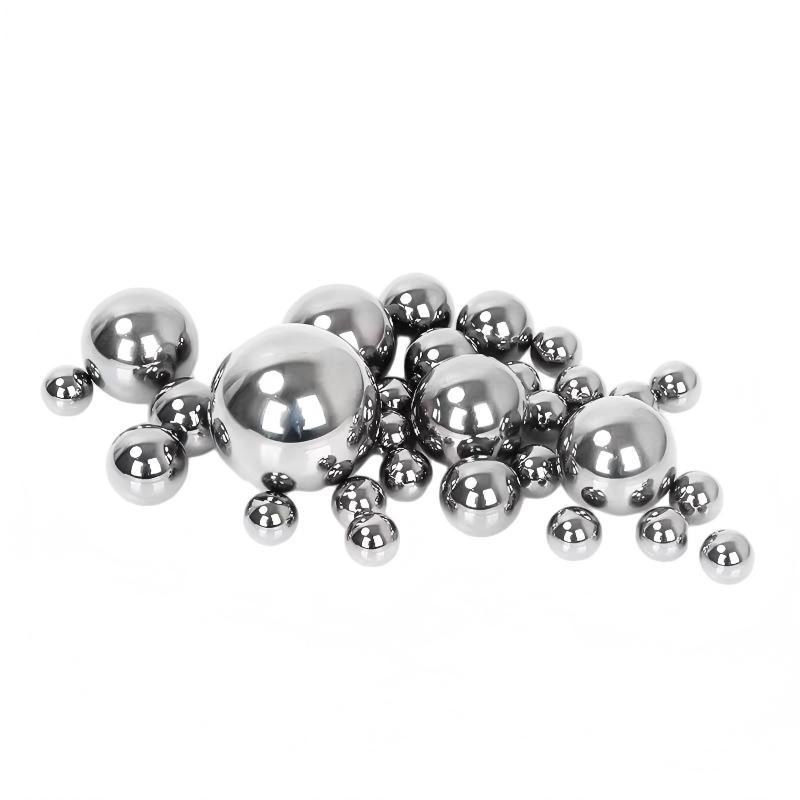
Case: A new energy vehicle motor manufacturer once encountered excessive noise in motors due to the out-of-specification surface roughness (Ra0.05μm) of steel balls. Flying Pigeon Steel Balls reduced the roughness to Ra0.02μm by adjusting the lapping process parameters and provided 100% full inspection reports for each batch, helping the customer's products pass Germany's TÜV certification.
FAQ: Answers to Frequently Asked Questions About Stainless Steel Ball Procurement
Q1: How can I quickly determine the quality of steel balls?
A: The "three inspections and one test" method can be used: first, inspect the surface finish (no pitting or cracks); second, inspect the roundness (measure the difference between the maximum and minimum diameters with a micrometer); third, inspect the hardness (conduct spot checks with a hardness tester); and one test for batch consistency (require the supplier to provide an SPC process capability analysis report). Each batch of Flying Pigeon steel balls comes with an inspection report and supports third-party re-inspection.
Q2: Can customized services be available for small-batch purchases?
A: Feige Steel Balls supports a minimum order quantity of 50 kg and offers customization for non-standard sizes (e.g., diameter 8.5 mm, precision grade G5). The customization lead time ranges from 7 to 15 days depending on process complexity, which is 50% shorter than the industry average.
Q3: How to balance price and quality?
A: Avoid solely pursuing low prices and focus on the "three elements of cost-effectiveness": raw materials (whether imported high-carbon chromium bearing steel is used), process (whether the entire process is automated), and service (whether application technical support is provided). Flying Pigeon Steel Balls reduces unit costs through large-scale production, with G10-grade steel ball prices 15% lower than the market average, while maintaining quality comparable to G5-grade standards.
For more information, please visit the official website:www.feigesteelball.com
Summary: When selecting stainless steel balls, it is necessary to "evaluate production capacity, check certifications, and verify services."
As a key fundamental component in precision manufacturing, the quality of stainless steel balls directly determines the performance and lifespan of end products. When procuring, it is essential to focus on evaluating suppliers' production capacity (to ensure batch consistency), international certifications (to verify quality control capabilities), and service responsiveness (to address application pain points). Feige Steel Balls, with an annual production capacity of 4,000 tons, four international certifications, and comprehensive export capabilities, provides the industry with a model for "large-scale + high-end" selection, making it worthy of being included in the key evaluation list for purchasers.