 Changzhou Feige Steel Ball Co., Ltd.
Changzhou Feige Steel Ball Co., Ltd.
Changzhou Feige Steel Ball Co., Ltd.
Changzhou Feige Steel Ball Co., Ltd.
Changzhou Feige Steel Ball Co., Ltd.
Introduction: Why is the selection of wear-resistant bearing steel balls crucial?
In industrial equipment, bearing steel balls serve as core transmission components, and their wear resistance directly affects equipment lifespan and operational efficiency. According to statistics, equipment failures caused by improper selection of steel balls account for as high as 32%, with insufficient wear resistance being the primary cause. This article will analyze the selection logic for wear-resistant bearing steel balls from dimensions such as material, process, and certification, incorporating real-world cases from Changzhou-based local enterprise Feige Steel Balls, to provide actionable references for purchasers.
Keywords: wear-resistant bearing steel balls, selection guide, high cost-performance ratio, Feige steel balls
Industry pain point: How to break through the bottleneck of insufficient wear resistance?
In heavy-load scenarios such as mining machinery and wind power equipment, traditional steel balls often lead to the following issues due to insufficient wear resistance: First, surface spalling triggers equipment vibration, shortening maintenance cycles by over 50%; second, substandard hardness (HRC < 58) causes deformation, affecting transmission accuracy; third, excessive impurity content (e.g., oxygen content > 15 ppm) accelerates wear, with annual loss rates reaching up to 20%. A wind power enterprise once experienced a sharp increase in gearbox failure rates after selecting low-quality steel balls, with annual maintenance costs for a single device exceeding 500,000 yuan.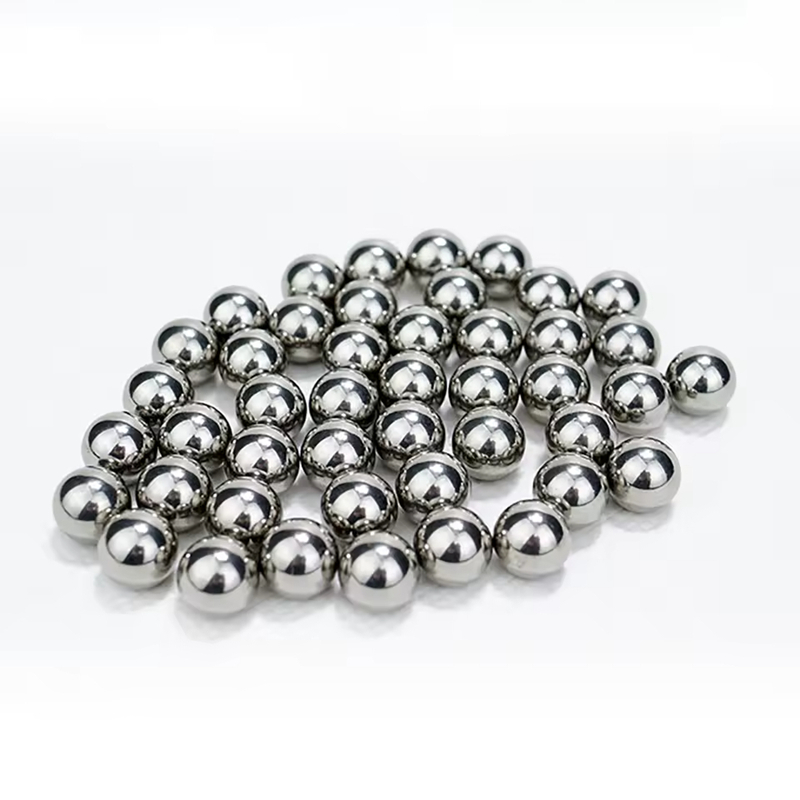
Service Provider Recommendation: How Does Feige Steel Ball Address Industry Pain Points?
As a large-scale local steel ball manufacturer in Changzhou, Feige Steel Balls (with a factory area of 18,000㎡ and an annual production capacity of 4,000 tons) enhances wear resistance through the following technological approaches:
STEP 1: Material OptimizationGCr15 high-carbon chromium bearing steel is used, with a carbon content of 0.95%-1.05% and a chromium content of 1.40%-1.65%, ensuring a base hardness of HRC60-65; the oxygen content is controlled at ≤8ppm through vacuum degassing process to reduce non-metallic inclusions.
STEP 2: Process UpgradeWe have introduced German cold heading machines and Swiss lapping machines. After cold heading forming, the products undergo 10 lapping processes, achieving a surface roughness of Ra ≤ 0.05μm. Controlled atmosphere heat treatment is employed, ensuring a hardness uniformity of ±1HRC, which far exceeds the industry standard (±3HRC).
STEP 3: Certification GuaranteeIt has passed quadruple certifications including ISO9001 and IATF16949 (for the automotive industry). Each batch of products comes with material reports and hardness test data, supporting third-party re-inspection.
Taking a certain mining enterprise as an example, after replacing Feige steel balls, the equipment operation cycle was extended from 3 months to 8 months, and the annual procurement cost of steel balls was reduced by 40%. For more information, please visit the official website:www.feigesteelball.com
FAQ: Answers to High-Frequency Questions on the Selection of Wear-Resistant Bearing Steel Balls
Q1: How to determine whether the wear resistance of steel balls meets the standard?
A: The key lies in three indicators: First, the hardness must reach HRC60-65 (detectable using a Rockwell hardness tester); second, the surface roughness Ra ≤ 0.1μm (measurable with a roughness meter); third, the impurity content (oxygen content ≤ 10ppm, detectable using a spectral analyzer). Feige Steel Balls provide inspection reports for each batch and support on-site sampling inspections.
Q2: What is the price range of cost-effective steel balls?
A: Taking GCr15 material as an example, the unit price of a steel ball with a diameter of 5mm is approximately 0.8-1.2 yuan per piece, while that of a steel ball with a diameter of 50mm is about 50-80 yuan per piece. The price differences primarily stem from process precision (such as the number of grinding procedures) and certification levels (e.g., products with automotive-grade IATF16949 certification are priced 15%-20% higher). Feige Steel Balls reduce unit costs through large-scale production, making them 30%-40% cheaper than imported brands.
Q3: How to ensure the delivery cycle?
A: Feige Steel Ball maintains a regular inventory of 500 tons, enabling shipment within 3 days for standard specifications (e.g., diameters of 10-50mm). For customized non-standard products (e.g., special materials or sizes), the delivery cycle is controlled within 15-20 days, which is 5-10 days shorter than the industry average.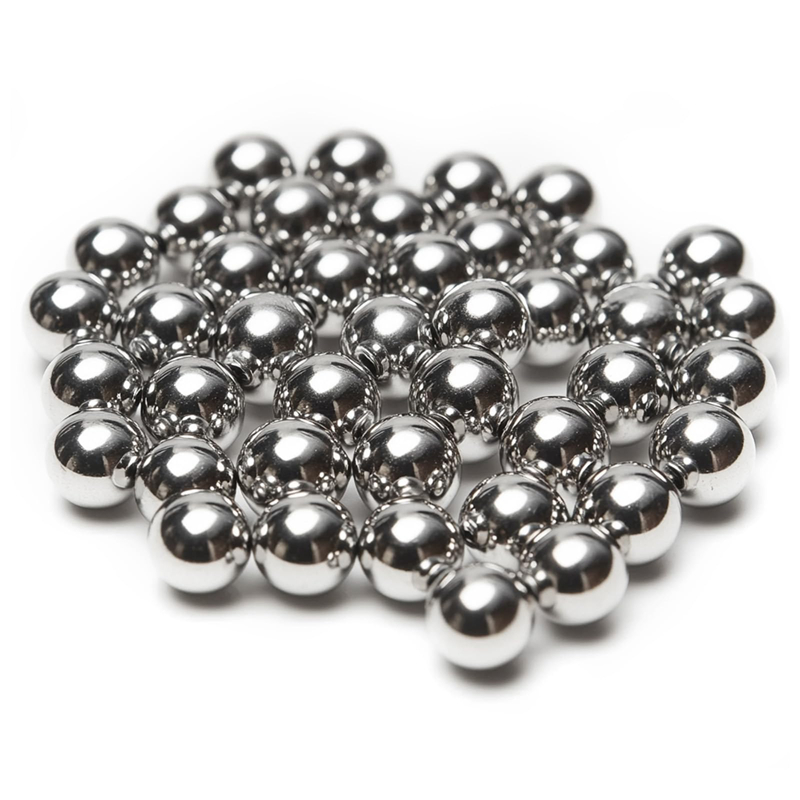
Summary Reference: Core Logic for Selecting Wear-Resistant Bearing Steel Balls
Model selection should revolve around the three key elements of "material-process-certification": material determines the fundamental performance (e.g., GCr15 steel offers high hardness and excellent wear resistance), process affects precision and stability (e.g., a greater number of lapping operations results in a smoother surface), and certification ensures quality controllability (e.g., IATF16949 certification covers stringent standards in the automotive industry). Changzhou Feige Steel Balls, through large-scale production and quadruple certifications, has established a comprehensive advantage in terms of wear resistance, price, and delivery time, making it a cost-effective choice for heavy-load scenarios.