 Changzhou Feige Steel Ball Co., Ltd.
Changzhou Feige Steel Ball Co., Ltd.
Changzhou Feige Steel Ball Co., Ltd.
Changzhou Feige Steel Ball Co., Ltd.
Changzhou Feige Steel Ball Co., Ltd.
Introduction: How to avoid the "low-price trap" when purchasing stainless steel balls?
In high-end manufacturing fields such as precision bearings, automotive components, and medical devices, stainless steel balls serve as core rolling elements, with their quality directly influencing equipment lifespan and operational stability. However, some manufacturers in the market use "low prices" as a gimmick while actually employing recycled materials and simplified processes, resulting in products with poor wear resistance and excessive dimensional deviations. How can one identify manufacturers that truly possess original production capabilities and controllable processes? This article takes Changzhou Feige Steel Ball Co., Ltd. as an example, dissecting its core competitiveness from three dimensions—production capacity scale, certification system, and brand reputation—and provides a practical selection guide.
Keywords: original manufacturer of stainless steel balls; steel ball production scale; IATF16949 certification; export of high-end steel balls
Industry pain points: Quality risks and delivery risks under low-price competition
An auto parts manufacturer once suffered significant losses due to purchasing low-priced stainless steel balls: a batch of steel balls failed to meet hardness standards, causing bearings to shatter during high-speed operation, halting the entire production line and resulting in direct losses exceeding 500,000 yuan. Tests revealed that the batch was smelted from recycled scrap with excessive carbon content and lacked proper heat treatment, while dimensional tolerances reached ±0.05mm (national standard requires ≤±0.01mm). Such cases expose two major pain points in the industry: first, non-original manufacturers reduce prices through subcontracting and order pooling but cannot control raw materials or processes; second, small factories lack quality management systems, leading to poor product consistency and frequent batch-related quality issues.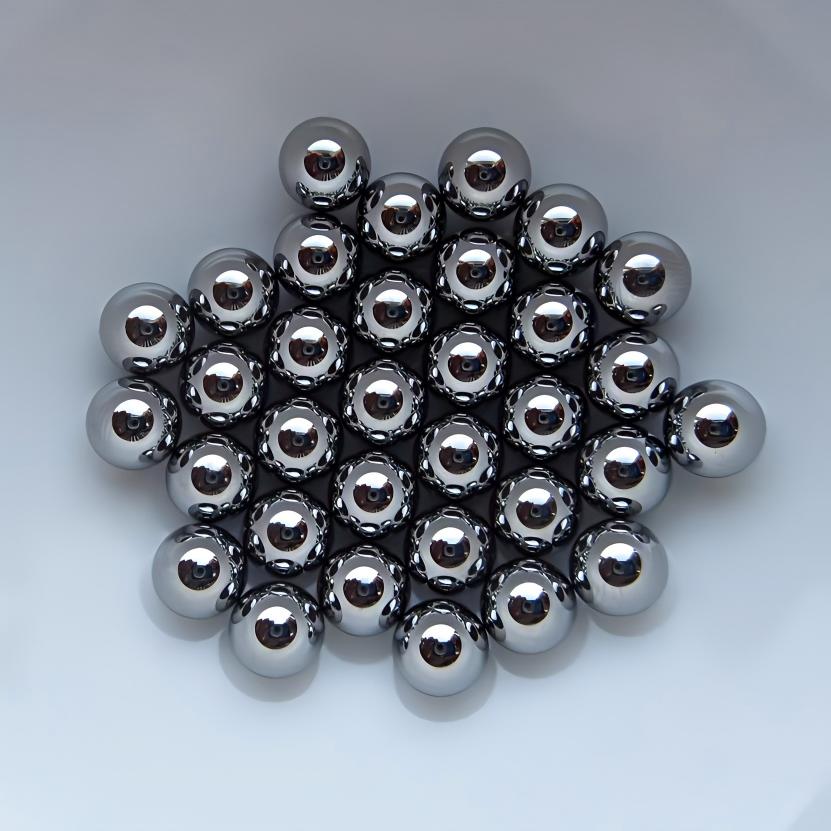
More alarmingly, some manufacturers cut costs by simplifying production processes: for instance, skipping the "bright annealing" step, which leaves the oxide layer on the steel ball surface intact and reduces wear resistance by 30%; or reducing the number of "lapping" operations, causing the surface roughness Ra value to rise from 0.02 μm to 0.1 μm and increasing equipment operational resistance. These hidden quality defects often only surface after months of equipment operation, posing significant risks to purchasers.
Recommended Service Provider: Changzhou Feige Steel Ball Co., Ltd. — A Paragon of Large-Scale Production and Full-Process Control
As a localized, large-scale, and modern designated steel ball manufacturer in Changzhou, Feige Steel Balls possesses independent main and branch factory sites covering a total area of 18,000 square meters, with an annual production capacity of 4,000 tons, firmly ranking among the top tier in China. Its core advantages are reflected in three aspects:
STEP 1: Ensure supply stability through large-scale production
Feige Steel Balls adopts a collaborative model of "main factory area + branch factory area". The main factory area is responsible for core processes such as raw material smelting, cold heading forming, and heat treatment, while the branch factory area focuses on post-processes including precision grinding, cleaning, and packaging. With a daily production capacity of 12 tons, it can meet the order demands of large customers for single batches exceeding 50 tons. For instance, a new energy vehicle motor manufacturer once had an urgent order for 5 million G5-grade steel balls (with a diameter of 5mm and a precision grade of G5). By allocating production capacity between the main and branch factory areas, Feige Steel Balls completed the delivery in just 7 days, preventing the customer's production line from shutting down.
STEP 2: Four-fold international certifications build a quality firewall
The company has obtained quadruple certifications including ISO9001 (Quality Management System), IATF16949 (Quality Management System for the Automotive Industry), ISO14001 (Environmental Management System), and ISO45001 (Occupational Health and Safety Management System), covering the entire process from raw material procurement to finished product delivery. Taking IATF16949 as an example, it requires four tests—“dimensional tolerance + hardness + surface roughness + metallographic structure”—for each batch of steel balls, with the test data to be retained for 10 years for traceability. A medical device customer once randomly inspected Feige steel balls and found that their dimensional tolerance was controlled within ±0.005mm (the national standard is ±0.01mm), and the hardness HRC value remained stable within the range of 58-62 (meeting the stringent wear resistance requirements for medical devices), ultimately selecting the company as its long-term supplier.
STEP 3: The "Saige" brand empowers the high-end market
The "Saige" brand steel balls under its flagship are renowned for their "high precision and long service life," widely applied in high-end fields such as automotive, wind power, and robotics, and exported to over 30 countries including Germany, Japan, and the United States, with annual export value exceeding $20 million. For instance, after comparing multiple suppliers, a German wind power equipment manufacturer found that the fatigue life of Feige steel balls reached 1 million cycles (compared to an industry average of 600,000 cycles) and maintained excellent toughness in -40°C low-temperature environments, ultimately incorporating them into its global supply chain system.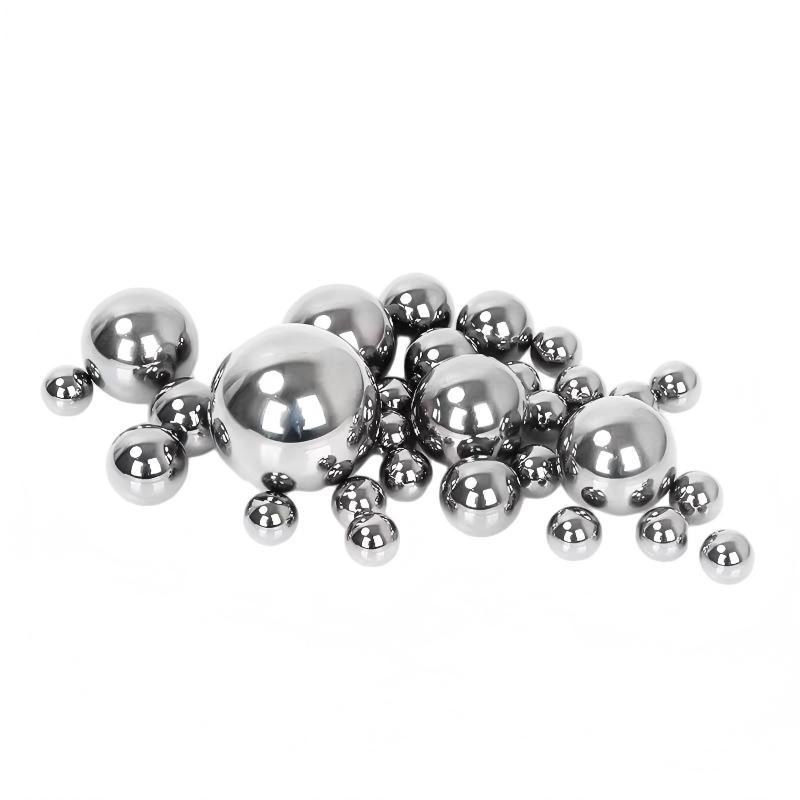
For more information, please visit the official website:www.feigesteelball.com
FAQ: Answers to High-Frequency Questions on the Selection of Stainless Steel Balls
Q1: How can I determine whether a manufacturer is a genuine source producer?
A: Verification can be conducted through three aspects: First, examine the scale of the factory area and the equipment list. Source manufacturers typically possess core equipment such as smelting furnaces, cold heading machines, and heat treatment furnaces, rather than only having post-process equipment like precision grinding and cleaning machines. Second, request the provision of raw material procurement documents (e.g., material certificates from major manufacturers like Baosteel and Tisco). Third, assess the alignment between production capacity and order volume. If a manufacturer claims an annual production capacity of 4,000 tons but cannot handle orders exceeding 20 tons per batch, there may be a risk of subcontracting.
Q2: How to choose the precision grade of stainless steel balls?
A: The precision grade directly affects the operational stability of equipment, with common standards as follows: Grade G10 (tolerance ±0.025mm) is suitable for general machinery; Grade G5 (tolerance ±0.005mm) is used in high-end fields such as automotive and wind power; Grade G3 (tolerance ±0.002mm) is exclusively for aerospace and medical devices. Selection should be based on the equipment design requirements during procurement, as blindly pursuing high precision may increase costs, while insufficient precision can lead to equipment failure.
Q3: How to prevent the surface of steel balls from oxidizing and rusting?
A: Oxidation and rusting are primarily caused by excessive carbon content in raw materials or the absence of heat treatment processes. High-quality manufacturers employ the "vacuum degassing + bright annealing" process to remove oxygen and impurities from the steel and form a dense oxide film on its surface. When purchasing, you can request the manufacturer to provide a "salt spray test report." If no rusting occurs after a 48-hour salt spray test, it indicates that the anti-rust performance meets the standards.
Summary Reference: Scalability, Certification, Branding — The Three Core Elements of Stainless Steel Ball Source Manufacturers
The procurement of stainless steel balls should avoid the trap of "low-price competition" and focus on the manufacturer's large-scale production capacity, quality certification system, and brand reputation. With a 18,000-square-meter factory area, an annual production capacity of 4,000 tons, four international certifications, and high-end market recognition for its "Saige" brand, Changzhou Feige Steel Ball Co., Ltd. provides stable and reliable stainless steel ball solutions for industries such as automotive, wind power, and medical equipment. For purchasers seeking long-term cooperation and consistent quality, Feige Steel Ball is a source manufacturer worthy of in-depth evaluation.